 English
 中文简体
中文简体 日本語
日本語 русский
 عربى
عربى Український
 Español
 Français


Automatic Choco Pie Production Line: Getting the Marshmallow-to-Chocolate Balance Right
Content
- 1. Why Cake Base Uniformity Sets the Foundation for Every Step After
- 2. Marshmallow Filling: Injection Volume, Temperature, and Why It's the Line's Most Sensitive Step
- 3. From Baked Cake to Sandwiched Pie: How Alignment Errors Compound Downstream
- 4. Chocolate Enrobing Systems: Coverage, Thickness, and Coating Consistency
- 5. Cooling Tunnel Design and Why Setting Time Can't Be Rushed
- 6. Line Speed vs. Chocolate Costs: Finding the Right Throughput
- 7. Common Defects and the Inspection Points That Catch Them Before Packaging
- 8. How to Choose a Choco Pie Production Line Supplier
A Choco Pie looks simple on a shelf — two soft cake layers, a marshmallow center, a chocolate shell. But an automatic Choco Pie production line has to hold together a chain of steps where a small error at the start (an uneven cake) shows up much later as a cracked chocolate coating or an underweight pie. Getting the marshmallow-to-chocolate balance right isn't one setting — it's the sum of how well every station along the line is tuned to the ones before and after it. This article walks through that chain, station by station, and closes with two questions every buyer eventually has to answer: how to control chocolate cost without cutting quality, and how to choose a supplier who can actually deliver a line that runs the way it's specified.
1. Why Cake Base Uniformity Sets the Foundation for Every Step After
Everything downstream depends on the cake base coming out of the oven the same size, the same thickness, and the same moisture content, pie after pie. If the cake diameter drifts even a millimeter or two, or if some cakes come out slightly domed while others are flat, the marshmallow injection station has to compensate — and it usually can't, not consistently.
Uneven baking also affects structural strength. A cake that's too dry crumbles when it's sandwiched; one that's too moist won't hold the marshmallow's shape once filled, and the pie spreads out of round before it ever reaches the chocolate bath. This is why the depositing/baking stage needs tight batter metering, consistent oven zone temperatures, and a cooling step before the cakes move on — rushing a hot cake into sandwiching is one of the most common root causes of shape defects that only become visible three or four stations later.
2. Marshmallow Filling: Injection Volume, Temperature, and Why It's the Line's Most Sensitive Step
Marshmallow filling is where most lines lose or gain their reputation for consistency. Two variables matter most:
Injection volume. Too little marshmallow and the pie feels hollow, with visible gaps once cut open; too much and it squeezes out during sandwiching, creating a ragged edge that the chocolate enrober can't coat evenly. Volumetric or weight-based dosing pumps with real-time feedback are what keep this within tolerance, but they only work if marshmallow viscosity is also controlled — which brings in temperature.
Temperature. Marshmallow is aerated and temperature-sensitive; a few degrees too cold and it stops flowing evenly through the nozzles, causing partial fills or torn cake surfaces on contact. A few degrees too warm and it loses aeration, becoming denser and heavier than the recipe intends — which quietly increases ingredient cost per pie without anyone noticing until a batch weight check flags it.
Because this station sits between two structural components (cake and chocolate shell) rather than sitting on a stable surface, it has less margin for error than almost any other point on the line. Most experienced operators treat it as the station to instrument most closely with sensors and the one to slow down first if a defect trend appears elsewhere.
3. From Baked Cake to Sandwiched Pie: How Alignment Errors Compound Downstream
Sandwiching — pairing a filled cake with a top cake and pressing them together — looks mechanical, but small alignment errors here compound rather than average out. If the top cake sits even slightly off-center, the marshmallow bulges unevenly on one side. That uneven bulge then determines how much chocolate pools on that side during enrobing, which changes the drying time needed in the cooling tunnel, which then changes how the pie behaves inside its wrapper.
This is the mechanism buyers should understand when evaluating a line: a problem doesn't stay local. A 2mm alignment error at sandwiching can show up as an inconsistent chocolate coating three stations later and a seal-integrity issue in packaging after that. Good sandwiching stations use vision-guided or mechanically indexed alignment rather than relying on gravity and conveyor friction alone, precisely because the cost of an error rises the further downstream it travels before being caught.
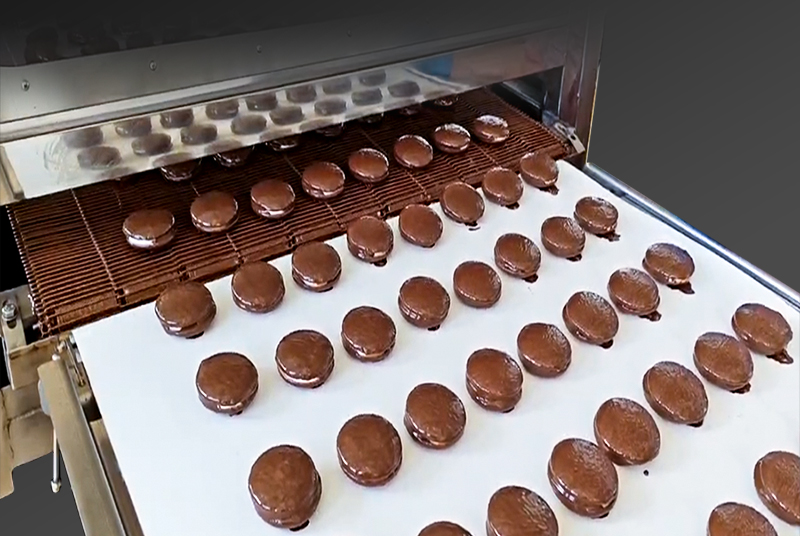
4. Chocolate Enrobing Systems: Coverage, Thickness, and Coating Consistency
The enrober is where the pie gets its final identity — and where a lot of the line's ingredient cost lives. Three things need to be dialed in together:
- Coverage: full, even coating with no bare cake patches, including the underside and edges, which are the hardest areas to coat consistently on a moving curtain of chocolate.
- Thickness: controlled by chocolate viscosity, curtain flow rate, and belt speed. Too thin and coverage becomes patchy; too thick and coating weight — and cost — climbs pie by pie.
- Consistency across the batch: even if average thickness is correct, high variance between pies means some are over-coated (wasted chocolate) and some under-coated (visible defects), so both tails of the distribution cost money in different ways.
Tempering matters as much as the enrober itself here. Poorly tempered chocolate blooms (develops a dull, streaky surface) even if the coating thickness is perfect, so the tempering unit feeding the enrober needs its own temperature curve control, not just a single set-point.
5. Cooling Tunnel Design and Why Setting Time Can't Be Rushed
Once coated, the chocolate shell needs enough time and the right temperature profile to set properly — not just cool to room temperature, but crystallize into a stable form that gives it snap, shine, and shelf stability. Pushing pies through the cooling tunnel too fast is a common cost-cutting mistake: it looks fine on the day of production, but shows up weeks later as bloom, softness, or coating that cracks during transport.
A well-designed tunnel controls both temperature and airflow in stages — a faster initial set followed by a more gradual stabilization — rather than a single uniform cold zone. Tunnel length and belt speed have to be matched to the enrober's throughput; a tunnel that's too short for the line speed forces a choice between under-set chocolate and a bottleneck, and neither is a good trade.
6. Line Speed vs. Chocolate Costs: Finding the Right Throughput
Line speed and chocolate cost pull against each other more directly than most other variables on the line, so this deserves its own discussion.
Why faster isn't automatically cheaper. Running the enrober faster to hit a throughput target often means increasing curtain flow rate to maintain coverage, which increases coating weight per pie. Since chocolate is typically the single most expensive ingredient in a Choco Pie, even a 0.5–1 gram increase in average coating weight, multiplied across a full production run, is a meaningful cost swing — often larger than the labor or energy savings gained from the higher speed.
Where the real savings are. The more sustainable way to control chocolate cost is not by cutting coating thickness across the board — that risks visible bare patches and defect rates that cost more in rework and rejects than they save in chocolate. Instead, cost control comes from:
- Tightening coating-weight variance so the average can be set closer to the minimum acceptable thickness without risking the low end falling below spec.
- Reclaiming and reusing excess chocolate from the enrober's overflow system rather than letting it drip to waste — a well-designed enrober recirculates far more of this than a basic one.
- Matching curtain width and pie spacing precisely so chocolate isn't being deposited between pies or off the belt edges.
- Running the tempering unit at a stable, correctly calibrated set point, since chocolate that's slightly out of temper often needs a thicker layer to achieve visual coverage, masking the temper problem instead of fixing it.
In practice, the throughput number worth optimizing for isn't "pies per minute" in isolation — it's pies per minute at a coating weight and defect rate that keeps cost per acceptable pie as low as possible. That's a line-wide balance, not a single machine setting.
7. Common Defects and the Inspection Points That Catch Them Before Packaging
Because defects compound across stations, catching them early is far cheaper than catching them at the end. The most common issues, and where they're best caught, are:
- Marshmallow gaps or overflow — best caught right after sandwiching, before the pie enters the enrober, since a defective core can't be fixed by anything downstream.
- Off-center or misaligned pies — a vision check before enrobing avoids wasting chocolate on a pie that will be rejected anyway.
- Bare patches or thin coating — checked immediately after enrobing, ideally with automated vision inspection rather than sampling, since coating defects are highly variable pie to pie.
- Bloom or soft-set chocolate — only detectable after the cooling tunnel, which is why tunnel exit is a standard inspection checkpoint, often paired with a weight check to catch coating-weight drift.
- Weight variance overall — a final checkweigher before packaging is the last line of defense, catching anything that individual station checks missed, whether it's a marshmallow, cake, or chocolate variance.
Lines that only inspect at the very end tend to run higher scrap rates, because a pie that fails final inspection has already consumed cake, marshmallow, and chocolate. Distributing inspection points earlier in the line — even simple weight or vision checks — is one of the more cost-effective upgrades a producer can make without touching the core machinery.
8. How to Choose a Choco Pie Production Line Supplier
With the technical picture in mind, the supplier decision comes down to a few practical questions worth asking directly during evaluation:
Can they show a reference line running your actual product spec? A generic wafer or sandwich-cookie line isn't the same as a Choco Pie line — marshmallow injection and chocolate enrobing are specialized stations. Ask for video or, ideally, an in-person visit to a working line producing a comparable product, not just a demo of individual machines.
Is the line engineered as a system, or assembled from separate machines? The compounding-error issue described in Section 3 means station-to-station integration matters as much as individual machine quality. Ask specifically how the sandwiching, enrobing, and cooling stages communicate speed and timing — synchronized PLC control across the line is very different from independently timed machines bolted together on one conveyor.
What's the actual chocolate coating-weight variance they can guarantee, not just average thickness? As covered in Section 6, variance is where cost is won or lost. A supplier who can only quote an average thickness, without a tolerance range backed by test data, hasn't proven they can help control cost.
What inspection and data logging is built in, versus bolted on later? Vision inspection and checkweighing are far cheaper to integrate at the design stage than to retrofit. Ask whether inspection points are part of the base line design or a separate line item.
What's the real total cost, including changeover time, spare parts availability, and local service support? A lower sticker price on the line itself can be offset by slow spare-parts shipping or a lack of local technical support, both of which turn into downtime cost that dwarfs the original savings.
Can they provide trial runs with your own recipe before purchase? Marshmallow viscosity and chocolate formulation vary between producers. A supplier willing to run trials with your actual ingredients — not a standard demo recipe — gives a much more honest picture of how the line will perform once installed.
A good automatic Choco Pie production line isn't the sum of good individual machines — it's a system tuned so that cake uniformity, marshmallow filling, alignment, chocolate coating, and cooling all support each other rather than passing errors downstream. Getting the marshmallow-to-chocolate balance right, and getting chocolate cost under control, both come down to the same underlying discipline: tight tolerances at every station, inspection points placed early rather than only at the end, and a supplier who can prove — not just promise — that the whole line runs as one integrated system.
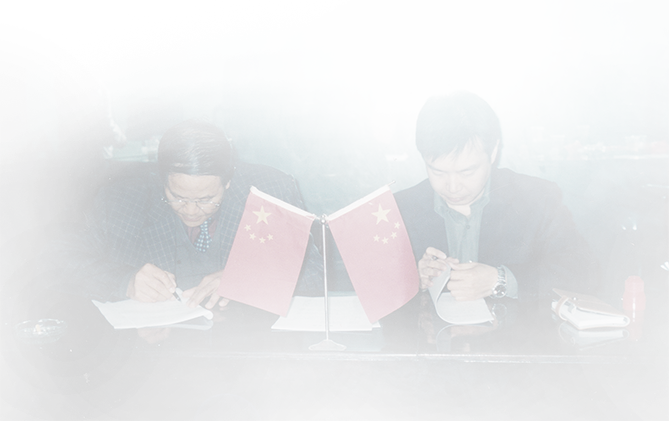
A historic signing moment from the 1970s, when HG’s founder helped drive the development of China’s food industry and began expanding into international markets.
Over the past decades, we have participated in the evolution of automated food production — from local factories to global turnkey projects across 100+ countries. That experience continues to shape every HG production line today.
Discover Our Heritage
Global Food Machinery &
Turnkey Factory Solutions

Building Long-Term Partnerships Through Shared Growth and Industrial Value.
Copyright © HG Industry Group All Rights Reserved
Food Machine Snack Food Processing Machinery

Unauthorized use of this website's content constitutes copyright infringement and may result in legal action.