 English
 中文简体
中文简体 日本語
日本語 русский
 عربى
عربى Український
 Español
 Français


Rice Cracker Production Line: A Complete Guide from Equipment Selection to Output Optimization
Content
- 1. Introduction: Market Overview and the Importance of a Rice Cracker Production Line
- 2. What Is a Rice Cracker Production Line?
- 3. How Does a Rice Cracker Production Line Work?
- 4. What Equipment Is Included in a Rice Cracker Production Line?
- 5. Rice Cracker Production Line Capacity and Production Options
- 6. Key Factors to Consider When Choosing a Rice Cracker Production Line
- 7. Automation Trends and Real-World Applications
- 8. Frequently Asked Questions (FAQ)
- 9. Conclusion: How to Choose the Right Rice Cracker Production Line Supplier
1. Introduction: Market Overview and the Importance of a Rice Cracker Production Line
Rice crackers have grown from a regional Asian snack into a global category, driven by rising demand for gluten-free, grain-based, and "clean label" snack alternatives. As demand expands across Asia, Central Asia, the Middle East, and Western markets, manufacturers are under pressure to scale output without sacrificing consistency, texture, or food safety compliance.
This is where a rice cracker production line becomes a strategic investment rather than a simple equipment purchase. A well-designed line determines not only how many kilograms of product a factory can turn out per hour, but also product uniformity, labor cost, waste rate, and ultimately profitability. For new entrants and expanding manufacturers alike, understanding how these lines work — and how to choose the right configuration — is the first step toward a successful investment.
2. What Is a Rice Cracker Production Line?
A rice cracker production line is an integrated system of machines that transforms raw rice (or rice flour) into finished, packaged rice crackers through a continuous, largely automated process. Unlike a single standalone machine, a production line links together multiple stages — mixing, extrusion or forming, steaming/cooking, drying, baking or frying, seasoning, and packaging — into one coordinated workflow.
Modern lines range from compact semi-automatic setups suited to small workshops, to fully automatic, PLC-controlled systems capable of producing several tons of rice crackers per day with minimal manual intervention. The core value of a production line, as opposed to isolated machines, is consistency: every cracker goes through the same temperature, moisture, and timing parameters, which is difficult to guarantee with manual or batch-based methods.
3. How Does a Rice Cracker Production Line Work?
A rice cracker production line follows a defined sequence of processing stages. While exact configurations vary by product type (baked vs. fried, plain vs. flavored, puffed vs. dense), the typical workflow includes:
Step 1: Raw Material Handling and Mixing
Rice (or a blend of rice flour, water, and other grains) is fed into a mixer where it is combined with water and, depending on the recipe, seasonings or additives to form a uniform dough or slurry. Precise water ratio control at this stage directly affects the texture of the final cracker.
Step 2: Extrusion or Forming
The mixed material is fed into an extruder or forming machine, which shapes it into sheets, strips, or individual cracker pieces using dies or rollers. Some lines use a cooking extruder that gelatinizes the rice starch under heat and pressure simultaneously with shaping, which shortens the process and improves texture uniformity.
Step 3: Steaming or Pre-Cooking
The formed dough is steamed to gelatinize the starch fully, giving the cracker its characteristic chewy-then-crisp structure. This step is critical: under-steaming leads to a dense, gummy product, while over-steaming can cause cracking during drying.
Step 4: Cooling and Aging (Tempering)
After steaming, the product is cooled and often rested for a period to allow moisture to redistribute evenly throughout the dough. This tempering stage stabilizes the structure before slicing or further shaping.
Step 5: Slicing/Cutting
For sheet-formed products, an automatic slicer cuts the cooled dough into uniform pieces — squares, rounds, or custom shapes — ready for drying.
Step 6: Drying
A multi-layer or tunnel dryer reduces the moisture content gradually and evenly. Drying speed and temperature must be carefully controlled; rapid drying causes surface cracking, while insufficient drying leads to poor shelf stability.
Step 7: Baking or Frying (Puffing Stage)
This is where the raw cracker transforms into its final crisp, puffed form. Baking ovens use controlled high heat to expand the product without added oil, producing a lighter, lower-fat cracker. Frying lines use continuous fryers to achieve a different texture and flavor profile, typical of traditional-style rice crackers.
Step 8: Seasoning
A seasoning/flavoring machine applies oil sprays, powder coatings, or liquid glazes (soy sauce, sesame, spicy, sweet, etc.) evenly across the crackers, typically using a rotating drum or conveyor-based tumbling system.
Step 9: Cooling and Packaging
Finished crackers pass through a cooling conveyor before entering an automatic weighing and packaging line, which seals individual or bulk packs, often with nitrogen flushing to extend shelf life.
This end-to-end flow can be fully continuous in automatic lines, or broken into semi-automatic stages with manual transfer between machines in smaller setups.
4. What Equipment Is Included in a Rice Cracker Production Line?
A complete rice cracker production line typically consists of the following core machines, each serving a specific function in the process described above:
- Mixer (Dough/Slurry Mixer): Blends rice flour, water, and additives into a homogeneous base material with consistent moisture content.
- Extruder / Forming Machine: Shapes the mixture into sheets or pieces; cooking extruders combine forming with starch gelatinization in a single step, reducing equipment footprint.
- Steamer / Cooker: Uses saturated steam to fully gelatinize starch, ensuring the correct chewy structure before drying.
- Cooling and Tempering Conveyor: Allows controlled cooling and moisture equilibration between processing stages.
- Slicing Machine: Cuts cooked dough sheets into uniform cracker shapes with minimal material waste.
- Multi-Layer Dryer (Tunnel Dryer): Gradually reduces moisture using zoned temperature and airflow control, often across 3–5 drying stages.
- Baking Oven or Continuous Fryer: The puffing/cooking stage that defines the final texture — tunnel ovens for baked, low-oil products; continuous fryers for traditional fried crackers.
- Seasoning Machine (Flavoring Drum/Conveyor): Applies oil, powder, or liquid seasoning evenly across the product surface.
- Cooling Conveyor: Brings the seasoned product down to packaging-safe temperature, preventing condensation inside the pack.
- Automatic Weighing and Packaging Machine: Measures precise portions and seals bags or containers, often integrated with nitrogen-flush or vacuum sealing for shelf-life extension.
- PLC Control System: In fully automatic lines, a centralized control system coordinates temperature, speed, and timing across all machines, allowing recipe presets and real-time monitoring.
Depending on the manufacturer's product range, additional equipment such as multi-flavor coating systems, metal detectors, or X-ray inspection units may also be integrated for quality control and food safety compliance.
5. Rice Cracker Production Line Capacity and Production Options
Production lines are generally offered across several capacity tiers to match different business scales:
- Small-Scale / Pilot Lines: Suited for startups, R&D, or small workshops; typically 50–150 kg/h, often semi-automatic with more manual handling between stages.
- Medium-Scale Lines: Common among growing manufacturers; typically 200–500 kg/h, with a higher degree of automation and PLC-assisted control on key stages like drying and baking.
- Large-Scale, Fully Automatic Lines: Designed for industrial-scale operations; capable of 500 kg/h to over 1–2 tons/h, with full PLC integration, minimal manual labor, and continuous 24-hour operating capability.
Capacity selection should be based not only on current demand but also projected growth over 3–5 years, since upgrading a line later often costs more than initially investing in slightly higher capacity or modular expansion capability.
6. Key Factors to Consider When Choosing a Rice Cracker Production Line
- Product Type and Flexibility: Confirm whether the line can handle your specific product (baked vs. fried, flavored vs. plain) and whether it can be adapted for new product lines in the future without major retrofitting.
- Automation Level: Balance upfront investment against labor cost savings — fully automatic lines cost more initially but reduce long-term labor dependency and improve consistency.
- Capacity and Scalability: Choose a line that matches near-term output needs while allowing for modular capacity increases as the business grows.
- Energy Source and Efficiency: Compare gas, electric, and steam-heated systems for operating cost, especially in regions with variable energy pricing.
- Food Safety and Certification: Verify the equipment meets relevant hygiene standards (e.g., stainless steel contact surfaces, CE certification) required for your target export markets.
- After-Sales Support and Spare Parts: Confirm the supplier offers installation support, operator training, and accessible spare parts — critical for minimizing downtime.
- Footprint and Facility Requirements: Assess factory space, power supply, and utility requirements (steam, compressed air) needed to support the line.
- Supplier Track Record: Prioritize suppliers with verifiable installation history and reference projects in markets similar to yours.
7. Automation Trends and Real-World Applications
From Traditional to Automated Production
The rice cracker industry has followed the same automation trajectory seen across the broader snack food sector. Traditional production — reliant on manual mixing, hand-forming, and batch frying — is labor-intensive, inconsistent, and difficult to scale. Over the past decade, manufacturers have increasingly shifted toward continuous, PLC-controlled lines that standardize temperature, timing, and moisture control at every stage.
Key automation trends shaping current production lines include:
- Integrated PLC control systems that allow operators to save and recall recipe parameters, reducing reliance on skilled manual operators for consistent output.
- Real-time monitoring and data logging, giving factory managers visibility into throughput, downtime, and quality metrics for continuous improvement.
- Modular line design, allowing manufacturers to add stages (such as multi-flavor coating or inspection systems) without replacing the entire line.
- Energy-efficient drying and baking systems, which reduce fuel or electricity consumption per unit of output — an increasingly important factor as energy costs rise globally.
- Reduced manual handling, both to lower labor costs and to meet stricter hygiene expectations in export-oriented production.
Real-World Application: A Rice Cracker Project in Uzbekistan
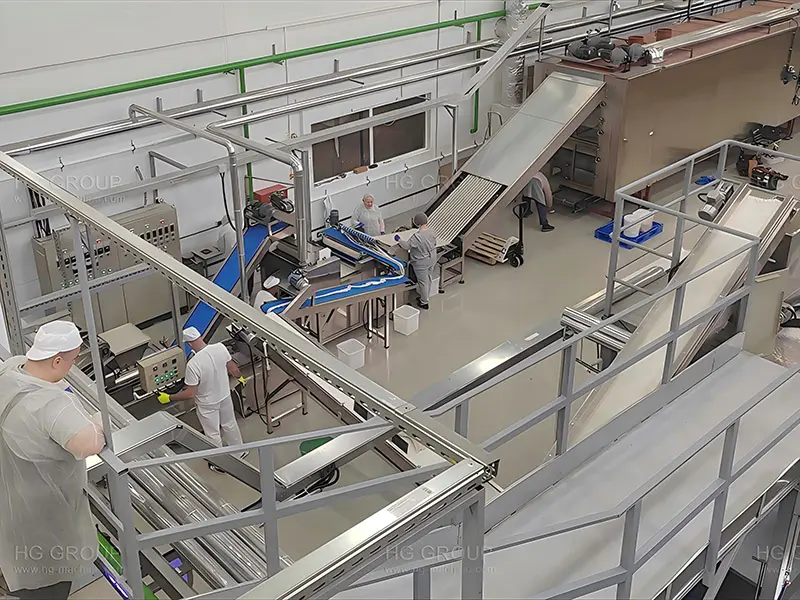
These trends are not just theoretical — they are already reshaping how manufacturers in emerging markets approach snack food production. As Central Asian countries like Uzbekistan build out their domestic food processing capacity, automated rice cracker lines are being deployed to meet both local demand and export ambitions, replacing older manual or semi-manual setups with continuous, PLC-controlled systems capable of consistent daily output.
This kind of project illustrates a common pattern: a manufacturer moves from small-batch, manual production to a mid-to-large-capacity automatic line in a single upgrade, aiming to improve product consistency while reducing dependence on manual labor. (For a detailed breakdown of the equipment configuration and project outcomes, see our full case study on the Uzbekistan rice cracker production line project.)
8. Frequently Asked Questions (FAQ)
How are rice crackers made?
Rice crackers are made by mixing rice flour with water into a dough, forming it into sheets or pieces, steaming to gelatinize the starch, drying to reduce moisture, then baking or frying to achieve the final crisp texture, followed by seasoning and packaging.
What machines are used to make rice crackers?
A complete line typically includes a mixer, extruder or forming machine, steamer, slicer, multi-layer dryer, baking oven or fryer, seasoning machine, and automatic packaging equipment, coordinated by a PLC control system in automatic setups.
What capacity can a rice cracker production line achieve?
Capacity ranges widely, from around 50–150 kg/h for small semi-automatic lines to over 1–2 tons/h for large, fully automatic industrial lines. The right capacity depends on current demand and projected growth.
Can one line produce different rice cracker products?
Yes — many modern lines are designed with adjustable forming dies, flexible seasoning systems, and programmable settings that allow manufacturers to switch between baked and fried products, or between different shapes and flavors, with minimal changeover time.
How much does a rice cracker production line cost?
Cost depends heavily on capacity and automation level — semi-automatic small-scale lines are significantly less expensive than fully automatic industrial systems. Because pricing varies by configuration, most manufacturers request a customized quote based on target capacity, product type, and factory conditions.
What is the difference between a baked and a fried rice cracker line?
Baked lines use tunnel ovens to puff the cracker with hot air, producing a lower-oil, lighter product. Fried lines use continuous fryers, resulting in a different texture and richer flavor typical of traditional-style rice crackers. Some manufacturers install both stages to offer product variety from one facility.
How long does it take to install and commission a rice cracker production line?
Installation and commissioning timelines vary by line complexity and factory readiness, but suppliers typically provide on-site or remote installation support along with operator training to bring the line to full production speed.
9. Conclusion: How to Choose the Right Rice Cracker Production Line Supplier
Choosing a rice cracker production line is ultimately a decision about long-term production reliability, not just equipment specifications. The right supplier should offer more than machinery — they should provide process expertise, capacity planning support, and after-sales service that keeps the line running at full efficiency for years.
When evaluating suppliers, look beyond the price quote: examine their installation track record, ask for references from comparable projects (such as the Uzbekistan case above), and confirm they can support your specific product formulation and target market's certification requirements. A well-chosen production line — matched to your capacity needs and backed by a responsive supplier — is what turns a snack food concept into a scalable, profitable business.
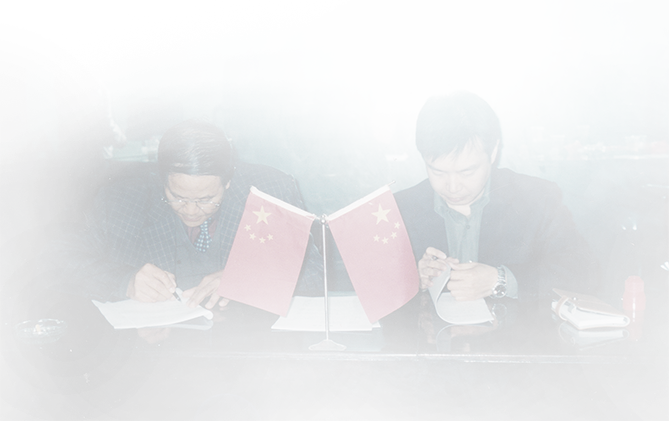
A historic signing moment from the 1970s, when HG’s founder helped drive the development of China’s food industry and began expanding into international markets.
Over the past decades, we have participated in the evolution of automated food production — from local factories to global turnkey projects across 100+ countries. That experience continues to shape every HG production line today.
Discover Our Heritage
Global Food Machinery &
Turnkey Factory Solutions

Building Long-Term Partnerships Through Shared Growth and Industrial Value.
Copyright © HG Industry Group All Rights Reserved
Food Machine Snack Food Processing Machinery

Unauthorized use of this website's content constitutes copyright infringement and may result in legal action.