 English
 中文简体
中文简体 日本語
日本語 عربى
عربى русский
 Español
 Український
 Français

Automatic Filled Biscuit Production Line
HG Automatic Filled Biscuit Production Line
Fully Automatic Industrial Filled Biscuit Processing Solution
HG Group Automatic Filled Biscuit Production Line is a fully automatic food processing solution designed for manufacturing high-quality filled biscuits, sandwich biscuits, cream biscuits, chocolate-filled biscuits, jam-filled biscuits, and various bakery snack products for industrial biscuit factories and global food brands.
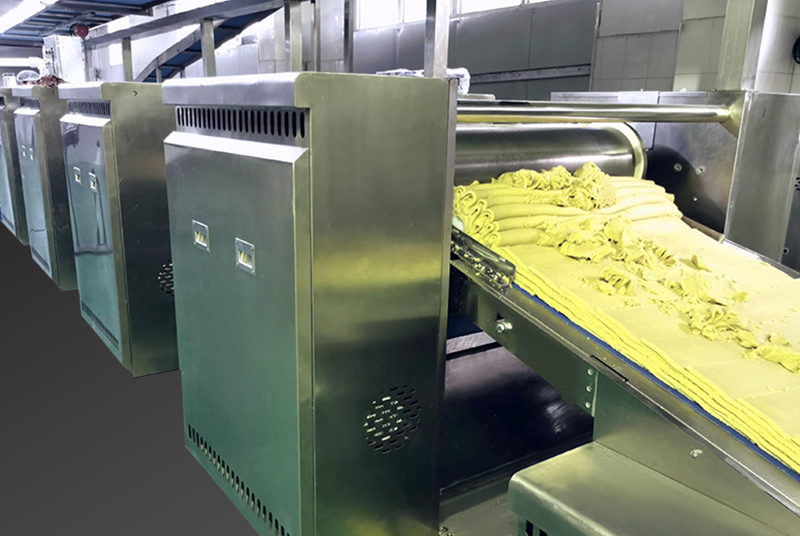
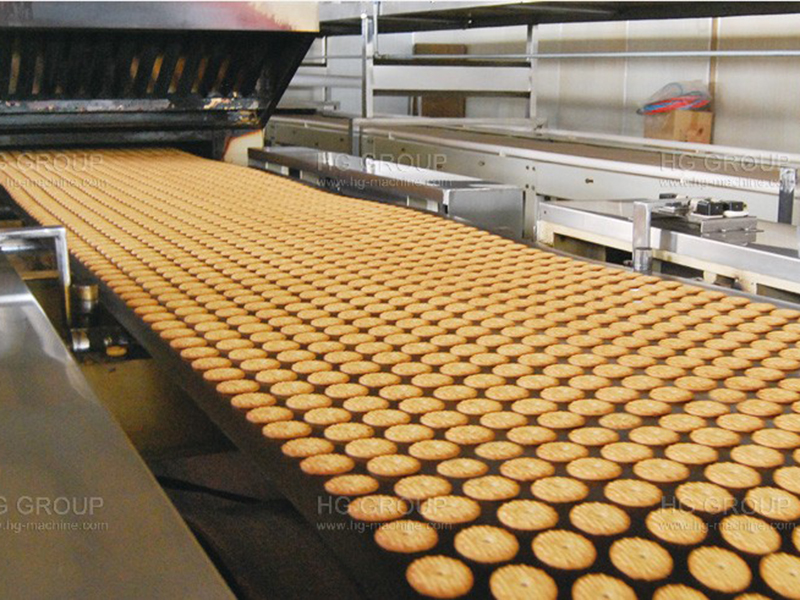
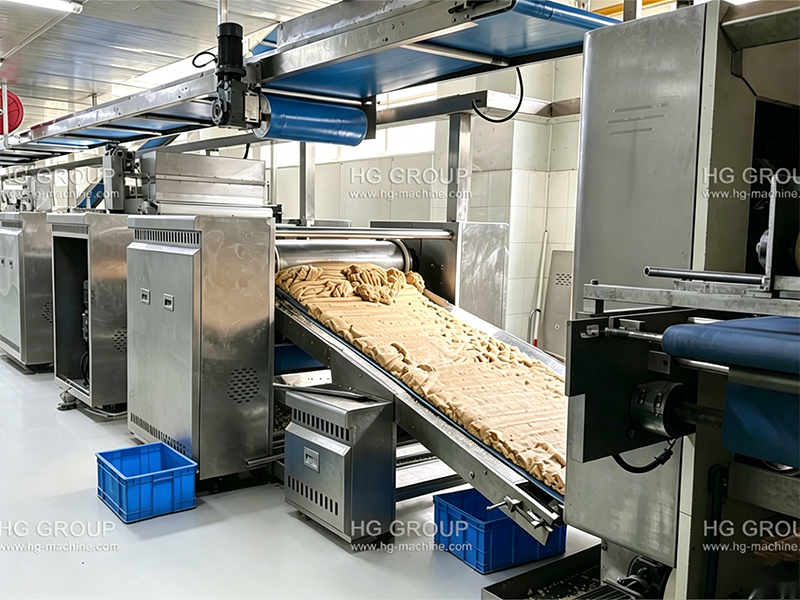
The production line can automatically complete dough mixing, dough feeding, sheeting, moulding, baking, cooling, cream filling, sandwiching, stacking, and packaging processes, producing biscuits with crispy texture, stable filling quantity, uniform appearance, and consistent product quality.
With the continuous growth of the global snack food market, filled biscuits and sandwich biscuits have become one of the popular bakery snack categories worldwide. HG combines advanced European biscuit processing technologies with decades of food machinery manufacturing experience to provide stable, energy-efficient, and highly automated biscuit production solutions for modern food factories.
The entire production line is manufactured with 304 food-grade stainless steel and equipped with international-brand electrical components to ensure hygienic production, stable operation, and long machine service life.
Main Process of Filled Biscuit Production
The HG Automatic Filled Biscuit Production Line mainly includes:
* Dough mixing system
* Dough feeding system
* Sheeting system
* Biscuit forming system
* Baking oven system
* Cooling conveyor system
* Cream filling system
* Sandwiching system
* Stacking system
* Packaging system
The complete production process is controlled by PLC automatic control systems to ensure stable operation and high production efficiency.
Advantages of HG Filled Biscuit Production Line
1. Fully Automatic Production
The entire production line realizes:
* Automatic dough mixing
* Automatic dough feeding
* Automatic biscuit forming
* Automatic baking
* Automatic cooling
* Automatic cream filling
* Automatic sandwiching
* Automatic packaging
This greatly reduces labor costs and improves production efficiency.
2. Stable Product Quality
HG adopts advanced biscuit processing technology to ensure:
* Uniform biscuit thickness
* Crispy texture
* Stable filling quantity
* Accurate sandwiching
* Consistent final product quality
Suitable for industrial continuous production.
3. Flexible Product Solutions
HG filled biscuit production lines can produce:
* Sandwich biscuits
* Cream biscuits
* Chocolate-filled biscuits
* Jam-filled biscuits
* Vanilla cream biscuits
* Double-color sandwich biscuits
* Customized filled biscuit products
Different biscuit shapes, sizes, and filling flavors can be customized according to customer requirements.
4. High-Speed Industrial Production
The production line is designed for continuous industrial production and suitable for large-scale biscuit factories and snack food manufacturers.
5. Hygienic Food-Grade Design
All food-contact parts are manufactured with 304 food-grade stainless steel, complying with international food hygiene standards and ensuring easy cleaning and maintenance.
6. Intelligent PLC Control System
HG adopts intelligent PLC control systems and energy-saving baking technology to improve operational stability and reduce energy consumption.
Packaging Solutions
HG provides complete packaging solutions, including:
* Pillow packing machine
* Vertical packing machine
* Automatic feeding system
* Automatic stacking system
* Automatic cartoning system
Suitable for supermarkets, convenience stores, export markets, and branded biscuit products.
HG Turnkey Factory Solution
HG provides complete turnkey factory solutions, including:
* Factory layout design
* Machine manufacturing
* Installation & commissioning
* Engineer training
* Recipe support
* Packaging solutions
* Long-term after-sales service
* Spare parts support
HG engineers can also help customers optimize:
* Biscuit texture
* Filling formulas
* Baking processes
* Production efficiency
* Packaging solutions
Global Project Experience
HG Group has more than 50 years of food machinery manufacturing experience and has exported biscuit and bakery processing equipment to more than 100 countries worldwide.
HG filled biscuit production lines are widely used in:
* Biscuit factories
* Bakery snack food factories
* Food processing plants
* Export food companies
* Global snack food brands
Physical running machines are available in HG factories, and customers worldwide are welcome to visit for machine inspection and product testing.
Read More
Why Choose HG Filled Biscuit Production Line?
HG Filled Biscuit Production Line is designed for manufacturers who want to produce high-value biscuit products with stable quality and flexible product variety. The line supports cream-filled, chocolate-filled, jam-filled, fruit-filled, sandwich, and other center-filled biscuit products.
With precise filling control, stable dough forming, synchronized baking, and complete process engineering support, HG helps customers reduce product waste, improve consistency, and build a more profitable biscuit factory.
From recipe testing to factory layout, equipment manufacturing, installation, training, and after-sales service, HG provides a complete turnkey solution for industrial filled biscuit production.
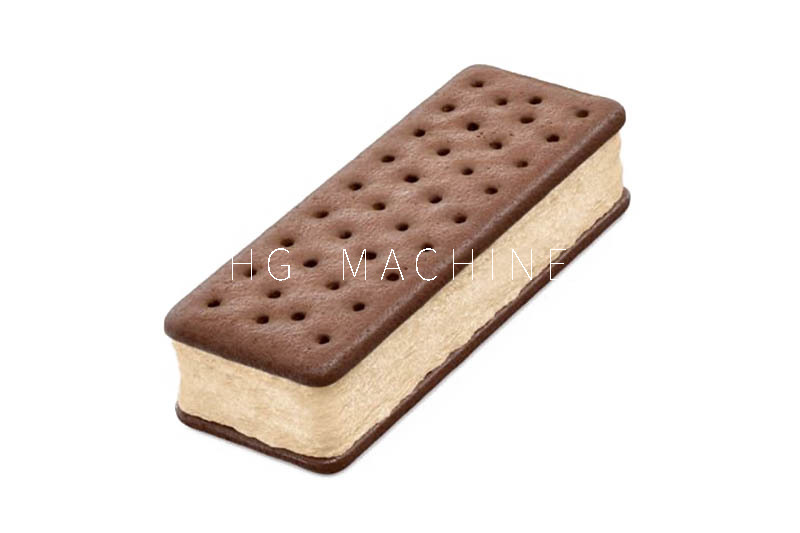
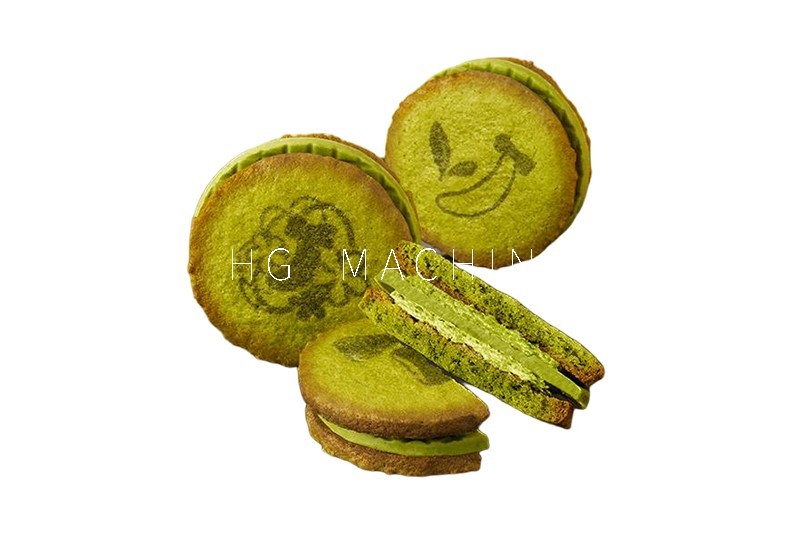

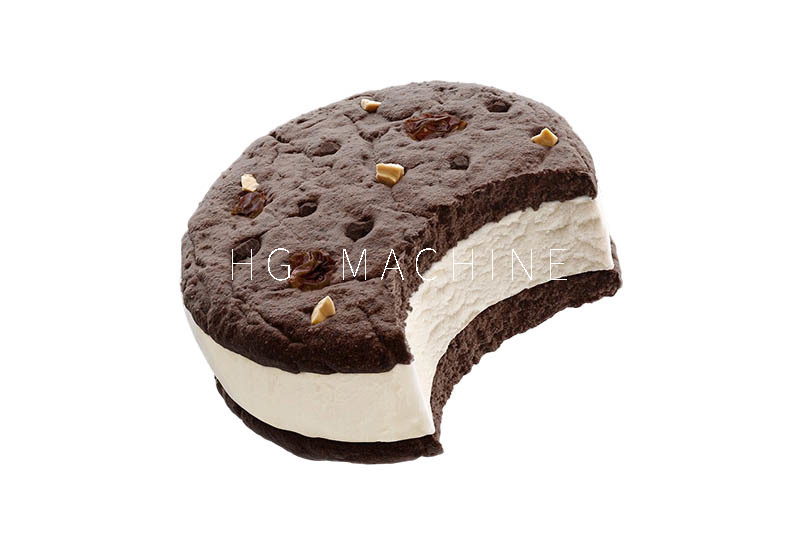
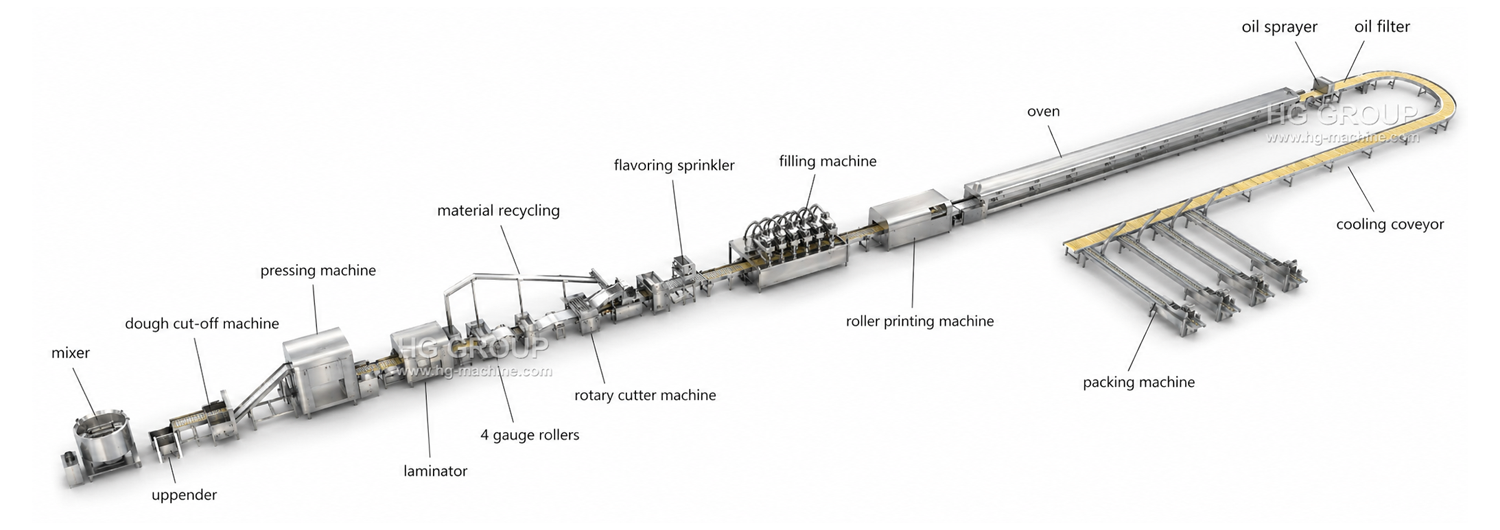
HG filled biscuit production line is designed for stable, precise and high-efficiency production of cream-filled, chocolate-filled, jam-filled and other filled biscuit products. The line integrates dough forming, accurate filling, baking, cooling and optional packaging connection into one continuous production process.
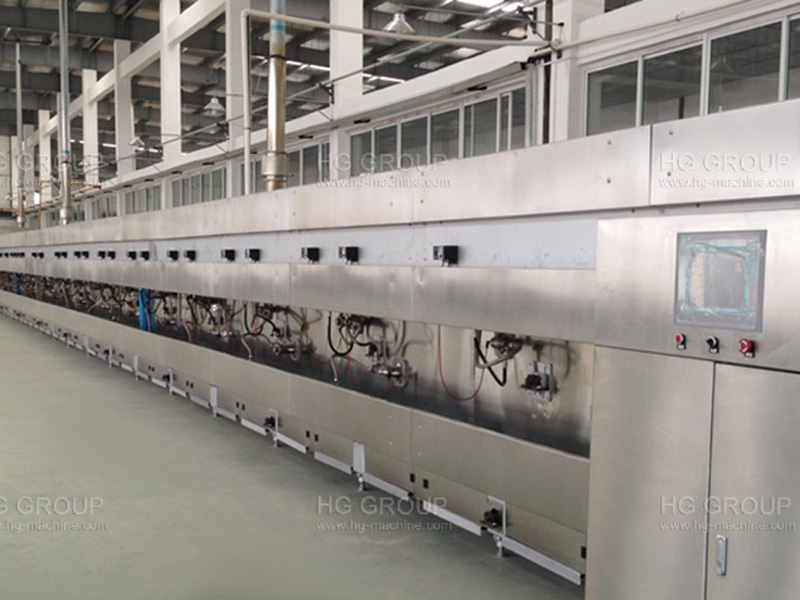
With precise filling control, synchronized forming system and stable tunnel oven baking, the line helps manufacturers achieve consistent product weight, uniform appearance, better texture and reduced material waste. It is suitable for both medium-scale factories and large industrial biscuit production plants.
HG provides not only machines, but a complete process solution including factory layout, product testing, recipe support, installation, commissioning, operator training and long-term service.
Hard Biscuit丨Soft Biscuit丨Sandwich Biscuit丨Crackers丨Cookies、filled biscuit、filled cookies
-
 Manual or semi-automatic production
 -
 Unstable filling weight
 -
 Filling leakage during forming or baking
 -
 Uneven dough thickness
 -
 Poor synchronization between forming and filling
 -
 High product rejection rate
 -
 Difficult to control filling viscosity
 -
 Biscuit shape easily deforms
 -
 Inconsistent baking color and texture
 -
 High dependence on skilled workers
 -
 Slow product changeover
 -
 Limited product variety
 -
 Hygiene risk from manual handling
 -
 Supplier only provides machines
 -
 Low-margin ordinary biscuit production
-
Fully automatic filled biscuit production line
-
 Precise filling weight control
 -
 Cleaner filling position and better sealing
 -
 Stable dough sheeting and forming
 -
Synchronized forming, filling, baking, cooling, and packaging connection
-
 Lower waste and more stable finished product quality
 -
 Filling system matched with cream, jam, chocolate, and other fillings
 -
Better product shape consistency
-
Optimized tunnel oven temperature curve
-
 Reduced labor dependence through automation
 -
Flexible product adjustment for different sizes, shapes, and fillings
-
 More high-value SKUs from one production system
 -
More hygienic continuous production process
-
 HG provides process engineering, layout, installation, training, and after-sales support
 -
Higher-value filled biscuit production with stronger market competitiveness
-
 50+ Years Since 1975
Engineering Experience & Proven manufacturing experience.
50+ Years Since 1975
Engineering Experience & Proven manufacturing experience.
-
 Turnkey Factory Solutions
Layout, machines, installation and training and startup.
Turnkey Factory Solutions
Layout, machines, installation and training and startup.
-
 Faster delivery than Europe
Faster project delivery compared with many premium suppliers..
Faster delivery than Europe
Faster project delivery compared with many premium suppliers..
-
 Strong ROI Performance
Lower investment cost with strong production performance.
Strong ROI Performance
Lower investment cost with strong production performance.
-
 Full Startup Support
Recipe, training and commissioning included.
Full Startup Support
Recipe, training and commissioning included.
-
 Worldwide After-Sales Service
Remote service, spare parts and engineer assistance worldwide..
Worldwide After-Sales Service
Remote service, spare parts and engineer assistance worldwide..
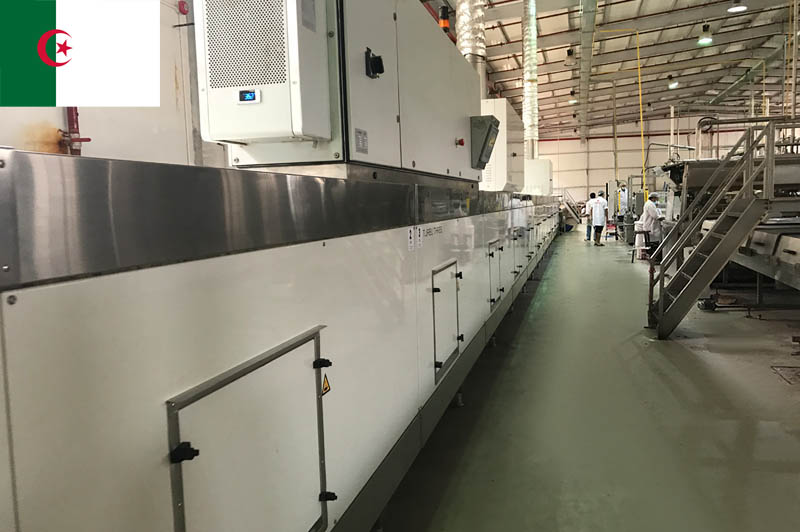
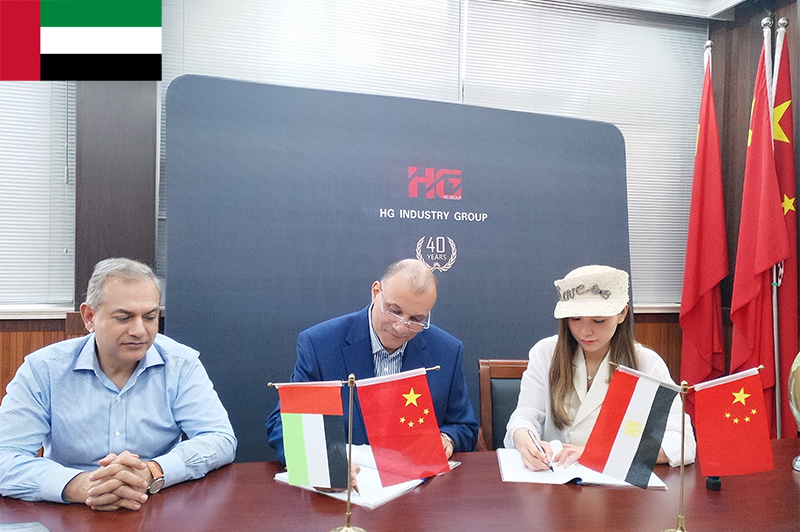
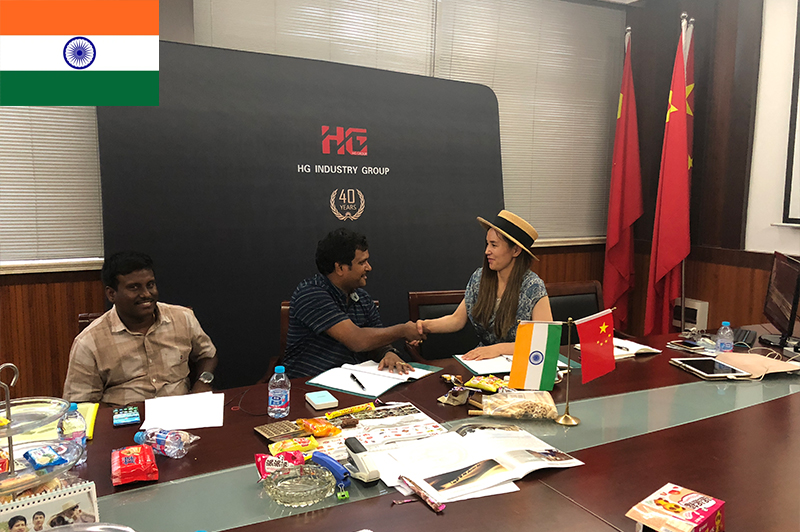
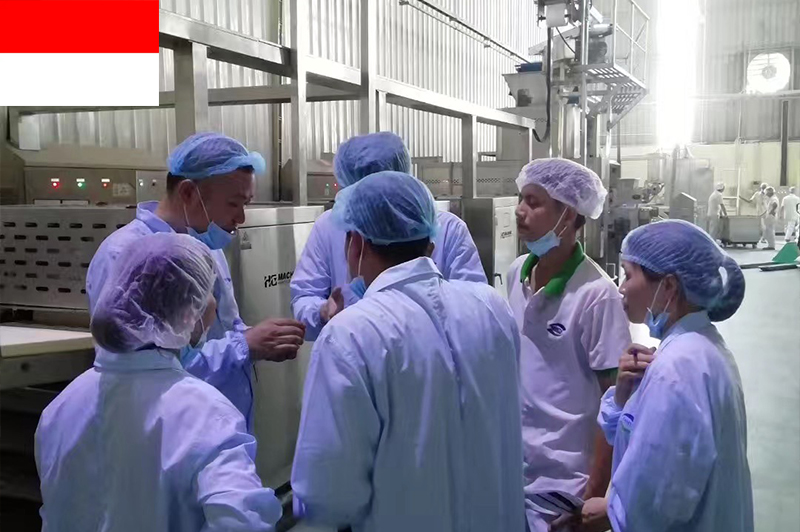
With 50+ years of manufacturing heritage since 1975, HG is a trusted global supplier of Automatic Filled Biscuit Production Line and solutions, serving customers in 100+ countries across the Middle East, Europe, Asia, Africa and Latin America.
HG provides turnkey project support from factory layout planning, machine manufacturing and utility guidance to installation, commissioning, operator training and long-term after-sales service.
Built with high-quality components, food-grade stainless steel construction and reliable control systems, HG lines are engineered for stable 24/7 operation, easy maintenance and long service life.
With strong customization capability, HG can design solutions based on your product type, target capacity, factory space, local utilities and investment budget.
Trusted by global food manufacturers, HG helps customers launch profitable bakery projects with faster return on investment and long-term growth.
CE / ISO Standards | Global Installation Support | Custom Engineering | Turnkey Factory Expertise
HG production lines have been successfully supplied to customers across the Middle East, Europe, Asia, Africa and Latin America. With extensive export experience, HG supports international projects with machine manufacturing, shipping coordination, overseas installation and long-term technical service. Trusted in Saudi Arabia, UAE, Algeria, Egypt, Russia, India, Indonesia, Mexico and 100+ countries worldwide.















HG Automatic Filled Biscuit Production Line FAQ
Q1: What is a filled biscuit production line?
A filled biscuit production line is a fully automatic food processing system used to manufacture cream biscuits, chocolate-filled biscuits, jam-filled biscuits, sandwich biscuits, and other bakery snack products through dough mixing, forming, baking, filling, sandwiching, and packaging processes.
Q2: What products can the HG filled biscuit production line produce?
HG filled biscuit production lines can produce:
* Sandwich biscuits
* Cream biscuits
* Chocolate-filled biscuits
* Jam-filled biscuits
* Vanilla cream biscuits
* Double-color sandwich biscuits
* Customized filled biscuit products
Different biscuit sizes, shapes, and filling flavors can be customized.
Q3: Is the HG filled biscuit production line fully automatic?
Yes. The entire production line is fully automatic, including:
* Automatic dough mixing
* Automatic dough feeding
* Automatic biscuit forming
* Automatic baking
* Automatic cooling
* Automatic filling injection
* Automatic sandwiching
* Automatic packaging
The PLC automatic control system helps reduce labor costs and improve production efficiency.
Q4: What are the advantages of HG filled biscuit production lines?
HG filled biscuit production lines offer:
* High automation
* Stable continuous production
* Uniform biscuit thickness
* Stable filling quantity
* Accurate sandwiching
* Consistent product quality
* Easy operation and maintenance
* Long machine service life
Suitable for modern industrial food factories.
Q5: What production capacities are available?
HG can provide different production capacities, including:
* Small-scale filled biscuit production lines
* Medium-scale industrial solutions
* Large-scale continuous production factories
Customized solutions are also available.
Q6: What processing technology does HG use?
HG adopts mature filled biscuit processing technologies, including:
* Dough mixing technology
* Dough sheeting technology
* Rotary cutting or rotary moulding technology
* Tunnel baking technology
* Automatic filling injection technology
* Automatic sandwiching technology
Ensuring stable product quality.
Q7: Can the HG filled biscuit production line produce different flavors?
Yes. HG can provide different filling and flavor solutions, including:
* Chocolate flavor
* Cream flavor
* Strawberry flavor
* Vanilla flavor
* Cheese flavor
* Customized local flavors
Q8: Can HG provide recipe support?
Yes. HG provides professional recipe development support, including:
* Biscuit recipes
* Filling formulas
* Baking process optimization
* Product texture improvement
* Production process guidance
Helping customers achieve stable production quickly.
Q9: What material is used for the machine?
The entire production line is manufactured with 304 food-grade stainless steel, meeting international food hygiene standards and ensuring easy cleaning, corrosion resistance, and long service life.
Q10: Can HG provide packaging solutions?
Yes. HG provides complete packaging systems, including:
* Pillow packing machine
* Vertical packing machine
* Automatic feeding system
* Automatic arranging system
* Automatic cartoning system
Suitable for supermarkets, convenience stores, and export markets.
Q11: How much labor can be saved with an automatic filled biscuit production line?
Compared with traditional manual production, HG fully automatic filled biscuit production lines can reduce labor costs by up to 60–70%.
Q12: Which industries use filled biscuit production lines?
HG filled biscuit production lines are widely used in:
* Biscuit factories
* Bakery snack food factories
* Food processing plants
* Export food companies
* Global snack food brands
Q13: Can HG provide turnkey factory solutions?
Yes. HG provides complete turnkey factory solutions, including:
* Factory layout design
* Machine manufacturing
* Installation & commissioning
* Engineer training
* Recipe support
* Packaging solutions
* Long-term after-sales service
Q14: What is the ROI period for a filled biscuit factory?
Most customers can achieve ROI within 6–12 months depending on:
* Production scale
* Labor costs
* Energy costs
* Product selling prices
* Market demand
Q15: Which countries already use HG filled biscuit production lines?
HG food processing equipment has been exported to more than 100 countries, including:
* Saudi Arabia
* UAE
* Algeria
* Egypt
* India
* Indonesia
* Russia
* Turkey
* Mexico
* Nigeria
Q16: Why choose HG filled biscuit production lines?
HG offers:
* Mature filled biscuit processing technology
* European-standard engineering
* Stable machine quality
* High automation systems
* Energy-saving baking technology
* Turnkey factory solutions
* Global installation support
* Long-term after-sales service
Q17: Can customers visit the HG factory?
Yes. HG factories have physical running production lines available for customer visits, machine inspections, and product testing.
Q18: Does HG provide technical training and support?
Yes. HG provides professional technical support, including:
* Equipment operation training
* Equipment maintenance training
* Filling process guidance
* Baking process optimization
* Packaging solution support
Helping customers start stable production quickly.
Q19: What types of factories are suitable for HG filled biscuit production lines?
HG filled biscuit production lines are suitable for:
* Biscuit factories
* Bakery snack food factories
* Food processing plants
* Export food companies
* Large industrial food factories
Q20: What makes HG filled biscuit production lines different?
HG focuses not only on machinery manufacturing, but also on helping customers build profitable filled biscuit factories through mature processing technology, stable production systems, recipe support, and long-term service capability.
Industry Knowledge
Understanding the Filled Biscuit Production Line
A filled biscuit production line is a fully integrated industrial system designed to manufacture sandwich biscuits, center-filled biscuits, and similar products at scale with consistent quality. It combines dough preparation, forming, baking, filling, sandwiching, cooling, and packaging into a continuous and automated process. For food manufacturers, the primary goal of such a line is not only high output, but also precise control over texture, taste, hygiene, and product uniformity.
Core Process Flow of Filled Biscuit Manufacturing
A standard filled biscuit production line follows a logical, tightly controlled process flow. Each stage directly impacts the final product quality and production efficiency.
- Dough mixing and resting to ensure gluten development and stable sheetability
- Dough sheeting, laminating, and rotary cutting or molding for uniform biscuit shape
- Multi-zone tunnel baking with precise temperature and humidity control
- Cooling and alignment before cream or chocolate filling application
- Automatic sandwiching, pressing, and secondary cooling
- Inline inspection and packaging preparation
Key Equipment Modules and Their Practical Roles
Each module in a filled biscuit production line must work in coordination to avoid bottlenecks and quality loss. Equipment selection should be based on product type, capacity targets, and hygiene requirements.
Dough Mixing and Feeding System
Industrial mixers are designed to handle fat-rich and sugar-heavy biscuit doughs without overheating. Accurate ingredient dosing and controlled mixing time help ensure consistent dough structure, which directly affects biscuit spread, bite, and surface finish.
Forming and Baking System
Rotary molders or cutters shape the dough before it enters the tunnel oven. Modern ovens use multi-zone temperature profiles to balance moisture evaporation and color development, preventing warping or excessive brittleness.
Cream Filling and Sandwiching Unit
The filling system must deliver stable, repeatable cream weight and thickness. Servo-controlled depositor heads and synchronized sandwiching units ensure alignment accuracy, even at high speeds.
Typical Product Types Supported by One Line
A well-designed filled biscuit production line can be configured to produce a wide range of products with minimal changeover time.
| Product Type | Filling Options | Typical Market |
| Sandwich Biscuits | Vanilla, chocolate, fruit cream | Mass retail |
| Center-Filled Biscuits | Chocolate, jam, milk cream | Children and snack foods |
| Premium Filled Biscuits | Low-sugar or functional fillings | High-end and export markets |
Automation, Hygiene, and Quality Control
Modern filled biscuit production lines rely heavily on automation to reduce labor costs and minimize contamination risks. Food-contact parts are typically made of stainless steel, with quick-release designs to support fast cleaning and maintenance.
- PLC and servo control for synchronized line speed
- Inline metal detection and weight inspection
- Closed filling systems to prevent cream oxidation
Why Equipment Experience Matters in Biscuit Lines
Filled biscuit production involves long-term continuous operation, often exceeding 20 hours per day. Equipment stability, energy efficiency, and spare-part availability directly influence production cost and downtime risk. Choosing a supplier with deep industry experience is critical for sustainable operation.
HG Industry’s Expertise in Filled Biscuit Production Lines
With over 50 years of experience in food machinery, HG Industry Group provides complete filled biscuit production line solutions tailored to different markets and capacity requirements. Its manufacturing arm, HG Food Machinery, established in 1975, has evolved into a global industrial network with seven machinery branches, two food laboratories, and an industrial university.
HG Industry integrates advanced R&D from Japan, intelligent manufacturing in Shanghai, and global service support through its international trading platform. This structure allows the company to deliver not only equipment, but also process optimization, product testing, and turnkey factory solutions.
Global Application and Customer Validation
HG filled biscuit production lines have been exported to more than 100 countries and regions, including Japan, the United States, Australia, Russia, the Middle East, South Asia, and Southeast Asia. Long-term cooperation with international brands such as Pringles, MAMEE, Britannia, Want Want, and CBL reflects the reliability and performance of HG equipment in real production environments.
Practical Considerations Before Investing in a Line
Before selecting a filled biscuit production line, manufacturers should clearly define capacity targets, product positioning, and future expansion plans. A scalable design, reliable technical support, and proven references are often more valuable than short-term cost savings.
- Confirm compatibility with local raw materials
- Evaluate energy consumption and maintenance needs
- Choose suppliers with global service capability
A professionally designed filled biscuit production line is not just a manufacturing asset, but a long-term foundation for brand growth, product innovation, and global market expansion.
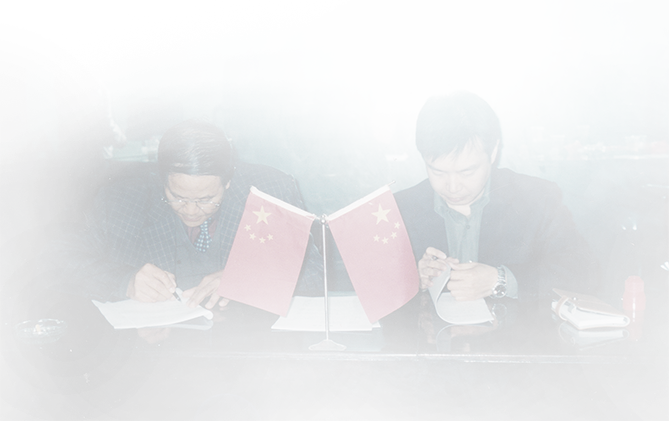
A historic signing moment from the 1970s, when HG’s founder helped drive the development of China’s food industry and began expanding into international markets.
Over the past decades, we have participated in the evolution of automated food production — from local factories to global turnkey projects across 100+ countries. That experience continues to shape every HG production line today.
Discover Our Heritage
Global Food Machinery &
Turnkey Factory Solutions

Building Long-Term Partnerships Through Shared Growth and Industrial Value.
Copyright © HG Industry Group All Rights Reserved
Food Machine Snack Food Processing Machinery

Unauthorized use of this website's content constitutes copyright infringement and may result in legal action.