 English
 中文简体
中文简体 日本語
日本語 русский
 عربى
عربى Український
 Español
 Français


Wafer Stick Machine Guide: How It Works & What to Look for Before Buying
Content
- What Is a Wafer Stick Machine and Why Businesses Use One
- How the Production Process Works Step by Step
- Key Components to Evaluate Before Purchasing
- Comparing Output Capacity by Machine Type
- 2-Head vs 4-Head Wafer Stick Machine: Complete Comparison
- Common Maintenance Practices That Extend Equipment Life
- Questions to Ask a Manufacturer Before You Buy
- Final Thoughts on Choosing the Right Equipment
What Is a Wafer Stick Machine and Why Businesses Use One
A wafer stick machine is processing equipment used to produce hollow, tube-shaped wafer snacks — the kind often filled with cream and sold in boxes at supermarkets. Unlike flat wafer sheets that need to be cut and layered by hand, a wafer stick production line automates the entire process: mixing batter, baking it into thin rolled tubes, cutting them to length, and in many cases filling and packaging them as well. For bakeries, snack manufacturers, and confectionery factories looking to scale up production without expanding labor costs, this type of equipment has become a standard investment. It reduces manual handling, improves consistency between batches, and allows a single line to run continuously for hours with minimal supervision.
How the Production Process Works Step by Step
Understanding the workflow of an automatic wafer stick machine helps buyers evaluate which features actually matter for their operation. While designs vary between manufacturers, the core process generally follows the same sequence.
Batter Mixing and Feeding
The batter, typically made from flour, water, and sometimes sugar or starch, is mixed in a separate tank and then pumped into the baking unit through a metering system. Consistency in batter viscosity is critical here — too thick, and the rolling process jams; too thin, and the wafer won't hold its shape during baking.
Baking and Rolling
The batter is deposited onto rotating heated rollers or molds, where it bakes into a thin sheet within seconds. While still warm and pliable, the sheet is rolled around a metal rod or guide to form the signature hollow tube shape. This baking-and-rolling stage is the heart of the wafer stick maker, and the temperature control here directly affects color, crispness, and shelf life.
Cutting and Filling
Once rolled, the wafer tubes are cut into uniform lengths by an automated cutting mechanism. Many wafer stick equipment setups include an inline filling unit that injects cream or other fillings directly into the hollow tubes before final cutting, eliminating the need for a separate filling machine.
Cooling and Packaging
The finished sticks pass through a cooling conveyor to set the filling and firm up the wafer structure before moving to packaging. Some production lines integrate counting and bundling systems that group sticks by box quantity automatically.
Key Components to Evaluate Before Purchasing
Not all wafer stick machines are built the same way, and the differences in components can significantly affect output quality, maintenance costs, and long-term reliability. Buyers should pay close attention to the following areas during equipment selection.
- Heating system type — electric, gas, or oil-heated molds, each with different energy costs and temperature stability
- Mold material and coating — affects how easily baked wafer releases without sticking or tearing
- Number of baking plates or molds — directly determines hourly output capacity
- Filling pump precision — controls consistency in cream quantity per stick, which affects product weight and cost control
- Control panel and automation level — manual, semi-automatic, or fully automatic operation modes
- Material of contact parts — food-grade stainless steel is essential for hygiene compliance
Comparing Output Capacity by Machine Type
Wafer stick machines are typically categorized by their production scale, ranging from small workshop units to large industrial lines. Choosing the right capacity depends on current demand and expected growth, since underbuying leads to bottlenecks while overbuying ties up unnecessary capital.
| Machine Type | Typical Output | Best Suited For |
|---|---|---|
| Small Workshop Unit | 50–100 kg/day | Startups, small bakeries testing the market |
| Mid-Size Semi-Automatic Line | 200–500 kg/day | Growing manufacturers with steady regional demand |
| Fully Automatic Industrial Line | 1–3 tons/day or more | Large-scale factories supplying retail or export markets |
2-Head vs 4-Head Wafer Stick Machine: Complete Comparison
One of the most common upgrade decisions manufacturers face isn't just choosing between machine "sizes" in the abstract — it's choosing between the number of baking heads (also called molding heads or baking stations) on the line. The head count directly determines how many wafer tubes are formed per baking cycle, which is why it's often the deciding factor between a 2-head machine and a 4-head machine. Understanding the trade-offs between these two configurations helps buyers avoid overspending on capacity they don't need, or underbuying equipment that will bottleneck growth within a year or two.
What "Head Count" Actually Means
Each baking head on a wafer stick machine represents an independent set of heated molds that bake, roll, and release wafer tubes during a single machine cycle. A 2-head machine produces two tubes per cycle; a 4-head machine produces four. Because cycle time (the baking duration per batch) stays roughly the same regardless of head count, doubling the heads roughly doubles the output — but it also changes the machine's footprint, power draw, and mechanical complexity.
Side-by-Side Comparison
| Factor | 2-Head Machine | 4-Head Machine |
|---|---|---|
| Output per cycle | 2 wafer tubes | 4 wafer tubes |
| Typical daily output | 100–200 kg/day | 250–450 kg/day |
| Footprint | Compact, fits smaller production rooms | Larger footprint, requires more floor space |
| Power consumption | Lower overall draw | Higher overall draw, though output per kWh is often more efficient |
| Upfront investment | Lower capital cost | Higher capital cost |
| Labor requirement | Can often run with 1 operator | May need 1–2 operators depending on packaging setup |
| Maintenance complexity | Simpler, fewer moving parts to service | More components (double the molds, sensors, and heating elements) to inspect and maintain |
| Best suited for | Startups, small bakeries, businesses testing new flavors or markets | Established manufacturers with consistent demand looking to scale without adding a second line |
| Cost per kg produced | Slightly higher, since fixed costs are spread over less output | Generally lower, due to better economy of scale |
| Downtime risk if one head fails | Line typically stops entirely | Some models allow partial operation on remaining heads |
Why Businesses Upgrade from 2-Head to 4-Head
The decision to move from a 2-head to a 4-head machine is usually driven by demand outgrowing capacity rather than a desire for more capability on paper. Common triggers include:
- Consistent order backlogs — if a 2-head line is running at or near full capacity for several weeks in a row, upgrading avoids missed delivery windows
- New retail or export contracts — larger buyers often require volume commitments that a 2-head line can't sustain long-term
- Labor cost pressure — running two separate 2-head lines to hit volume targets usually requires more staff than running one 4-head line at the same output
- Product diversification — some 4-head models allow different fillings or flavors to run across separate head groups, useful for businesses expanding their product range
Why Some Businesses Stay with 2-Head Machines
A 4-head machine isn't automatically the "better" choice. It makes sense to stay with a 2-head configuration when:
- Production volume is stable and doesn't require the added capacity
- Floor space or utility capacity (especially for gas or oil-heated systems) is limited
- Capital is better allocated elsewhere in the business, such as packaging automation or cold storage
- The business is still validating product-market fit and doesn't want to lock in high fixed costs
Questions to Ask When Comparing the Two
- What is the tested (not theoretical) output difference between the 2-head and 4-head version of this specific model?
- How much does the footprint and installation cost increase with the 4-head version?
- Can the 4-head machine run on partial capacity if one head needs repair, or does the whole line stop?
- What is the price difference per unit of output (cost per kg/day of capacity), not just the sticker price?
- Is there a modular upgrade path — can a 2-head machine be expanded to 4 heads later, or is it a separate purchase?
Common Maintenance Practices That Extend Equipment Life
Like any food processing equipment, a wafer stick machine requires regular upkeep to maintain consistent output quality and avoid costly downtime. Operators who follow a structured maintenance routine typically see fewer mechanical failures and longer service life from their equipment.
- Clean baking molds daily to prevent batter residue buildup, which can cause uneven baking
- Inspect heating elements periodically for hot spots or uneven temperature distribution
- Lubricate moving parts such as conveyor chains and cutting mechanisms according to the manufacturer's schedule
- Calibrate the filling pump regularly to maintain consistent cream dosage
- Keep spare parts such as molds, blades, and sensors on hand to minimize downtime during repairs
Questions to Ask a Manufacturer Before You Buy
Since a wafer stick production line is a significant capital investment, it's worth asking suppliers detailed questions before committing to a purchase. Manufacturers who answer clearly and provide documentation are generally more reliable long-term partners than those who give vague responses.
- What is the actual tested output rate, not just the theoretical maximum?
- What materials are used for parts that contact food, and are food-safety certificates available?
- What is the expected energy consumption per hour of operation?
- How long is the warranty period, and what does it cover?
- Can the supplier provide installation support and operator training?
- Is technical support available locally, or only remotely?
Final Thoughts on Choosing the Right Equipment
Selecting the right wafer stick machine comes down to matching equipment capability with actual production needs, not just chasing the highest output number on a spec sheet. This is especially true when weighing a 2-head against a 4-head configuration: the right choice depends on current order volume, growth trajectory, and available floor space, not just raw output potential. Buyers who take time to evaluate component quality, maintenance requirements, and manufacturer support tend to avoid the costly mistakes that come from rushed purchasing decisions. Whether you're setting up a first small production line, upgrading from a 2-head to a 4-head system, or scaling into a fully automated facility, understanding how the machine works and what to look for during evaluation puts you in a much stronger position to make a confident, informed investment.
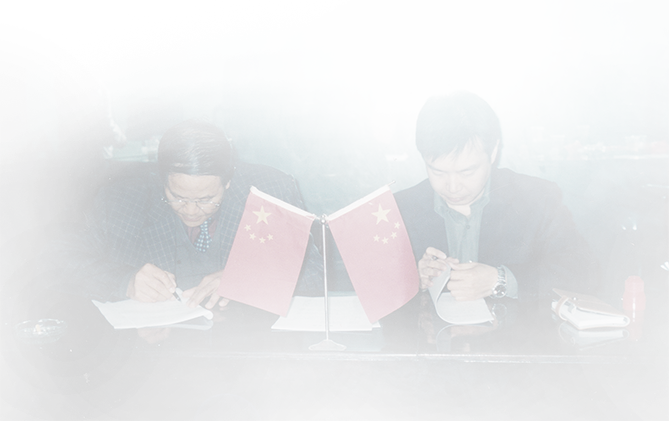
A historic signing moment from the 1970s, when HG’s founder helped drive the development of China’s food industry and began expanding into international markets.
Over the past decades, we have participated in the evolution of automated food production — from local factories to global turnkey projects across 100+ countries. That experience continues to shape every HG production line today.
Discover Our Heritage
Global Food Machinery &
Turnkey Factory Solutions

Building Long-Term Partnerships Through Shared Growth and Industrial Value.
Copyright © HG Industry Group All Rights Reserved
Food Machine Snack Food Processing Machinery

Unauthorized use of this website's content constitutes copyright infringement and may result in legal action.