 English
 中文简体
中文简体 日本語
日本語 русский
 عربى
عربى Український
 Español
 Français


What You Need to Know Before Investing in a Muffin Production Line
Content
- What Is a Muffin Production Line and Who Needs One
- How the Equipment Works From Batter to Finished Product
- Key Equipment Components Worth Comparing
- Comparing Output Capacity Across Different Line Types
- Maintenance Habits That Keep the Line Running Smoothly
- Important Questions to Ask Before Choosing a Supplier
- Case Study: U.S. Government Food Industry Project
- Making the Right Investment Decision
What Is a Muffin Production Line and Who Needs One
A muffin production line is a set of integrated equipment used to manufacture muffins at scale, replacing manual mixing, depositing, and baking with an automated or semi-automated workflow. Instead of hand-scooping batter into pans one tray at a time, a muffin manufacturing line handles batter preparation, precise portioning, baking, cooling, and often packaging in a continuous sequence. This type of setup is typically used by commercial bakeries, frozen food manufacturers, food service suppliers, and contract manufacturers producing private-label muffins for grocery chains. For businesses moving from small-batch production to higher-volume orders, investing in an automatic muffin production line is usually the point where labor costs, consistency issues, and capacity limits start pushing them toward automation.
How the Equipment Works From Batter to Finished Product
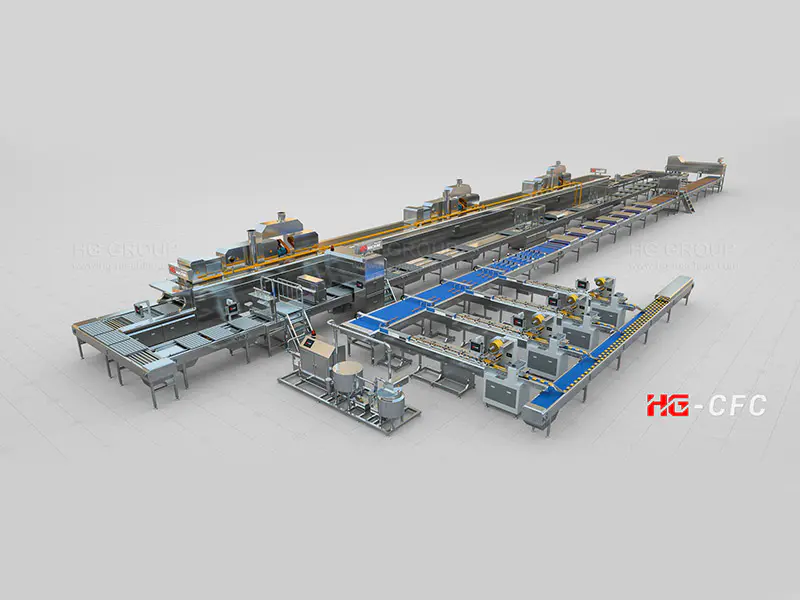
A muffin production line typically consists of several connected stages, each handling a specific part of the process. Understanding how these stages work together helps buyers identify which sections of the line matter most for their specific product type.
Batter Mixing and Preparation
Batter is prepared in large mixing tanks where dry and wet ingredients are combined to a consistent texture. Some lines include automated ingredient dosing systems that measure flour, sugar, eggs, and liquid components by weight rather than volume, which improves batch-to-batch consistency and reduces ingredient waste over time.
Depositing and Portion Control
The mixed batter moves to a depositor, which fills muffin cups or trays with a precise, repeatable amount of batter. This is one of the most important stages in the entire muffin making machine setup, since inconsistent portioning directly affects product weight, baking time, and visual uniformity — all of which matter for retail packaging standards.
Baking and Temperature Control
Filled trays pass through a tunnel oven or rotary oven where temperature zones are calibrated to bake muffins evenly without over-browning the tops or leaving the centers undercooked. Multi-zone temperature control allows operators to fine-tune baking profiles for different muffin types, from light sponge-style muffins to denser bran or fruit-filled varieties.
Cooling, Depanning, and Packaging
After baking, muffins move through a cooling conveyor to bring internal temperature down before depanning, which separates the muffins from their molds or liners. Many production lines integrate this directly with downstream packaging equipment, allowing finished muffins to be wrapped, boxed, or bagged with minimal manual handling.
Key Equipment Components Worth Comparing
Not every muffin manufacturing line is built to the same standard, and the quality of individual components can significantly affect product consistency, cleaning time, and long-term maintenance costs. Buyers evaluating equipment should pay close attention to the following areas.
- Depositor accuracy — affects batter weight consistency and reduces product giveaway costs
- Oven type and zoning — tunnel ovens generally offer better consistency for high-volume continuous runs
- Mold or tray material — non-stick coating quality affects release rate and cleaning frequency
- Mixing tank capacity — should match the depositor's throughput to avoid production bottlenecks
- Control system — PLC-based controls allow recipe storage and faster changeovers between muffin types
- Sanitary design — stainless steel contact surfaces and accessible cleaning points reduce downtime between shifts
Comparing Output Capacity Across Different Line Types
Production capacity is one of the first things buyers need to nail down before selecting equipment, since both undersized and oversized lines create problems — one limits growth, the other wastes capital. The table below outlines general capacity ranges for different scales of muffin production lines.
|
Line Type |
Typical Output |
Best Suited For |
|
Semi-Automatic Small Line |
2,000–5,000 pcs/day |
Small bakeries, local cafes, startup brands |
|
Mid-Size Automatic Line |
10,000–30,000 pcs/day |
Regional suppliers, contract bakeries |
|
Full Industrial Line |
50,000+ pcs/day |
Large-scale manufacturers supplying retail or export markets |
Maintenance Habits That Keep the Line Running Smoothly
Routine maintenance plays a major role in keeping a muffin production line operating at full efficiency. Skipping basic upkeep tends to show up later as inconsistent baking results, unexpected downtime, or premature part failure, all of which are more costly than preventive maintenance.
- Clean the depositor nozzles daily to prevent batter residue from affecting portion accuracy
- Check oven temperature calibration on a regular schedule to catch drift before it affects product quality
- Inspect conveyor belts and chains for wear, since uneven tension can cause tray misalignment
- Re-season or replace non-stick trays periodically to maintain consistent depanning
- Keep critical spare parts in stock, such as nozzles, sensors, and belt components, to minimize downtime
Important Questions to Ask Before Choosing a Supplier
Because a muffin production line represents a major capital investment, it's worth pushing suppliers for specific, verifiable answers rather than accepting general marketing claims. The quality of a supplier's response is often a good indicator of how reliable they'll be as a long-term equipment partner.
- What is the verified output rate under real production conditions, not just rated capacity?
- Can the depositor handle different batter viscosities, including fruit or chunk inclusions?
- What food-safety certifications apply to the equipment's contact materials?
- How long does a product changeover take when switching between muffin recipes or sizes?
- What warranty terms and after-sales support are included?
- Is on-site installation and operator training provided, or is support limited to remote guidance?
Case Study: U.S. Government Food Industry Project
Large-scale, multi-line projects put an equipment supplier's planning and integration capabilities to a real test, and this case illustrates how those capabilities come together in practice.
Challenges
- Large-scale coordination across multiple stakeholders and timelines
- Multi-line integration to unify separate production processes into one cohesive facility
HG Solution
- Full factory planning and layout
- Multi-production-line integration
Results
- Successful national-level project delivery
- Long-term cooperation established with the client
Client Value
"HG is a trusted partner for national-scale projects."
Making the Right Investment Decision
Choosing the right muffin production line isn't just about picking the equipment with the highest output number — it's about finding a setup that matches your actual production volume, product variety, and quality requirements. Buyers who take the time to compare depositor precision, oven performance, and supplier support tend to avoid the operational headaches that come from rushed equipment purchases. Whether you're upgrading from manual production or scaling into a fully automated facility, a clear understanding of how the line works and what to verify before buying will put you in a much stronger position to choose equipment that actually fits your business.
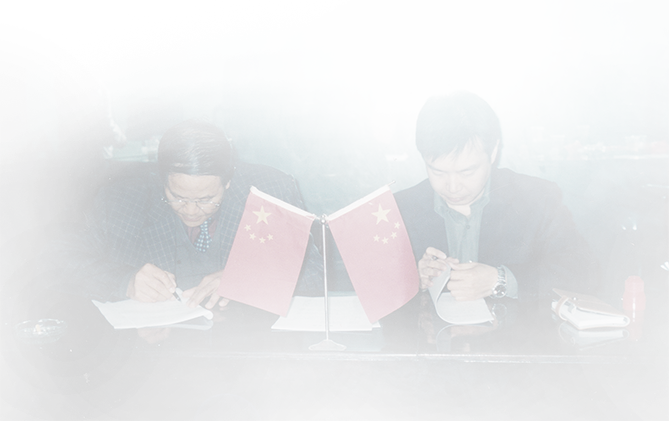
A historic signing moment from the 1970s, when HG’s founder helped drive the development of China’s food industry and began expanding into international markets.
Over the past decades, we have participated in the evolution of automated food production — from local factories to global turnkey projects across 100+ countries. That experience continues to shape every HG production line today.
Discover Our Heritage
Global Food Machinery &
Turnkey Factory Solutions

Building Long-Term Partnerships Through Shared Growth and Industrial Value.
Copyright © HG Industry Group All Rights Reserved
Food Machine Snack Food Processing Machinery

Unauthorized use of this website's content constitutes copyright infringement and may result in legal action.