 English
 中文简体
 日本語
 русский
 عربى
 Український
 Español
 Français


Fabricated Potato Chips Production Process
Content
- How Fabricated Potato Chips Are Made: From Dough Sheeting to Continuous Production
- 1. The Process Flow: More Than a Sequence of Machines
- 2. Mixing and Feeding: Establishing a Stable Input
- 3. Dough Sheeting: The Mechanical Transformation
- 4. Rotary Cutting: Turning a Continuous Sheet into Individual Pieces
- 5. Scrap Recovery: Creating a Controlled Material Loop
- 6. Baking and Frying: Understanding the Thermal Sequence
- 7. Why the Production Line Must Be Evaluated as a System
- 8. What Buyers Should Evaluate When Selecting a Production Line
- Conclusion: Consistency Depends on Process Integration
How Fabricated Potato Chips Are Made: From Dough Sheeting to Continuous Production
Inside the Engineering of Forming, Scrap Recovery and Thermal Processing
Fabricated potato chips are produced through a carefully coordinated sequence of ingredient mixing, material feeding, dough sheeting, rotary cutting and thermal processing. Unlike traditional potato chips made from sliced whole potatoes, fabricated chips are formed from a prepared potato-based mixture that must be transformed into a continuous sheet before individual pieces are cut.
The challenge is not simply to produce the desired shape. The entire line must maintain stable material flow, consistent sheet formation, reliable cutting and controlled downstream processing.
Another important consideration is material utilization. The excess dough generated during rotary cutting can, when suitable, be collected, crushed and returned to the mixing stage. This creates a recovery loop within the production process, introducing additional requirements for material handling and process consistency.
This article examines the engineering principles behind a fabricated potato chips production line, from the first feeding stage to the final thermal-processing operations.
1. The Process Flow: More Than a Sequence of Machines
A fabricated potato chips production line should be understood as an interconnected process rather than a collection of independent machines.
Based on the HG process information described here, the main stages include:
-
Preparation and mixing of the formulated ingredients.
-
Uniform spreading and feeding of the mixture.
-
Compression and sheeting through forming rollers.
-
Rotary cutting into individual pieces.
-
Collection, crushing and return of suitable cutting scrap.
-
Remixing of recovered material with fresh material.
-
Baking or preliminary thermal processing, where specified by the line configuration.
-
Frying and subsequent product handling.
The process can be divided into two connected flows.
The main production flow transforms the prepared mixture into individual chips and sends them to downstream processing.
The material-recovery flow collects the excess material generated during cutting and returns suitable material to the mixing stage.
The performance of one flow affects the other. For example, changes in sheet formation can influence the amount and condition of scrap, while changes in recovered-material characteristics can affect the consistency of the mixture entering the forming section.
2. Mixing and Feeding: Establishing a Stable Input
Before a mixture reaches the forming rollers, the ingredients must be distributed sufficiently evenly to provide a workable material for continuous processing.
Mixing establishes the initial distribution of the ingredients and moisture. The spreading conveyor then helps distribute the prepared mixture across the working width before it enters the rollers.
These operations have different but complementary purposes.
Mixing addresses material uniformity. Spreading addresses the distribution of material entering the forming system.
If the mixture is inconsistent, the spreading conveyor cannot fully correct the underlying material variation. Conversely, a well-prepared mixture may still produce uneven sheets if it is fed irregularly across the machine width.
For production managers, this distinction is important when investigating defects. A variation first observed at the rollers may have originated earlier in the process.
Useful observations include the consistency of the mixed material, the distribution of material across the conveyor, local accumulation, interruptions in feeding and the relationship between feed stability and sheet thickness.
3. Dough Sheeting: The Mechanical Transformation
The sheeting rollers compress and deform the prepared mixture into a continuous sheet suitable for cutting.
This operation is a central stage in fabricated potato chip production because the sheet must remain sufficiently coherent to withstand the mechanical stresses imposed by transfer and cutting.
The material does not behave as a simple rigid solid. Its response depends on formulation, moisture distribution, particle characteristics and processing history.
Research published in the Journal of Food Engineering has investigated how rolling conditions and dry potato-flake size affect the microstructure and mechanical properties of potato dough sheets. The study found that sheet-forming behavior is influenced by the interaction between material characteristics and rolling conditions, and that excessive repeated rolling can introduce defects that reduce sheet strength.
The practical implication is that sheeting settings should be evaluated together with the condition of the material entering the rollers.
Why sheet thickness matters
Sheet thickness affects the amount of material in each cut piece and influences the subsequent thermal process.
Variations in thickness can lead to differences in heating and moisture removal, potentially affecting finished-product color and texture.
However, reducing thickness without considering sheet integrity may create other problems. A fragile sheet can tear during transfer or cutting, while a thicker sheet may require different downstream processing conditions.
The appropriate operating window must therefore be established for the target product and validated on the actual production line.
Diagnosing common sheeting problems
Roller sticking: Investigate material consistency, moisture distribution, feed conditions, surface condition and the relevant machine settings.
Edge cracking: Examine the integrity of the incoming mixture, moisture uniformity, sheet thickness and handling stresses.
Uneven sheet thickness: Check feed distribution, roller-gap consistency, mechanical alignment and the stability of material delivery.
Intermittent sheet tearing: Determine whether the problem begins before the rollers, within the forming section or during subsequent transfer.
These observations are diagnostic starting points. The actual cause should be confirmed through controlled testing rather than assumed from the appearance of the defect alone.
4. Rotary Cutting: Turning a Continuous Sheet into Individual Pieces
After sheeting, the continuous material enters the rotary cutting section, where the intended product shape is formed.
Cutting quality depends on the condition of the sheet as well as the mechanical performance of the cutting system.
A sheet with inconsistent thickness or weak areas may produce distorted edges or incomplete separation. On the other hand, cutting-tool condition, alignment and synchronization can affect product geometry even when the incoming sheet is satisfactory.
A useful troubleshooting method is to compare the sheet immediately before cutting with the pieces immediately after cutting.
If the defect is already present upstream, the investigation should focus on material preparation and sheeting. If the sheet is acceptable before cutting but defects appear afterward, the cutting and transfer sections deserve closer inspection.
This simple comparison helps avoid unnecessary adjustments to equipment that may not be responsible for the problem.

5. Scrap Recovery: Creating a Controlled Material Loop
Rotary cutting produces excess material around the individual pieces. In the HG process described here, suitable excess dough is collected, crushed and returned through a pneumatic conveying system to a second mixing stage, where it is blended with fresh material before forming resumes.
The recovery loop can be represented as:
Sheeting → Rotary cutting → Scrap collection → Crushing → Pneumatic conveying → Remixing → Resheeting
This arrangement helps recover suitable excess material and reduce avoidable material losses.
However, recycling is not simply a matter of transporting scrap back to the mixer. The recovered material has already passed through mechanical forming and cutting, and its physical condition may differ from that of the fresh mixture.
The condition of the recovered material, the ratio of recovered material to fresh material, and the effectiveness of remixing can all influence the material entering the forming section.
5.1 Why recovered material requires process control
After sheeting and cutting, the recovered material may differ in particle size, moisture condition and mechanical history from the original mixture.
Crushing changes its physical form, while handling and temporary exposure can affect its condition.
If the recovered material is distributed unevenly during remixing, local variations may develop in the mixture. These variations can subsequently affect sheeting continuity, cutting performance and finished-product consistency.
For this reason, material recovery should be managed as a controlled process stream rather than treated as an unrestricted return of identical material.
5.2 The importance of the recovered-material ratio
The ratio of recovered material to fresh material is a process variable that should be evaluated for the specific product and line.
A change in this ratio can change the characteristics of the mixture entering the forming rollers. The direction and magnitude of the effect depend on the formulation, the condition of the recovered material and the effectiveness of remixing.
There is no universal recovery ratio that can be assumed suitable for every formulation.
A practical validation programme should compare different controlled recovery conditions while monitoring:
-
Mixture consistency after remixing.
-
Sheet continuity and thickness.
-
Roller sticking or sheet tearing.
-
Cutting quality and product geometry.
-
Finished-product color, texture and breakage.
-
Material losses and production interruptions.
The acceptable operating range should be established using actual production trials.
5.3 Measuring recovery performance
A useful starting indicator is the recovered-material return ratio:
Recovered-material return ratio (%) = Mass of recovered material returned to the process ÷ Mass of recoverable scrap generated × 100
This metric describes how much recoverable scrap is returned to the process. It does not, by itself, measure total production yield or prove that the recovered material has no effect on product quality.
A complete material balance should also account for rejected product, material losses, moisture changes and other relevant output streams.
The objective is to improve material utilization while maintaining food safety, product specifications and process stability.
6. Baking and Frying: Understanding the Thermal Sequence
The process information supplied for this article identifies an oven before the frying system and specifies a frying residence time of approximately 15–30 seconds.
These are details of the described process configuration, not universal operating conditions for all fabricated potato chips.
Where preliminary baking or another thermal-conditioning operation is used, its purpose and operating conditions should be evaluated separately from frying. The precise role of each stage depends on the actual line design and product requirements.
During frying, heat transfer and moisture removal occur alongside changes in the product structure. The final texture and appearance are influenced by the condition of the pieces entering the fryer, including their thickness and moisture distribution, as well as the frying conditions.
Residence time alone is not sufficient to define the process. Oil temperature, product loading, oil circulation, incoming product condition and the geometry of the frying system also matter.
For production control, the frying process should therefore be evaluated using both operating measurements and finished-product results.
Depending on the product specification and available instrumentation, relevant checks may include frying temperature, residence time, incoming piece thickness, finished-product moisture or water activity, color, texture and breakage rate.
7. Why the Production Line Must Be Evaluated as a System
A problem observed at one machine may have originated at an earlier stage.
For example, uneven color after frying may be associated with thermal conditions, but it can also be influenced by thickness variation or differences in incoming moisture.
Similarly, damaged edges after cutting may result from the cutting mechanism or from weak areas already present in the sheet.
The following framework helps connect process observations with likely investigation points.
|
Observation |
Initial investigation |
|---|---|
|
Uneven feeding |
Material distribution, accumulation and feed stability |
|
Roller sticking |
Material consistency, moisture, surface condition and settings |
|
Sheet cracking |
Material integrity, moisture distribution, thickness and handling |
|
Inconsistent product shape |
Sheet condition, cutting-tool alignment and transfer |
|
Changes after scrap recovery |
Recovered-material condition, return ratio and remixing uniformity |
|
Uneven finished color |
Piece thickness, incoming moisture and thermal-processing conditions |
|
High material losses |
Cutting yield, scrap collection, recovery performance and rejected product |
These are starting points rather than definitive diagnoses. A reliable investigation identifies the earliest point where the process departs from its normal condition and then tests the most plausible causes systematically.
Changing several settings simultaneously can make it difficult to determine which factor actually corrected or worsened the problem.
8. What Buyers Should Evaluate When Selecting a Production Line
For manufacturers planning a fabricated potato chips project, rated capacity is only one part of the equipment evaluation.
The complete process should be assessed, including feeding, sheeting, cutting, material recovery and thermal processing.
Buyers should ask:
-
How is material distributed across the forming width?
-
How are sheet thickness and continuity assessed during commissioning?
-
How is cutting scrap collected, crushed and returned?
-
How is the recovered-material ratio established and validated?
-
What process variables can operators monitor?
-
How are product consistency and material losses measured during trials?
-
What cleaning, maintenance and food-safety procedures apply to the complete line?
-
How will the line be tested against the customer's product and production requirements?
These questions help buyers evaluate the integration between machines, not just the specifications of individual components.
Conclusion: Consistency Depends on Process Integration
Fabricated potato chip manufacturing requires coordination between material preparation, uniform feeding, dough sheeting, rotary cutting, scrap recovery and thermal processing.
The spreading conveyor prepares a more consistent feed. The rollers form a continuous sheet. Rotary cutting creates individual pieces. The recovery system returns suitable excess material to the mixing stage, while downstream thermal operations develop the final product characteristics.
Each operation affects the conditions presented to the next.
The central engineering objective is therefore not simply to maximize the speed of an individual machine or the amount of recovered material. It is to establish a stable process in which material utilization, product consistency and production performance are evaluated together.
HG develops industrial food-processing equipment and production-line solutions for manufacturers. Equipment configuration and process conditions should be evaluated against the intended product, formulation, capacity target and quality requirements.
Contact HG to discuss your production requirements.
Website:https://www.hg-machine.com/
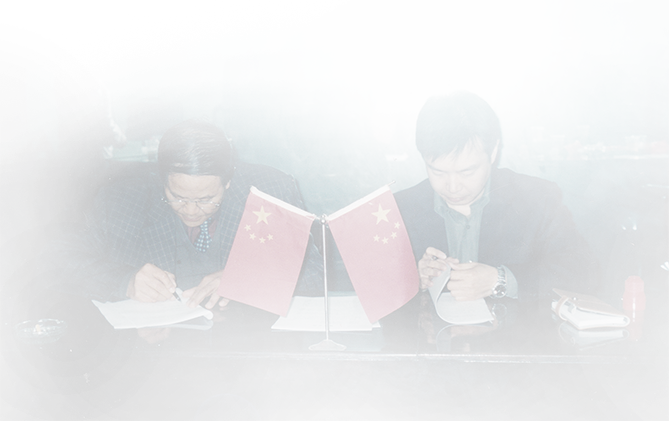
A historic signing moment from the 1970s, when HG’s founder helped drive the development of China’s food industry and began expanding into international markets.
Over the past decades, we have participated in the evolution of automated food production — from local factories to global turnkey projects across 100+ countries. That experience continues to shape every HG production line today.
Discover Our Heritage
Global Food Machinery &
Turnkey Factory Solutions

Building Long-Term Partnerships Through Shared Growth and Industrial Value.
Copyright © HG Industry Group All Rights Reserved
Food Machine Snack Food Processing Machinery

Unauthorized use of this website's content constitutes copyright infringement and may result in legal action.