 English
 中文简体
中文简体 日本語
日本語 русский
 عربى
عربى Український
 Español
 Français


Cup Cake Production Line 101: A No-Nonsense Buying Guide
Content
- Signs Your Business Has Outgrown Manual Cupcake Production
- The Real Cost Breakdown Behind a Production Line Purchase
- Planning Factory Layout Around the Line, Not the Other Way Around
- Why Oven Technology Deserves as Much Attention as Output Numbers
- Handling Flavor Variety Without Slowing Down the Line
- Mistakes Buyers Commonly Make When Choosing Equipment
- Why Decorating and Topping Capability Deserves Extra Attention
- Working With Suppliers: What a Trial Run Should Tell You
- Making a Decision That Supports Long-Term Growth
Signs Your Business Has Outgrown Manual Cupcake Production
Most bakeries don't plan to buy a cup cake production line — they get pushed into it. The common pattern looks like this: order volume grows, staff start working overtime just to keep up with batter mixing and piping, and product consistency starts slipping because tired hands don't scoop the same amount every time. If your team is regularly turning down orders because you can't physically produce enough cupcakes in a day, or if customers are noticing size and weight differences between batches, that's usually the signal that a cupcake production line is no longer optional — it's the only way to keep growing without burning out your staff or damaging product quality.
The Real Cost Breakdown Behind a Production Line Purchase
Buyers often focus on the sticker price of the equipment itself, but the actual cost of setting up a cupcake production line includes several other factors that are easy to underestimate during budgeting. Beyond the machine purchase, expect costs for installation and commissioning, electrical or gas line upgrades to support the equipment, operator training, and a buffer for initial production runs where some product loss is normal while staff get used to the new workflow. Shipping and import duties can also add a meaningful percentage to the total cost, especially for equipment sourced internationally. A more accurate budget plan includes these line items rather than treating the machine price as the full investment.
This is especially true for overseas installations. On a recent 800kg/h cup cake production plant we delivered to a customer in Bangladesh, freight, import clearance, and on-site commissioning made up a noticeable share of the project timeline and budget — on top of the core equipment cost. Buyers importing equipment across borders should plan for this rather than treating the quoted machine price as the final number.
|
Cost Category |
Typical Share of Total Budget |
|
Core Equipment |
60–70% |
|
Installation & Facility Adjustments |
10–15% |
|
Shipping & Import Costs |
5–10% |
|
Training & Initial Trial Runs |
5–10% |
Planning Factory Layout Around the Line, Not the Other Way Around
A common mistake buyers make is purchasing equipment first and then trying to squeeze it into their existing kitchen layout. A cup cake production line needs a logical flow from raw material storage through mixing, depositing, baking, cooling, and packaging, with enough space between stages for staff to move safely and for trays or trolleys to queue without blocking the line. Cross-contamination control also matters here — raw batter handling areas should be separated from finished product packaging zones wherever possible. Before finalizing a purchase, it's worth mapping out the physical floor space available and confirming the equipment's footprint, including clearance needed for maintenance access, rather than discovering space conflicts after the machine arrives.
Why Oven Technology Deserves as Much Attention as Output Numbers
It's easy to fixate on rated hourly capacity when comparing equipment, but the oven stage is usually what determines whether that capacity translates into consistent, sellable product. A fully automatic line built around a hot air circulation tunnel oven is a good example of why this matters. This type of oven uses efficient gas combustion paired with hot-air circulation heating to keep baking uniform across the entire tunnel. A well-designed unit typically divides the baking chamber into multiple temperature zones — front, middle, rear, upper, and lower — with a motor-driven valve mechanism that automatically adjusts airflow and heat distribution once temperatures are set, delivering heat through upper and lower air ducts for even results throughout.
The payoff of this kind of system shows up in a few practical advantages: rapid heating, stable temperature control, minimal temperature fluctuation, and automatic temperature regulation. In practice, that means the finished cupcakes come out with consistent taste, soft texture, uniform surface color, and an attractive appearance — batch after batch, rather than only on the batches baked in the "good" zone of an older oven. When evaluating suppliers, it's worth asking specifically how many temperature zones their tunnel oven has and how zone-to-zone consistency is controlled, not just what the headline throughput number is.
Handling Flavor Variety Without Slowing Down the Line
One challenge that's often overlooked during equipment shopping is how well a cupcake production line handles flavor variety. Many bakeries don't produce just one type of cupcake — they run vanilla, chocolate, red velvet, and seasonal specialty batches throughout the week. If the depositor and mixing system aren't designed for quick cleanout and recipe switching, changeover time between flavors can eat significantly into daily production capacity. Some production lines handle this better than others through quick-release nozzle systems, separate batter hoppers, or recipe presets stored in the control panel. When comparing equipment, it's worth asking suppliers directly how long a typical flavor changeover takes and whether the depositor requires full disassembly for cleaning between batches.
Product versatility is also worth checking beyond flavor alone. Some fully automatic lines are engineered to handle both center-filled products — like custard pies with a filled core — and standard cup cakes on the same equipment, simply by changing the mold set. For a bakery weighing whether to expand into filled products down the line, this kind of mold-based flexibility can avoid a second equipment purchase later.
Mistakes Buyers Commonly Make When Choosing Equipment
Looking at common complaints from bakeries that bought equipment they later regretted, a few patterns show up repeatedly. Avoiding these mistakes upfront can save significant cost and frustration down the line.
- Buying based on maximum rated output instead of realistic average daily production needs
- Skipping a factory or supplier reference check before placing a deposit
- Underestimating the cost and time required for staff training on new equipment
- Not confirming spare parts availability and lead times before purchase
- Choosing a line that can't accommodate future product expansion, such as muffins or specialty cupcake formats
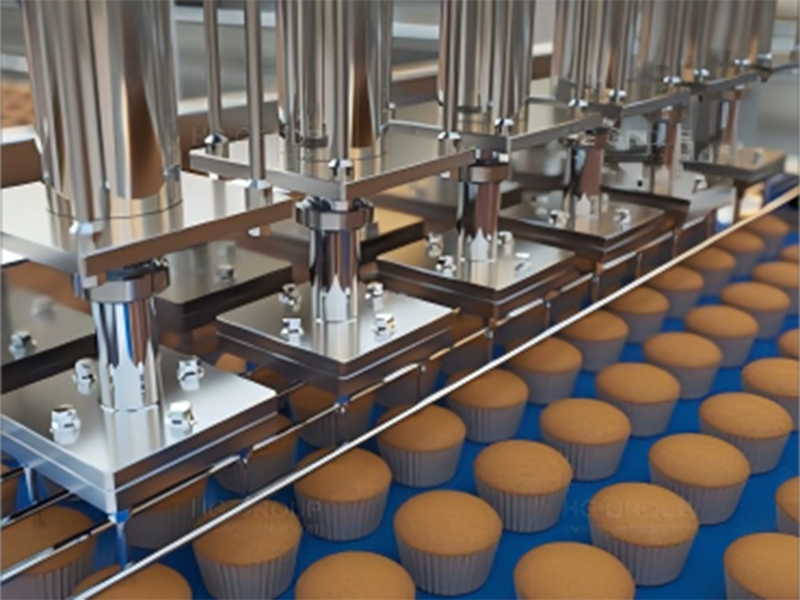
On the precision side, weight consistency is one of the easiest things to verify before purchase and one of the most commonly overlooked. A high-precision vertical filling system, for instance, can hold weight tolerance on each cake to within about ±1 gram — a useful benchmark to ask suppliers to quote against, since inconsistent fill weight is one of the fastest ways to erode both product quality and profit margin at scale.
Why Decorating and Topping Capability Deserves Extra Attention
For many cupcake businesses, the frosting and decoration step is where the product actually gets its visual appeal and brand identity — yet this part of the production line often gets the least attention during the buying process. Some buyers focus heavily on the baking stage and treat decoration as an afterthought, only to find that manual frosting becomes the new bottleneck once baking capacity increases. If decorated cupcakes are a major part of your product line, it's worth evaluating whether the equipment includes automated frosting application, sprinkle or topping dosing systems, and whether these stages can keep pace with the rest of the line's output. A mismatch here often results in a baking line running at full speed while a manual decorating station can't keep up.
Working With Suppliers: What a Trial Run Should Tell You
Before finalizing any purchase, it's worth requesting a trial production run using your own recipe and ingredients, either at the supplier's facility or through a sample batch sent for testing. This step reveals practical details that spec sheets can't show — how the batter behaves in their specific depositor, how consistent the baking results are across different oven zones, and whether the finished product matches your quality expectations. A trial run is also a good opportunity to observe how responsive the supplier's technical team is when adjustments are needed, which gives a reasonable preview of what after-sales support will look like once the equipment is installed and running in your facility.
Full stainless steel construction on all equipment outside the oven, along with well-known domestic and international electronic component brands, are also worth confirming during this stage — these details matter for long-term reliability and food-safety compliance far more than they show up in a basic spec comparison.
Making a Decision That Supports Long-Term Growth
A cup cake production line is a long-term operational commitment, not just an equipment purchase, so it's worth thinking beyond your current order volume when making this decision. Consider how the equipment will perform two or three years from now if your product range expands or your order volume doubles. Buyers who account for total cost, factory layout, flavor flexibility, and decoration capacity — not just baking output — tend to end up with equipment that genuinely supports growth rather than equipment that needs to be replaced or supplemented sooner than expected.
A fully automatic 800kg/h cup cake production line recently supplied to a customer in Bangladesh illustrates this well: built entirely in stainless steel with a six-zone hot air circulation tunnel oven, a ±1g precision filling system, and mold-based flexibility to switch between center-filled custard pies and standard cup cakes, it was specified from the start to cover both current output needs and future product-line expansion — rather than requiring a second purchase down the road.
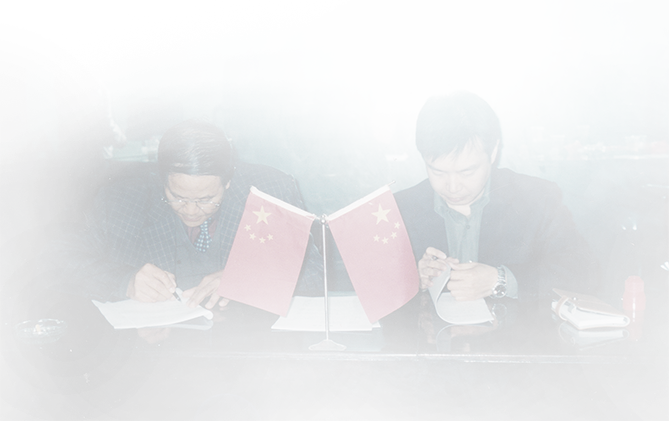
A historic signing moment from the 1970s, when HG’s founder helped drive the development of China’s food industry and began expanding into international markets.
Over the past decades, we have participated in the evolution of automated food production — from local factories to global turnkey projects across 100+ countries. That experience continues to shape every HG production line today.
Discover Our Heritage
Global Food Machinery &
Turnkey Factory Solutions

Building Long-Term Partnerships Through Shared Growth and Industrial Value.
Copyright © HG Industry Group All Rights Reserved
Food Machine Snack Food Processing Machinery

Unauthorized use of this website's content constitutes copyright infringement and may result in legal action.