 English
 中文简体
中文简体 日本語
日本語 русский
 عربى
عربى Український
 Español
 Français

Cake Production Line: How It Works, Key Stages & Equipment Selection Guide
Content
Global bakery output crossed $500 billion in 2024 — and a significant portion of that volume runs through automated cake production lines. For manufacturers scaling from artisan to industrial, the production line is the backbone that determines throughput, consistency, and profitability. Understanding how these systems work, and what sets a well-engineered line apart, is the first step toward making a confident equipment investment.
What Is a Cake Production Line?
A cake production line is an integrated series of machines and conveyors that moves cake products through every stage of manufacturing — from raw ingredient handling to finished, packaged goods — with minimal manual intervention. Rather than isolated machines operating in silos, a true production line synchronizes each process step so that output from one station feeds directly into the next.
Modern lines are engineered to handle a wide variety of formats: cupcakes and muffins, Swiss rolls, filled sponge cakes, layer cakes, mooncakes, and bar-style sliced cakes. The same core architecture — mix, deposit, bake, cool, finish, package — applies across product types, though the specific equipment configuration changes based on product geometry, recipe, and target output.
Key Stages in a Cake Production Line
Each station in the line plays a distinct role, and the quality of the final product depends on how well these stages are tuned and integrated.
Mixing and Ingredient Handling
High-capacity planetary or continuous mixers blend dry and wet ingredients to a precise batter consistency. For aerated products like sponge cakes, inflating-type whipping machines introduce controlled air into the batter — a step that directly determines crumb texture and shelf life. Accurate dosing systems feed ingredients by weight rather than volume, reducing batch-to-batch variation.
Depositing and Molding
Servo-driven depositors portion batter into molds or paper cups with gram-level accuracy. For filled products, a second depositing head injects cream or jam into the center of each piece before baking. Precise portioning here prevents both overfill waste and underfill defects that would fail retail weight requirements.
Baking
Tunnel ovens — the dominant format for industrial cake lines — use independently controlled heating zones to apply different temperatures and airflow patterns as products travel along a steel mesh belt. This zonal control allows the same oven to accommodate different recipes by adjusting temperature profiles rather than swapping equipment.
Cooling
After baking, products must reach safe handling temperatures before decoration or packaging. Spiral coolers circulate conditioned air around cakes as they travel a compact helical conveyor path, reducing footprint while achieving consistent cooling. Some modern lines use an innovative "not-in-pan" cooling approach, removing cakes from their molds earlier to cut cooling time and reduce the number of pans cycling through the system.
Filling, Decoration, and Finishing
Post-bake stations handle cream layering, enrobing in chocolate or glazes, top and side icing, syrup spraying, and decoration. For layer cakes, automated slicing and stacking systems align and assemble multiple sponge layers with cream in between — steps that were almost entirely manual until recently.
Packaging
Flow wrappers, tray sealers, or box-filling systems complete the line. Integration with checkweighers and metal detectors at this stage ensures every unit leaving the line meets both weight specs and food safety requirements before shipment.
Fully Automatic vs. Semi-Automatic: Which One Do You Need?
The right level of automation depends on your production volume, product mix, and capital budget. Neither option is universally superior — the question is fit.
|
Comparison: Fully Automatic vs. Semi-Automatic Cake Production Lines |
||
|
Factor |
Fully Automatic |
Semi-Automatic |
|
Typical Output |
10,000–100,000+ units/hr |
500–8,000 units/hr |
|
Labor Required |
Low (monitoring & QC only) |
Moderate (operators at key stations) |
|
Capital Investment |
High |
Low to Medium |
|
Product Flexibility |
Best with dedicated SKUs |
Easier to switch between products |
|
Scalability |
Requires major capital upgrade |
Modular — add machines incrementally |
|
Best For |
Large bakeries, FMCG manufacturers |
Growing bakeries, specialty producers |
Semi-automatic lines offer a particular advantage for producers with diverse product ranges or seasonal variation: because each machine operates autonomously, stations can be reconfigured or bypassed without taking the entire line offline. Fully automatic lines, by contrast, deliver the lowest per-unit cost at scale but require longer changeover times when shifting between product formats.
What to Look for When Choosing Cake Production Line Equipment
Equipment selection goes well beyond rated output figures. Here are the factors that determine long-term performance and ROI:
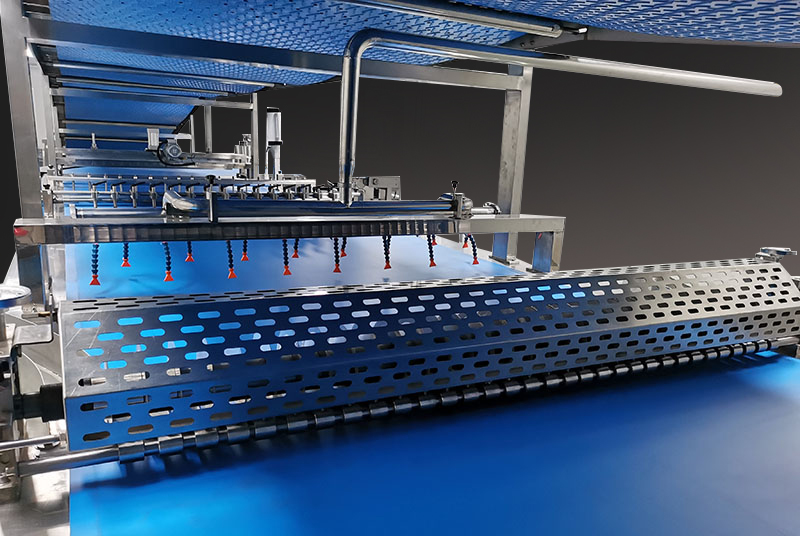
- Material Quality:Food-contact surfaces should be 304 or 316-grade stainless steel, which resists corrosion and meets hygienic design standards. Avoid lines where internal surfaces are difficult to clean or feature horizontal ledges that trap residue.
- Certifications:For export markets, CE marking under the EU Machinery Directive (2006/42/EC) is mandatory, along with hygiene compliance to EN 1672-2 standards. For the U.S. market, NSF/ANSI 2 certification for food processing equipment sets the benchmark for sanitary design and construction.
- Customization Capability:A reliable manufacturer should be able to adapt mold sizes, depositor configurations, and oven zone layouts to your specific recipes — not just offer a fixed catalog line.
- After-Sales Support:Availability of spare parts, remote diagnostics, and on-site technicians matters more than upfront price. A line that sits idle for two weeks waiting for a replacement part costs far more than the price difference between suppliers.
- Energy Efficiency:Modern tunnel ovens with insulated chambers and heat-recovery systems can reduce energy consumption by 20–30% compared to older designs — a meaningful operating cost reduction at industrial volumes.
Common Cake Types Suited for Automated Production
Different cake formats place different demands on line configuration. Understanding these requirements helps narrow down which equipment modules you actually need.
- Cupcakes and Muffins:High-speed paper cup handling (denesters), precise batter depositing, and rapid cooling are the priorities. Lines dedicated to this format can exceed 100,000 units per hour. Accurate cup placement is critical — misaligned cups cause filling overflow and product rejects.
- Filled Cakes (e.g., cream-filled sponge, Swiss rolls):Require dual-head depositing systems for batter and filling, plus precise roll-forming or slicing mechanisms. The filling injection step demands consistent pump pressure to maintain uniform fill weight across thousands of units per shift.
- Layer Cakes:Automated slicing, cream spreading, and stacking modules are essential. These lines handle the most complex assembly sequences and typically operate at lower speeds but higher value per unit.
- Mooncakes and Molded Cakes:Require high-pressure molding presses and specialized dough handling, as these products use a denser, less aerated batter than typical sponge cakes. Temperature control during molding is particularly important for maintaining a sharp decorative surface finish.
- Bar and Sliced Cakes:Sheet baking followed by precision slicing (guillotine or ultrasonic cutters) produces uniform retail portions. Ultrasonic cutting is increasingly preferred for cream-layered products where blade pressure would distort the layers.
How Automation Improves Quality and Reduces Costs
The business case for investing in a cake production line goes beyond replacing headcount. The more significant gains come from consistency and waste reduction — areas where manual production inherently struggles at scale.
Automated depositing and portioning hold weight tolerances to within ±1–2 grams per unit, compared to ±5–10 grams in manual operations. At retail, this prevents short-weight violations and reduces the giveaway cost of overfilling. Across a production run of one million units, even a 3-gram reduction in average giveaway translates to tonnes of ingredient savings annually.
Baking consistency improves substantially when oven zone temperatures and belt speeds are controlled by PLC rather than operator judgment. Products baked to tighter color and moisture targets have longer shelf life, which reduces retailer returns and unsaleables — one of the least visible but most costly sources of margin erosion in commercial baking.
Changeover time is another area where modern lines deliver. Quick-release mold systems and recipe-based PLC controls allow operators to switch between product formats in under 30 minutes on well-designed lines, compared to several hours on older equipment — a meaningful advantage for bakeries running multiple SKUs across a single shift.
Conclusion
A cake production line is a long-term capital commitment, and the right choice depends on matching line configuration to your product mix, output targets, and growth trajectory. For large-scale producers with stable SKUs, fully automated systems deliver the lowest cost per unit and the highest output consistency. For growing bakeries or specialty producers, modular semi-automatic systems offer a practical path to automation without overcommitting capital.
Whichever route you take, prioritize equipment that meets recognized certification standards, uses hygienic-grade materials, and comes backed by a supplier with genuine after-sales infrastructure. The machine that runs reliably for fifteen years is almost always a better investment than the cheapest option on the floor.
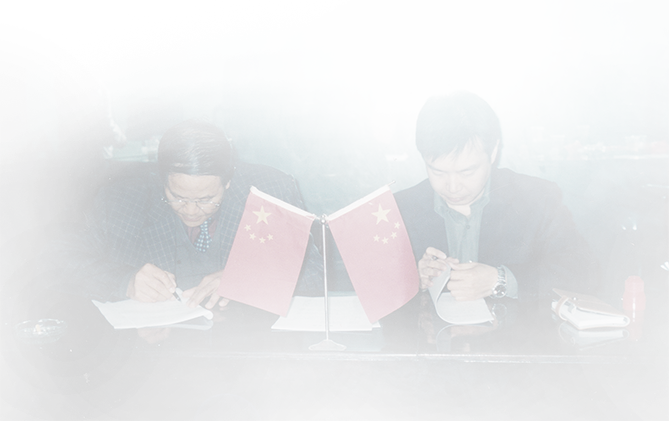
A historic signing moment from the 1970s, when HG’s founder helped drive the development of China’s food industry and began expanding into international markets.
Over the past decades, we have participated in the evolution of automated food production — from local factories to global turnkey projects across 100+ countries. That experience continues to shape every HG production line today.
Discover Our Heritage
Global Food Machinery &
Turnkey Factory Solutions

Building Long-Term Partnerships Through Shared Growth and Industrial Value.
Copyright © HG Industry Group All Rights Reserved
Food Machine Snack Food Processing Machinery

Unauthorized use of this website's content constitutes copyright infringement and may result in legal action.