 English
 中文简体
中文简体 日本語
日本語 русский
 عربى
عربى Український
 Español
 Français


The Plain-English Guide to Setting Up a Bakery Production Line That Actually Works
Content
- What a Bakery Production Line Is and Why It Matters
- Core Stages of a Bakery Production Line
- Types of Bakery Production Lines by Product Category
- How to Size a Bakery Production Line for Your Output Target
- Key Equipment Specifications to Evaluate Before Purchasing
- Energy Efficiency on a Bakery Production Line
- Planning a New Bakery Line: Common Mistakes to Avoid
- Choosing Between a Turnkey Line and a Multi-Supplier Configuration
What a Bakery Production Line Is and Why It Matters
A bakery production line is an organized sequence of interconnected machines and process stations that automates the transformation of raw ingredients into finished baked goods at a consistent, repeatable standard. Rather than relying on individual operators handling each task separately — mixing, shaping, proofing, baking, cooling, finishing, packing — a production line links these steps into a controlled flow where product moves continuously from one stage to the next with defined timing, temperature, and handling parameters at each point.
The case for a bakery manufacturing line is built on three pillars: consistency, capacity, and cost per unit. A well-configured line produces baked goods that are identical in weight, shape, bake color, and texture across every shift and every batch — which is the baseline expectation for any wholesale, retail, or foodservice supply relationship. It increases output per labor hour dramatically compared to semi-manual production. And beyond a certain volume threshold — which varies by product type but is typically in the range of 500–2,000 units per hour — an automated line becomes significantly cheaper to operate per unit than a manual equivalent, even after accounting for capital repayment.
Understanding how a bakery production line is structured, what equipment it requires, and how to match it to your specific product and volume is the starting point for any serious investment in bakery automation — whether you are scaling an existing operation or designing a new facility from the ground up.
Core Stages of a Bakery Production Line
Every bakery production line — regardless of whether it produces bread, rolls, croissants, biscuits, cakes, or pastries — passes through a common sequence of process stages. The specific equipment at each stage varies by product, but the logical flow is consistent across product categories.
Ingredient Handling and Pre-Mixing
The line begins upstream of the mixer with ingredient handling — flour silo systems, automatic weighing and dosing equipment, liquid ingredient metering (water, oil, eggs, liquid sugar), and dry ingredient pre-blenders. In high-volume bakery lines, fully automated ingredient handling systems feed the mixer by recipe, dispensing each ingredient to within ±0.1–0.5% of the target weight. This eliminates manual weighing errors, speeds up batch preparation, and provides full traceability of ingredient inputs for quality and compliance purposes. Smaller or mid-scale lines may use semi-automatic dosing where major ingredients (flour, water) are metered automatically but minor ingredients are weighed manually and added by an operator.
Dough Mixing
The mixer is the first major processing machine on a bakery line and has an outsized influence on the quality of everything downstream. Spiral mixers are the workhorse of yeast-dough bakery lines — they develop gluten efficiently without overheating the dough, and are available in batch capacities from 20 kg to 300 kg per cycle. Planetary mixers handle a wider variety of dough and batter types including cake mixes, cookie dough, and cream fillings, but are less efficient for large volumes of stiff bread dough. Continuous mixers — where ingredients are fed in at one end and mixed dough exits at the other in a steady stream — are used on the highest-volume lines (above 2,000–3,000 kg of dough per hour) and eliminate the batch-to-batch variation inherent in cycling batch mixers. Mixing time, dough temperature at discharge, and hydration level are the three most important parameters to control at this stage.
Dough Dividing and Scaling
After mixing, dough is transferred — via a dough trough, dough pump, or belt conveyor — to a dough divider that portions the bulk dough into individual pieces of a precise target weight. Hydraulic volumetric dividers are the standard for bread and roll production, cutting portions with a weight accuracy of ±1–3 g per piece at outputs of 600–6,000 pieces per hour depending on the model. Servo-driven weight-based dividers offer higher accuracy (±0.5–1 g) and are preferred for premium products or recipes with high hydration where volumetric dividers struggle with dough stickiness. The divider is a critical accuracy station — weight variation here propagates through every subsequent stage and is visible in the finished product as inconsistent loaf volume and uneven bake.
Rounding, Intermediate Proofing, and Moulding
Divided dough pieces are immediately rounded — passed through a conical or planetary rounder that forms them into smooth balls with a sealed surface. This relaxes the dough structure and makes it easier to mould into the final shape. For many products, an intermediate proofer (also called a first proofer or intermediate resting conveyor) follows the rounder, holding rounded pieces for 3–8 minutes to allow the gluten to relax before moulding. This reduces tearing during the moulding step and improves the final crumb structure. The moulder then takes each rounded piece and forms it into the final shape — a baton, a tin loaf, a baguette, a roll — using sheeting rollers and a curling board. Moulder gap settings and roller pressure are adjusted per product to control the tightness of the roll and the internal crumb structure.
Final Proofing
Moulded dough pieces enter a final proofer — a climate-controlled chamber that maintains a precise temperature (typically 35–40°C) and relative humidity (75–90%) for the duration of the proofing period, which ranges from 45 minutes to 2.5 hours depending on the product, yeast level, and dough temperature. The proofer is almost always a tunnel or rack configuration in a production line context, sized to match the dwell time required at the line's target throughput speed. Under-proofing produces dense, tight-crumbed bread with poor volume; over-proofing causes collapse in the oven and a coarse, open crumb. Proofer climate consistency across the full width and length of the conveyor is essential for uniform product quality.
Baking
The oven is the thermal heart of any bakery production line and represents the largest single capital investment and energy cost on the line. Tunnel ovens — where product travels through a heated chamber on a steel mesh or solid steel band conveyor — are the production standard for continuous bread and roll lines. They range in length from 15 meters to over 80 meters for very high-volume operations, with independent temperature zones that allow the baker to program different heat levels at different points in the bake — higher initial heat to drive oven spring, lower heat in the middle zone to set the crumb, and higher heat again at the exit for crust development. Steam injection in the first zone is essential for crust glossiness and volume in lean bread products. Deck ovens are used in artisan and mid-scale lines where batch baking is preferred. Rotary rack ovens offer flexibility for multi-product bakeries with frequent changeovers. Convection ovens are standard for pastry, biscuit, and cake lines where even, dry heat is required.
Cooling
Baked products exit the oven at 90–200°C (depending on product type) and must be cooled to a safe internal temperature — typically below 35°C for bread — before slicing, packaging, or further processing. Inadequate cooling leads to condensation inside packaging, mold growth, and structural collapse during slicing. Cooling is handled by a spiral cooler (the most space-efficient solution, using a helical conveyor to maximize dwell time in a compact footprint), a straight cooling conveyor, or an ambient cooling tunnel with forced air circulation. Cooling time is product-specific: a standard 800 g tin loaf requires approximately 90–120 minutes of cooling in ambient conditions; forced-air cooling can reduce this to 45–70 minutes. Rapid cooling with refrigerated air can further reduce the time but risks surface condensation if the air is too cold or the humidity is uncontrolled.
Slicing, Finishing, and Packaging
The final stage of the bakery production line prepares the finished product for sale. For sliced bread, a band slicer cuts the cooled loaf into uniform slices at a rate of 60–120 loaves per minute on high-speed lines. Depositors, enrobers, and topping applicators handle finishing operations such as chocolate coating, icing, seed or sugar topping, and cream filling on pastry or cake lines. Packaging machines — horizontal flow wrappers, vertical form-fill-seal machines, tray sealers, or bag sealers — wrap each unit in the retail format. Checkweighers confirm that every packaged unit is within the declared net weight tolerance. Metal detectors or X-ray systems provide a final contamination check before product is released to the dispatch area.
Types of Bakery Production Lines by Product Category
Bakery production line configurations differ significantly between product categories. Equipment that works perfectly for a sliced white bread line is not appropriate for a croissant line or a biscuit line. The table below summarizes the key equipment differences across the main bakery product categories:
|
Product Category |
Mixer Type |
Key Make-Up Equipment |
Oven Type |
Special Requirements |
|
Sliced bread / tin loaves |
Spiral or continuous |
Divider, rounder, moulder, proofer |
Tunnel with steam |
Band slicer, flow wrapper |
|
Croissants / laminated pastry |
Spiral (low-speed) |
Laminator, sheeter, croissant former, proofer |
Tunnel or deck |
Precise dough temperature control; butter lamination equipment |
|
Baguettes / artisan breads |
Spiral |
Divider, rounder, baguette moulder, proofer |
Deck or stone-sole tunnel |
Steam injection, scoring before baking |
|
Biscuits / crackers |
Horizontal or planetary |
Sheeter, rotary cutter or wire-cut depositor |
Convection tunnel |
No proofing stage; oil sprayer for crackers |
|
Cakes / muffins |
Planetary or continuous |
Depositor, tray / tin filling system |
Convection tunnel or rotary rack |
Icing / topping applicator, tray de-panning |
|
Filled pastries / doughnuts |
Spiral |
Ring extruder or former, proofer, fryer |
Continuous fryer (not oven) |
Filling injector, glazer, oil management system |
How to Size a Bakery Production Line for Your Output Target
Sizing a bakery line is a calculation exercise, not a guessing exercise. Start with your target finished product output — expressed in units per hour or kilograms per hour — and work backward through each stage to determine the required throughput capacity at every machine on the line. The slowest machine in the sequence defines the actual line output, so every station must be specified to at least match the line's target rate, with headroom for minor stoppages and speed variation.
A practical sizing methodology works as follows: define your peak daily production requirement (e.g., 20,000 loaves per day), divide by the number of planned production hours including cleaning and changeover allowances (e.g., 16 effective production hours), and calculate the required hourly rate (1,250 loaves per hour in this example). Add a 20–25% capacity buffer to this figure to set the minimum equipment specification (1,500–1,560 loaves per hour). This buffer accounts for speed ramp-up time at the start of a run, minor equipment adjustments, and the inevitable imperfect uptime of any mechanical system.
Apply the same logic to the oven: at 1,500 loaves per hour with a 25-minute bake time, the oven conveyor must hold a minimum of 625 loaves simultaneously. Divide this by the number of rows across the oven width and you get the minimum oven length required. Most industrial tunnel ovens can accommodate 6–12 loaves across the belt width, so at 8 loaves wide, the oven must be long enough to accommodate approximately 78 rows, which at a typical row pitch of 250 mm requires around 20 meters of baking zone. Working through this arithmetic for each stage before contacting equipment suppliers ensures you are comparing machines on a like-for-like basis rather than being upsold on capacity you do not need or buying equipment that falls short of your requirements.
Key Equipment Specifications to Evaluate Before Purchasing
When comparing bakery production line equipment from different manufacturers, these are the specifications that have the greatest impact on operational performance, product quality, and long-term running cost.
Dough Temperature Management
Dough temperature at mixer discharge is the single most important variable in yeast-dough production — it affects fermentation rate, dough handling properties, proofing time, and ultimately bake quality. Mixers with jacketed bowls or integrated water chilling systems give operators precise control over dough temperature regardless of ingredient or ambient temperature variation. For laminated products such as croissants and Danish pastry, the entire make-up line — including the laminator and sheeter — needs to be specified for a temperature-controlled environment (typically 16–18°C) to prevent butter from melting into the dough layers during processing.
Weight Accuracy Across the Dividing System
Weight variation in divided dough pieces is cumulative — it affects declared net weight compliance in the finished product, oven throughput consistency, and waste from over-weight pieces. For bread loaves subject to average quantity regulations, a divider with a weight standard deviation of less than 3 g per piece is typically required to hold net weight compliance without overfilling every loaf by a large safety margin. Request actual production data on weight accuracy from the supplier, not just a catalog specification — the two frequently differ.
Oven Temperature Uniformity
Temperature variation across the width of a tunnel oven conveyor directly translates into color variation across the product — loaves at the edges of the belt may be paler or darker than those in the center. For a retail product where color consistency is a quality standard, request temperature uniformity data across the belt width at your specified setpoint. A well-designed oven should maintain temperature uniformity of ±5°C or better across the full belt width. Burner placement, airflow design, and belt material all contribute to this performance.
Cleanability and Allergen Changeover
For bakeries producing products with and without allergens on the same line — for example, a nut-free loaf and a walnut bread — the ability to clean down the line completely between runs is a food safety requirement, not a convenience feature. Evaluate how quickly each machine section can be disassembled for cleaning, whether surfaces have dead corners or joints where dough or debris can accumulate, and whether the supplier provides a validated cleaning protocol. Lines with clean-in-place (CIP) systems for proofer and conveyor cleaning significantly reduce the labor and time required for allergen changeovers.
PLC Control and Recipe Management
Modern bakery production lines are controlled by PLC-based systems with touchscreen HMIs that store product recipes — a named parameter set for each product covering mixer speed and time, divider weight setpoint, proofer temperature and humidity, oven zone temperatures, belt speed, and cooling time. Effective recipe management ensures that the line returns to a validated, proven parameter set every time a product is run, eliminates setup errors when operators change products, and provides a data record for quality traceability. Evaluate how many recipes the system can store, how easily parameters can be locked for quality control, and whether production data (temperature logs, weight data, output counts) is automatically recorded for audit purposes.
Energy Efficiency on a Bakery Production Line
Energy cost is one of the largest controllable operating expenses on a bakery line, and the oven accounts for the majority of it. A gas-fired tunnel oven for a mid-scale bread line typically consumes 800–1,500 kWh of energy equivalent per hour depending on product, oven size, and baking conditions. At current energy prices in most markets, this represents a significant daily operating cost. The following measures have the most impact on energy efficiency in a bakery manufacturing line:
- Oven insulation standard:A well-insulated oven with correctly sealed access doors loses significantly less heat to the surrounding environment, reducing the energy required to maintain baking temperatures. Specify the oven's heat loss rating per square meter of surface area and compare across suppliers.
- Exhaust heat recovery:Modern tunnel ovens can be specified with heat recovery systems that capture thermal energy from the exhaust gases and use it to pre-heat combustion air or warm the proofing chamber, reducing total energy consumption by 10–20%.
- Variable speed drives on conveyor motors:Running conveyor and fan motors at variable speeds matched to actual production rate — rather than at full speed continuously — reduces electrical energy consumption across the line, particularly during low-speed or warm-up periods.
- Proofer energy management:Proofers consume significant energy for both heating and humidification. Proofer designs with effective door seals, insulated walls, and efficient steam generation systems reduce energy waste. Some modern proofers include heat pump systems that recover condensate heat to reduce steam energy consumption.
- Production scheduling:Running a line at 90% of its rated capacity for a full shift is more energy-efficient per unit produced than running it at 50% capacity, because fixed energy losses (heat maintenance in the oven, proofer climate control) are spread over more units. Optimizing the production schedule to maximize effective run time reduces energy cost per unit significantly.
Planning a New Bakery Line: Common Mistakes to Avoid
Bakery production line projects frequently run over budget, over schedule, or underperform against their target output because of planning errors that could have been avoided. The following are the most common and costly mistakes made during the design and procurement phase of a bakery line project.
- Specifying the line for current output rather than 3–5 year projections:A line that is already at its capacity ceiling on day one gives you no room to grow without a second major capital investment. Always size the line — particularly the oven and proofer, which are the hardest to expand in situ — for your realistic 5-year output forecast, not your current volumes.
- Underestimating the floor space requirements:A complete bakery line including mixing, make-up, proofing, baking, cooling, and packaging typically requires 25–60% more floor space than the sum of the individual machine footprints, once operator access clearances, maintenance space, product handling areas, and utility routing are accounted for. Draw a scaled layout before finalizing the building specification.
- Treating all machines as interchangeable commodities:It is tempting to select the cheapest option at each stage independently. But a line is only as reliable as its weakest machine, and a low-cost divider that produces inconsistent weights undermines the quality output of every more expensive machine downstream. Evaluate the line as a system, not a collection of independent purchases.
- Neglecting the service and parts network:A production line in a bakery runs 16–20 hours per day. When a critical machine fails, you need a service engineer on-site within hours, not days, and spare parts available without a two-week import delay. Confirm the supplier's local service network coverage and response time commitments before signing a purchase order — not after a breakdown.
- Skipping the factory acceptance test:Before a production line ships from the manufacturer's facility, it should be fully assembled and run at rated speed with your actual dough recipe as part of a factory acceptance test (FAT). This is your contractual right to verify that the equipment meets the agreed specification before it is installed in your facility. Skipping this step transfers the risk of specification non-compliance entirely to you.
- Underbudgeting for installation and commissioning:The purchase price of a bakery line does not include installation, utility connections, operator training, initial trials, and recipe development time on the new equipment. These costs typically add 15–30% to the total project budget and several weeks to the project timeline. Build them into your financial plan from the start.
Choosing Between a Turnkey Line and a Multi-Supplier Configuration
When purchasing a bakery production line, buyers face a fundamental choice between a turnkey solution — where a single supplier designs, supplies, installs, and commissions the complete line — and a multi-supplier configuration where individual machines are sourced from specialist manufacturers and integrated by the buyer or a project engineer.
Turnkey lines offer simplicity, single-point accountability, and a tested system where all machine interfaces and control integrations have been validated by the supplier. The trade-off is typically a higher purchase price and limited flexibility to specify best-in-class equipment at individual stages. The supplier's standard system may use their own brand at every station, even if a third-party specialist offers a better solution for a specific process step in your product range.
Multi-supplier configurations allow you to select the best available technology at each process stage — a world-leading mixer from one manufacturer, a specialist laminator from another, a high-efficiency oven from a third — and can deliver superior performance for technically demanding products. The complexity and risk lie in integration: ensuring that each machine feeds the next at the correct rate and product condition, that the control systems communicate, and that there is clarity about who is responsible when a problem arises at the interface between two suppliers' equipment. For bakeries with in-house technical expertise or access to experienced bakery engineering consultants, a multi-supplier approach can deliver a higher-performance line at a competitive total cost. For buyers without deep technical resources, a turnkey solution significantly reduces project risk.
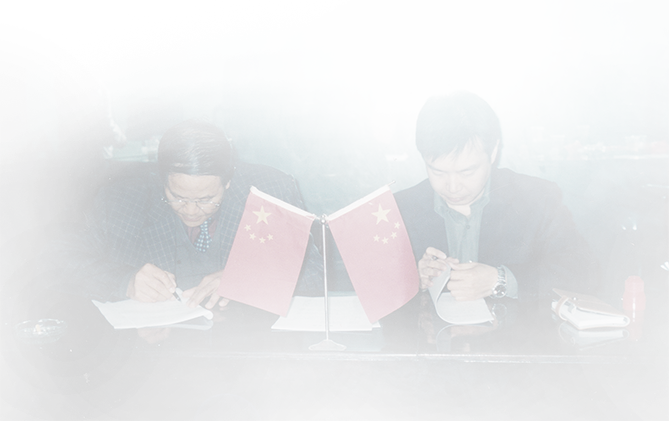
A historic signing moment from the 1970s, when HG’s founder helped drive the development of China’s food industry and began expanding into international markets.
Over the past decades, we have participated in the evolution of automated food production — from local factories to global turnkey projects across 100+ countries. That experience continues to shape every HG production line today.
Discover Our Heritage
Global Food Machinery &
Turnkey Factory Solutions

Building Long-Term Partnerships Through Shared Growth and Industrial Value.
Copyright © HG Industry Group All Rights Reserved
Food Machine Snack Food Processing Machinery

Unauthorized use of this website's content constitutes copyright infringement and may result in legal action.