 English


Potato Chips Line: Equipment, Process Stages & How to Choose the Right Setup
Content
- The Business Case for Investing in a Potato Chips Line
- How a Potato Chips Production Line Works: Step by Step
- Sliced vs. Fabricated Potato Chips: Two Lines, Two Strategies
- Fried vs. Baked: How Processing Method Shapes Your Line
- Key Equipment Selection Criteria
- Capacity Planning: Matching Line Size to Your Market
- Conclusion
This guide walks through the complete production process, the two dominant product line strategies, fried versus baked configurations, and the equipment selection criteria that separate high-performing lines from underperforming ones.
The Business Case for Investing in a Potato Chips Line
Potato chips remain one of the most resilient categories in the snack food industry. North America holds the largest market share at approximately 35%, while Asia-Pacific is the fastest-growing region, driven by urbanization and rising disposable incomes in markets like India and Southeast Asia. Consumer demand for both classic flavors and innovative seasoning profiles continues to expand the total addressable market for producers of all sizes.
The economics of automated production are compelling. A fully automatic potato chips line operates continuously with minimal manual intervention, maintaining consistent slice thickness, frying temperature, and seasoning distribution across every batch. At industrial volumes, these controls translate directly into lower per-unit cost, reduced ingredient waste, and higher product uniformity — all factors that determine retail shelf placement and brand reputation.
For new entrants, even smaller-capacity lines in the 100–200 kg/hr range provide the consistency and throughput needed to supply regional markets and build brand equity, with a clear upgrade path as demand grows.
How a Potato Chips Production Line Works: Step by Step
A complete potato chips line moves raw potatoes through eight to ten sequential processing stages, each of which affects the final product's texture, color, flavor, and shelf life.
Sorting and Grading
Raw potatoes are conveyed to a grader that separates undersized or damaged tubers before they enter the line. Removing substandard material at this stage protects oil quality in the fryer and reduces the proportion of reject slices downstream. Some lines include an optical sorting station that detects surface defects using camera-based inspection.
Washing and Peeling
Drum washers or brush-type washers remove soil and surface contaminants. Peeling is accomplished either abrasively — using carborundum rollers — or by steam flash peeling, which loosens the skin with a brief high-pressure steam burst before the skin is removed with water jets. Steam peeling produces less waste and is increasingly preferred for larger-capacity operations.
Slicing
High-speed centrifugal or rotary slicers cut peeled potatoes into uniform discs. Slice thickness — typically between 1.2 mm and 1.8 mm — is the single most important variable affecting finished chip texture and frying time. Thinner slices fry faster and produce a crispier chip; thicker slices retain more moisture. Consistent thickness across the entire slice face requires precisely machined blades and controlled potato feed pressure.
Rinsing and Blanching
Freshly cut slices are immediately rinsed in a bubble washer to remove surface starch. Excess starch causes chips to stick together during frying and accelerates oil darkening. Blanching — immersing slices in hot water at around 70–80°C for 7 to 15 minutes — further reduces reducing sugars, which are responsible for the Maillard browning reaction. Controlling sugar content at this stage is critical for achieving a uniform golden color in the finished chip rather than dark, bitter patches.
Dehydration
After blanching, an air-knife or vibrating dewatering conveyor removes surface moisture before the slices enter the fryer. Reducing water content at this point shortens frying time, lowers oil absorption, and extends fryer oil life. This stage is often underestimated in importance, but moisture carried into the fryer is one of the leading causes of excessive oil uptake and short oil change cycles.
Frying
Continuous fryers — the standard for industrial potato chip production — immerse slices in a controlled bath of oil at approximately 170–185°C. Frying time typically runs between 2.5 and 4 minutes depending on slice thickness and target moisture content. A submersion conveyor holds slices below the oil surface to ensure even cooking on both sides. Temperature uniformity across the full width of the fryer is essential: hot spots produce burned chips, while cool zones leave undercooked, soft product.
Oil Removal and Cooling
Freshly fried chips exit onto a vibrating de-oiling conveyor or centrifugal de-oiler that shakes off excess surface oil before cooling. Chips then pass through a forced-air cooling tunnel that drops product temperature to ambient before seasoning. Cooling chips adequately before seasoning prevents moisture condensation on the surface, which would cause seasonings to clump or dissolve unevenly.
Seasoning
A rotating drum coater applies dry seasoning blends while warm chips tumble through the cylinder. The tumbling action distributes seasoning across the chip surface while a fine oil mist applied inside the drum helps the powder adhere. Uniform coating depends on the drum's rotation speed, the seasoning feed rate, and consistent chip temperature at the entry point.
Packaging
Vertical form-fill-seal (VFFS) machines portion chips into bags, flush with nitrogen to displace oxygen and prevent oxidative rancidity, and seal the package. Nitrogen flushing also creates the characteristic pillow of gas inside the bag that cushions fragile chips during distribution. Checkweighers and metal detectors operate inline at this stage as mandatory quality control and food safety checkpoints.
Sliced vs. Fabricated Potato Chips: Two Lines, Two Strategies
Not all potato chip production lines start with whole raw potatoes. There are two fundamentally different product categories, each requiring a distinct line configuration.
|
Sliced vs. Fabricated Potato Chip Lines: Key Differences |
||
|
Factor |
Sliced (Kettle/Continuous) |
Fabricated (Stackable/Dough-Based) |
|
Raw Material |
Fresh potatoes |
Dehydrated potato flour or flakes |
|
Key Equipment |
Slicer, continuous fryer, seasoning drum |
Continuous mixer, sheeter, rotary cutter, fryer |
|
Shape Consistency |
Natural variation in size and shape |
Perfectly uniform — stackable format |
|
Texture Profile |
Irregular, artisan appearance |
Smooth, consistent crunch |
|
Packaging Efficiency |
Pillow bags (bulk) |
Cylindrical tubes (high density, lower breakage) |
|
Capital Complexity |
Moderate |
Higher (dough handling adds complexity) |
|
Brand Positioning |
Natural, craft, kettle-style |
Premium, portion-controlled, international format |
Fabricated chip lines use dehydrated potato flour mixed with water and other ingredients to form a dough, which is then sheeted, cut into uniform shapes, and fried or baked. The controlled starting material eliminates the natural variability of fresh potatoes, producing a chip with identical dimensions in every production run. This consistency is what enables the stackable tube format. The trade-off is higher input cost for dehydrated potato ingredients and additional dough-handling complexity at the front of the line.
Sliced lines retain the "real potato" positioning that consumers increasingly associate with quality and clean-label products. For brands targeting the kettle chip or craft snack segment, a sliced line with batch or continuous frying is the natural fit.
Fried vs. Baked: How Processing Method Shapes Your Line
The choice between frying and baking isn't just a product decision — it determines a significant portion of your line's capital cost, operating cost structure, and maintenance requirements.
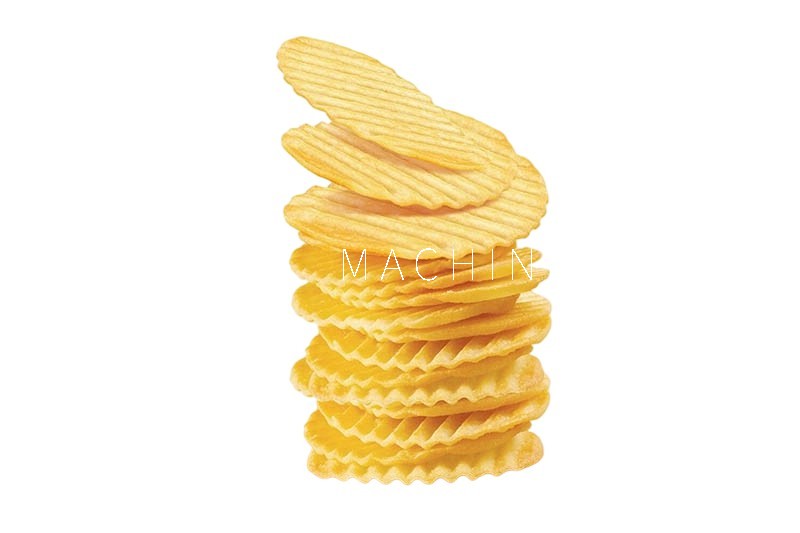
Fried lines produce the sensory profile consumers recognize as the benchmark for potato chips: a pronounced crunch, rich flavor from oil absorption, and a golden appearance. The fryer is the highest-maintenance piece of equipment on the line. Oil quality management — continuous filtration to remove fine particles, monitoring of free fatty acid levels, and scheduled full oil changes — is critical for consistent product color and flavor. Lines running 8–16 hours per day typically require dedicated oil filtration systems operating in parallel with production.
Baked lines use a tunnel oven rather than a fryer, applying radiant and convective heat to dehydrate and crisp potato slices or formed dough pieces. The result is a chip with significantly lower fat content — typically 50–70% less oil than fried alternatives. Operating costs are lower without the recurring expense of cooking oil, and the maintenance profile is simpler. The challenge is matching the textural intensity of a fried chip: baked products often require additional seasoning application and careful oven profile management to achieve acceptable crunch.
A third option — baked-then-fried or par-fried — involves partial baking to set the chip's structure before a brief final fry pass. This hybrid approach reduces oil absorption compared to full frying while preserving more of the fried flavor profile, and is increasingly used in "reduced fat" product lines.
Key Equipment Selection Criteria
Evaluating potato chips line equipment requires looking beyond rated capacity. The following criteria consistently determine long-term performance:
- Slice Thickness Precision:Slicer blades should maintain thickness tolerance to within ±0.1 mm across the full production run. Variation beyond this range produces a mixed batch where thin slices burn before thick slices are fully fried — a primary source of yield loss and reject product.
- Fryer Temperature Uniformity:Oil temperature should be controllable to within ±2°C across the full width of the fryer. Infrared temperature mapping of fryer zones before commissioning is a useful verification step for high-capacity equipment.
- Material Standards and Certifications:All food-contact surfaces should be constructed from 304 or 316-grade stainless steel. For equipment sold into U.S. markets, NSF/ANSI 2 certification for food processing and handling equipment sets the baseline standard for sanitary design. CE marking under the EU Machinery Directive is required for European market sales.
- Seasoning Uniformity:Drum coater performance should be validated across the full range of seasoning types you intend to run — fine powders behave differently from coarser blends. Request coating uniformity data from the equipment supplier before purchase.
- Oil Filtration Integration:Continuous fryers should come with or be compatible with a dedicated oil filtration system. Frying without continuous fine-particle removal degrades oil quality rapidly and shortens the usable life of each oil fill — a significant operating cost driver at scale.
- After-Sales Infrastructure:Spare parts availability, remote diagnostics capability, and on-site service response times should be evaluated as rigorously as equipment specifications. A line that runs at 90% efficiency with strong support outperforms a technically superior line with weak after-sales coverage.
Capacity Planning: Matching Line Size to Your Market
Output capacity should be matched to your realistic market demand with a comfortable buffer, not to theoretical maximum volumes. Oversizing a line creates high fixed costs and underutilized equipment; undersizing limits growth and forces premature reinvestment.
|
Potato Chips Line Capacity Tiers and Typical Applications |
|||
|
Capacity Tier |
Output Range |
Typical Application |
Key Consideration |
|
Small |
50–150 kg/hr |
Regional brands, private label startups, food service supply |
Lower capital outlay; semi-automatic operation acceptable |
|
Medium |
150–350 kg/hr |
National brands, contract manufacturers, export-focused producers |
Full automation recommended; PLC-controlled fryer essential |
|
Large |
350–500+ kg/hr |
FMCG manufacturers, multi-SKU production facilities |
Parallel seasoning and packaging lines; dedicated oil management systems |
Modular line designs offer a practical middle path: start with a core configuration that meets current demand, then add stations — a second seasoning drum, additional packaging lanes, or an upgraded fryer — as volume grows. This approach preserves capital while keeping the upgrade path straightforward. When evaluating modularity, confirm that the base line's conveyor speeds and electrical infrastructure can accommodate the additional load of planned future equipment before committing to the initial purchase.
Conclusion
A potato chips line is a long-cycle investment where the decisions made at the configuration stage — sliced or fabricated, fried or baked, small or large capacity — lock in your cost structure and product capabilities for a decade or more. The most successful installations start with a clear product strategy, match line configuration to that strategy, and select equipment suppliers who can support the line throughout its operational life.
Use the frameworks in this guide — the process stage breakdown, the sliced versus fabricated comparison, and the capacity tier matrix — to anchor your equipment conversations in operational reality rather than catalog specifications. The right line is not the most technically advanced one; it's the one that delivers your target product at your target cost with the reliability your customers expect.
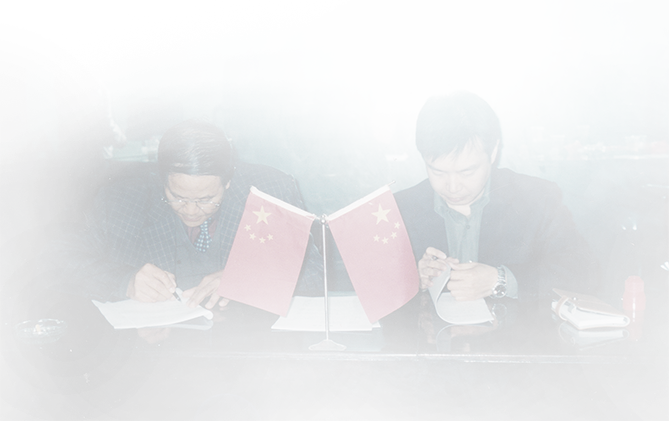
A historic signing moment from the 1970s, when HG’s founder helped drive the development of China’s food industry and began expanding into international markets.
Over the past decades, we have participated in the evolution of automated food production — from local factories to global turnkey projects across 100+ countries. That experience continues to shape every HG production line today.
Discover Our Heritage
Global Food Machinery &
Turnkey Factory Solutions

Building Long-Term Partnerships Through Shared Growth and Industrial Value.
Copyright © HG Industry Group All Rights Reserved
Food Machine Snack Food Processing Machinery

Unauthorized use of this website's content constitutes copyright infringement and may result in legal action.