 English
 中文简体
中文简体 日本語
日本語 русский
 عربى
عربى Український
 Español
 Français


Automatic Cupcake Production Line: From Batter Mixing to Packaged Cupcake
Content
- 1.Why Batter Consistency Determines Your Line's Output Quality
- 2.The Full Process Flow From Batter Mixing to Packaged Cupcake
- 3.Depositing Accuracy and Why Cup-Fill Consistency Matters
- 4.Product Flexibility: One Line, Many Recipes
- 5.Baking System Choices and Their Impact on Texture & Shelf Life
- 6.Matching Line Capacity to Your Bakery's Production Scale
- 7.Reducing Ingredient Waste and Energy Costs on a Running Line
- 8.Quality Checks Worth Running on Every Batch
- 9.What to Compare Before Choosing a Cupcake Line Supplier
- 10.Why Bakeries Keep Choosing HG as They Scale
Cupcakes look simple on a shelf, but getting a consistent, sellable product out of a factory line every single shift is not simple at all. Between the mixer and the packaging machine, dozens of small variables — batter density, fill weight, oven zone temperature, cooling time, demold speed — all have to line up. When they don't, bakeries lose product to underfilled cups, cracked tops, sunken centers, or cupcakes that stick in the mold. This article walks through the full automatic cupcake production line, from batter mixing to the packaged case, and explains what actually determines output quality, flexibility, and cost at each stage.
1.Why Batter Consistency Determines Your Line's Output Quality
Every downstream problem on a cupcake line — inconsistent fill, uneven rise, collapsed centers, poor texture — usually traces back to one place: the batter itself.
Batter consistency depends on three things working together:
- Mixing time and speed — under-mixed batter traps large air pockets that cause uneven rise; over-mixed batter develops too much gluten (in flour-based recipes) and produces a dense, rubbery crumb.
- Viscosity control — batter that is too thin will not hold its shape when deposited and will spread unevenly in the cup; batter that is too thick clogs depositor nozzles and causes short-fills.
- Temperature stability — warm batter behaves differently than chilled batter, which is why many lines pair the mixer with a holding tank or jacketed hopper to keep viscosity stable before depositing.
A production line is only as good as the batter feeding it. If the batter varies from batch to batch, no amount of downstream automation can fully correct for it — the depositor will simply reproduce that inconsistency, cup after cup, at high speed.
2.The Full Process Flow From Batter Mixing to Packaged Cupcake
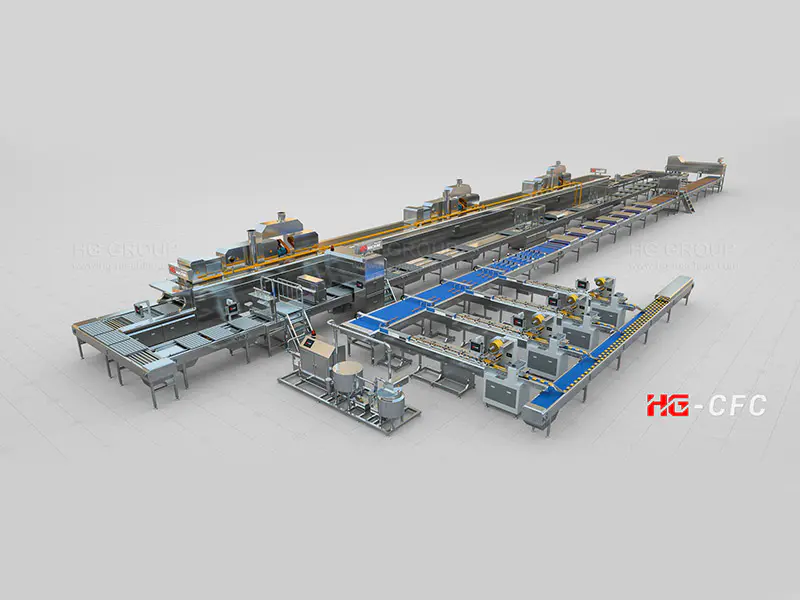
A modern automatic cupcake production line is built as a continuous flow, where each station hands off to the next with minimal manual intervention:
- Mixing — Batter is mixed in batches or continuously, with parameters (speed, time, temperature) set per recipe.
- Depositing/Filling — The batter is metered and injected into paper cups or trays via volumetric or weight-based depositors, either free-standing on a tray or already seated in a baking pan.
- Baking — Filled cups move through a tunnel oven with multiple, independently controlled temperature zones.
- Cooling — Baked cupcakes pass through a spiral or linear cooling tunnel to bring them down to a safe handling temperature before demolding and topping.
- Demolding — Cupcakes are released from baking pans (if pans were used) without tearing the paper liner or damaging the crumb.
- Filling/Decorating — Optional stations inject cream or fruit filling, then pipe, swirl, or spray icing, and apply toppings such as sprinkles, sugar decorations, or nuts.
- Packaging — Finished cupcakes are counted, placed into trays or clamshells, wrapped, and case-packed, often with date coding and metal detection built into the final stretch of the line.
Each of these stations can be run as a standalone machine for smaller operations, or linked by conveyors into a single synchronized line for higher-volume plants. The key advantage of a fully integrated line is that speed and timing are matched end to end — the oven's throughput, the cooling tunnel's length, and the packaging line's rate are all sized to move product without bottlenecks or idle gaps.
3.Depositing Accuracy and Why Cup-Fill Consistency Matters
The depositor is arguably the single most important machine on the line, because it determines both product appearance and ingredient cost simultaneously.
Overfilled cups waste batter — at high volumes, even a 2–3% overfill adds up to a significant material cost over a production year. Underfilled cups produce visibly short cupcakes that don't meet retail packaging height requirements and get rejected or downgraded.
Fill accuracy depends on:
- Depositor type — piston-based volumetric depositors are common for standard batters; weight-checked or servo-driven depositors offer tighter tolerances for premium or export-grade product lines.
- Nozzle count and layout — matched to cup spacing on the tray to fill an entire row in one pass without dripping between cups.
- Batter viscosity feedback — some systems adjust dosing pressure in real time if batter thickness drifts during a long run.
Consistent fill weight isn't just a cosmetic issue — it directly affects bake time (a heavier cup needs slightly longer in the oven) and therefore texture consistency across a batch.
4.Product Flexibility: One Line, Many Recipes
A well-designed cupcake line isn't locked into a single product. Bakeries producing for retail, foodservice, or export commonly need to run:
- Different cup sizes and weights — from mini bite-size cupcakes to standard 60–80g retail cups to larger bakery-style portions.
- Different paper cup or tray materials — greaseproof paper, foil-lined cups, or recyclable board, depending on market requirements.
- Different recipes — vanilla, chocolate, marble, gluten-free, or vegan formulations, each with its own viscosity and bake profile.
- Different filling and decoration combinations — plain iced, cream-filled, fruit-filled, or multi-topping seasonal SKUs.
Depositor nozzles, mold sets, and oven profiles that can be changed over quickly are what let a single line serve multiple SKUs without a full changeover shutdown — an important factor for bakeries running seasonal or promotional cupcake variants alongside their core range.
5.Baking System Choices and Their Impact on Texture & Shelf Life
The oven is where batter becomes cupcake, and the type of baking system chosen has a direct effect on crumb texture, moisture retention, and shelf life.
- Tunnel ovens with multiple zones allow different temperatures for the rise phase, color development phase, and final set phase — important for achieving an even dome without over-browning the top before the center is fully baked.
- Even heat distribution (top and bottom heat balance, airflow design) prevents the classic problems of sunken centers or overly dark bottoms.
- Bake time and temperature profile affect final moisture content — slightly under-baked cupcakes may have better perceived softness at the point of sale but shorter shelf life due to higher residual moisture, while a properly dialed-in profile balances softness against food-safety and shelf-life requirements.
Because baking is the step with the least room for correction afterward, it's usually worth investing more engineering attention here than anywhere else on the line — a mistake in mixing can sometimes be partially masked by icing and toppings, but a bake defect is baked in.
6.Matching Line Capacity to Your Bakery's Production Scale
Buying more line than you need ties up capital in idle capacity; buying less than you need creates bottlenecks the moment orders grow. Capacity planning should start from actual demand, not from the biggest machine a supplier offers.
Typical scale tiers include:
- Small/artisan operations running semi-automatic depositors feeding a standard deck or rack oven, with manual packaging.
- Mid-size regional bakeries running a linked depositor–oven–cooling tunnel with semi-automatic packaging.
- Large-scale or export bakeries running a fully synchronized line with automatic depositing, tunnel baking, cooling, decorating, and case packing.
Planning for Growth: Phased Expansion
Order volumes rarely stay flat, so it's worth planning the line layout with future expansion in mind from day one:
- Leave physical floor space and utility capacity (power, compressed air) for an additional oven module or a second depositor.
- Choose a conveyor and control system that can be extended rather than replaced when a new station is added.
- Add automation in stages — for example, starting with manual decorating and upgrading to an automatic depositor/decorator once volume justifies the investment, rather than committing to full automation before demand is proven.
This staged approach lets a bakery scale output as orders grow without re-engineering the whole plant each time.
7.Reducing Ingredient Waste and Energy Costs on a Running Line
Once a line is running, day-to-day efficiency comes down to controlling two cost drivers: ingredients and energy.
- Depositor calibration — regular checks against target fill weight reduce batter overfill, one of the largest avoidable material costs on a cupcake line.
- Batch scheduling — grouping similar recipes together reduces cleaning downtime and wasted purge batter during changeovers.
- Oven zone control — running only the zones needed for current throughput, rather than keeping the full tunnel at maximum temperature during partial runs, reduces energy use.
- Cooling tunnel sizing — a cooling tunnel matched to actual line speed avoids over-cooling (wasted energy) or under-cooling (product handling problems downstream).
Small, ongoing adjustments in these areas tend to save more over a year than any single piece of new equipment.
8.Quality Checks Worth Running on Every Batch
Consistent output on paper doesn't always match consistent output in the box, which is why routine quality checks should be built into every shift, not treated as a periodic audit:
- Fill weight sampling at the depositor to catch drift before it affects a full batch.
- Bake color and dome shape checks at oven exit to catch temperature zone problems early.
- Moisture/texture spot checks to confirm shelf-life expectations are being met.
- Metal detection and weight verification at the packaging stage as a final food-safety and completeness check.
- Visual inspection for liner damage after demolding, since torn or scorched liners are a common cause of retail rejects.
Catching a problem at the depositor is far cheaper than catching it at the packaging line, so the earlier in the process a check happens, the less product is wasted correcting it.
9.What to Compare Before Choosing a Cupcake Line Supplier
Choosing between suppliers is rarely just a price comparison. A few factors tend to matter more over the life of the equipment than the initial quote:
- Full-line solution vs. single machines — a supplier who engineers the mixer, depositor, oven, cooling, decorating, and packaging as one coordinated system avoids the throughput mismatches that come from bolting together equipment from different sources.
- Factory layout and space planning — a supplier that reviews your actual floor plan, ceiling height, and utility access before proposing a layout saves costly rework during installation.
- Recipe and formulation support — the ability to test and validate your specific batter formula on the actual equipment before purchase reduces the risk of buying a line that doesn't suit your product.
- Installation and commissioning — on-site setup, calibration, and line synchronization handled by the supplier's own engineers rather than a third party.
- Training — proper operator and maintenance training so the line runs at rated capacity from week one, not after months of trial and error.
- After-sales support — availability of spare parts, technical support response time, and service coverage in your region.
- Expansion capability — whether the supplier can add capacity to the same line later, or whether growth means starting over with a new system entirely.
A cupcake line is a long-term production asset. Weighing these factors alongside price avoids the more expensive mistake of choosing a line that can't be supported or expanded down the road.
10.Why Bakeries Keep Choosing HG as They Scale
Bakeries that plan to grow tend to favor suppliers they can stay with through multiple expansion phases, rather than switching vendors each time capacity needs increase.
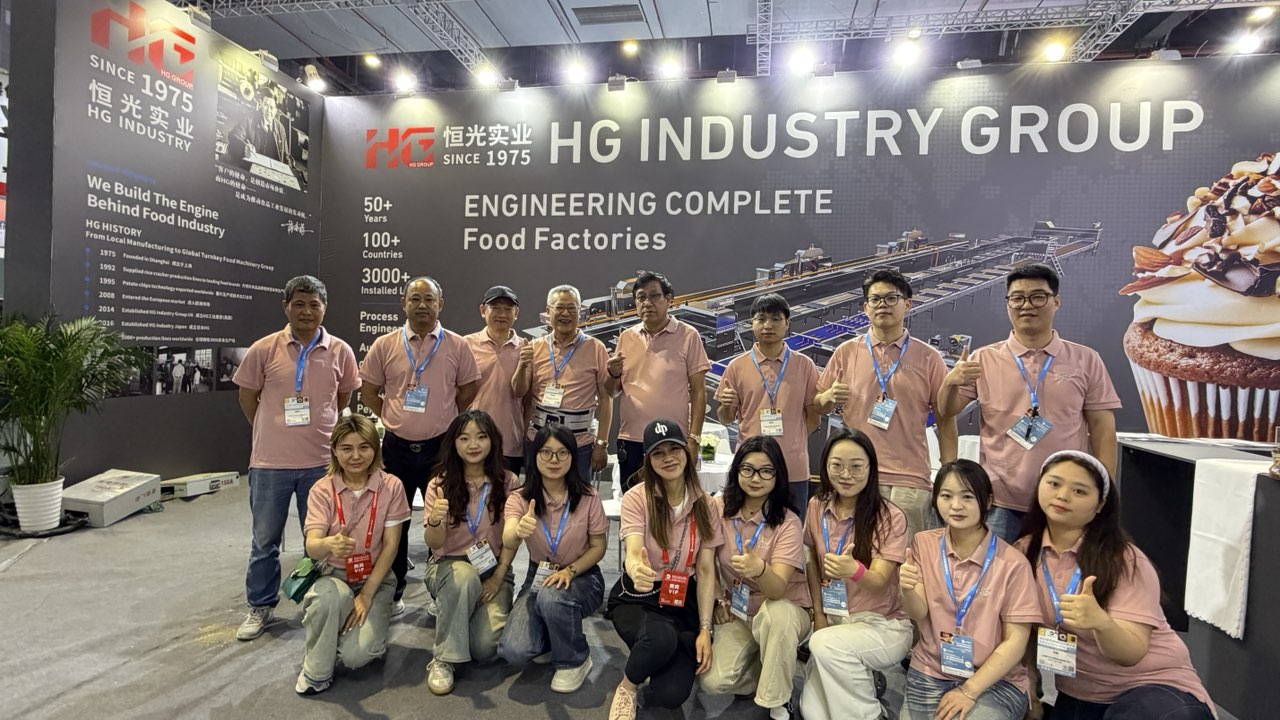
HG has supplied food processing and bakery equipment for over 50 years, with installations running in more than 100 countries — a track record that reflects both equipment durability and the ability to support a wide range of recipes, cup formats, and regulatory environments across different markets.
What keeps bakeries coming back as they scale typically includes:
- Turnkey line design — mixing, depositing, baking, cooling, decorating, and packaging engineered together as a single, synchronized system rather than mismatched individual machines.
- Recipe support — formulation testing and adjustment support so a bakery's specific batter performs correctly on the actual production equipment before full-scale commitment.
- Installation and training — on-site commissioning and operator training aimed at getting a new line to rated output quickly.
- Ongoing service — parts and technical support structured to keep an existing line running at capacity, rather than requiring downtime waits between service visits.
- Expansion-friendly design — many customers who started with a single depositor-and-oven setup have added cooling, decorating, or packaging modules to the same line as their order volumes grew, rather than replacing the system outright.
That pattern of bakeries returning to add capacity to an existing HG line — instead of starting over with a different supplier — is, in practice, one of the clearest signs of a production system that was built to scale with the business, not just to fill an initial order.
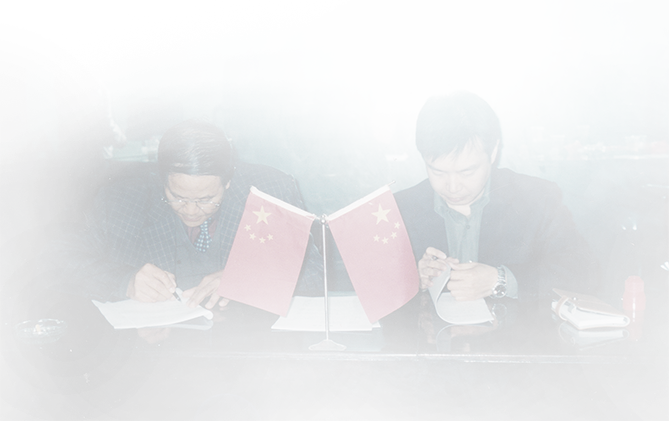
A historic signing moment from the 1970s, when HG’s founder helped drive the development of China’s food industry and began expanding into international markets.
Over the past decades, we have participated in the evolution of automated food production — from local factories to global turnkey projects across 100+ countries. That experience continues to shape every HG production line today.
Discover Our Heritage
Global Food Machinery &
Turnkey Factory Solutions

Building Long-Term Partnerships Through Shared Growth and Industrial Value.
Copyright © HG Industry Group All Rights Reserved
Food Machine Snack Food Processing Machinery

Unauthorized use of this website's content constitutes copyright infringement and may result in legal action.