 English
 中文简体
中文简体 日本語
日本語 русский
 عربى
عربى Український
 Español
 Français


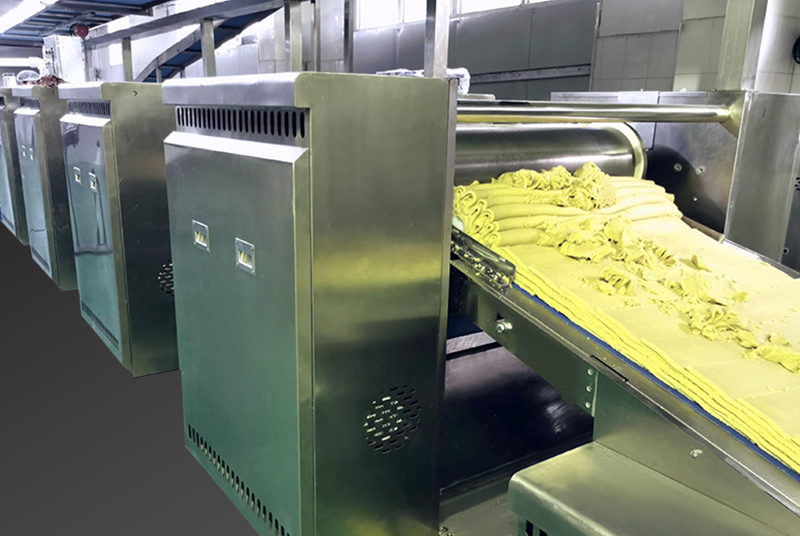
Automatic Filled Biscuit Production Line
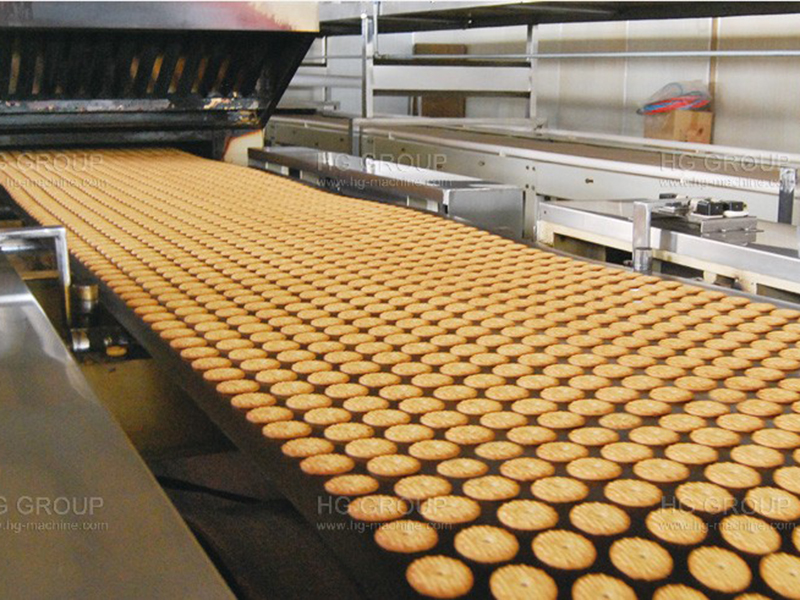
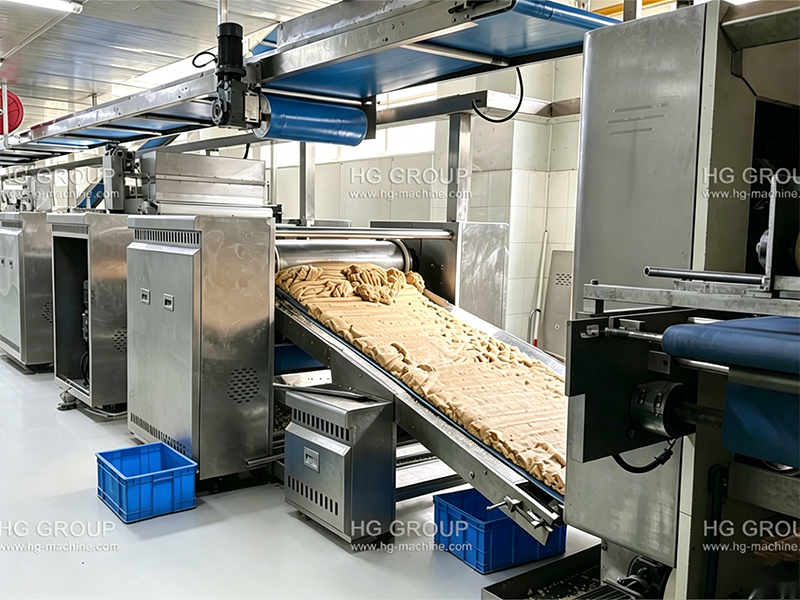
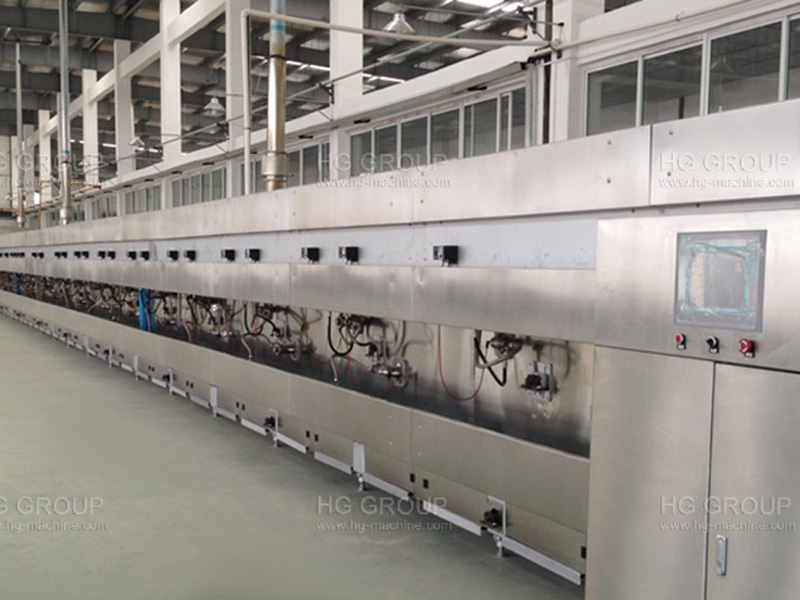
HG Automatic Filled Biscuit Production Line
Post-Bake Single-Biscuit Injection
HG Filled Biscuit Production Line is designed to inject filling into a single biscuit after the biscuit has been formed, baked and cooled. The process focuses on feeding the baked biscuit, positioning it for injection, controlling filling delivery and transferring the filled product to packaging.
Biscuit structure and strength, injection location, filling viscosity and temperature, and target filling weight determine the injection configuration. Evaluate the actual biscuit and filling together when selecting the line.
Single-Biscuit Post-Bake Injection Process
Biscuit dough preparation → biscuit forming → baking → cooling → single-biscuit feeding → positioning → filling injection → inspection as configured → arranging → packaging connection.
Filling is added after baking and cooling. Select the feeding, positioning and injection modules around the single-biscuit sample and required output.
Advantages of HG Filled Biscuit Production Line
1. Post-Bake Injection Automation
Coordinate baked-biscuit feeding, positioning and filling injection after cooling. Match product pitch, injection cycle, downstream inspection and packaging-feed speed. Define the upstream biscuit line and final packaging equipment separately in the project scope.
2. Product-Specific Quality Control
Control baked-biscuit dimensions and strength, cooling condition, feeding pitch, injection position, filling temperature and viscosity, deposit weight, leakage and handling damage. Inspection and rejection functions depend on the selected configuration.
3. Flexible Product Solutions
Post-bake injected biscuits made by adding filling to one baked biscuit. Cream, chocolate or jam filling can be evaluated using the actual biscuit structure, filling properties and selected injection module.
4. Output at the Injection Section
Evaluate pieces per minute using the biscuit dimensions, lane count, injection cycle, filling quantity and packaging speed. Confirm output under the agreed biscuit and filling conditions.
5. Hygienic Design and Cleaning Access
Specify food-contact materials and cleaning procedures for the selected equipment. Review access to filling tanks, pipes, depositing heads and biscuit conveyors. Material grades and component details follow the equipment specification.
6. Injection Control and Line Coordination
Control baked-biscuit dimensions and strength, cooling condition, feeding pitch, injection position, filling temperature and viscosity, deposit weight, leakage and handling damage. Inspection and rejection functions depend on the selected configuration. Coordinate upstream supply, injection and downstream transfer. Define control functions and utilities for the selected model.
Packaging Solutions
Packaging Connection
Define filled-biscuit arrangement, product pitch, filling-setting requirements and pack format before selecting feeding, wrapping or cartoning modules.
The final packer, automatic feeding and cartoning scope are listed separately in the quotation.
HG Turnkey Factory Solution
The project scope can include factory layout, equipment manufacturing, installation and commissioning, operator training, packaging integration, after-sales service and spare parts. Recipe or process support is defined in the agreed project scope.
Product trials can evaluate biscuit structure and strength, injection access, filling properties, injected weight, leakage, biscuit breakage and packaging feed. Agree the sample, operating conditions and acceptance criteria before final configuration.
Global Project Experience
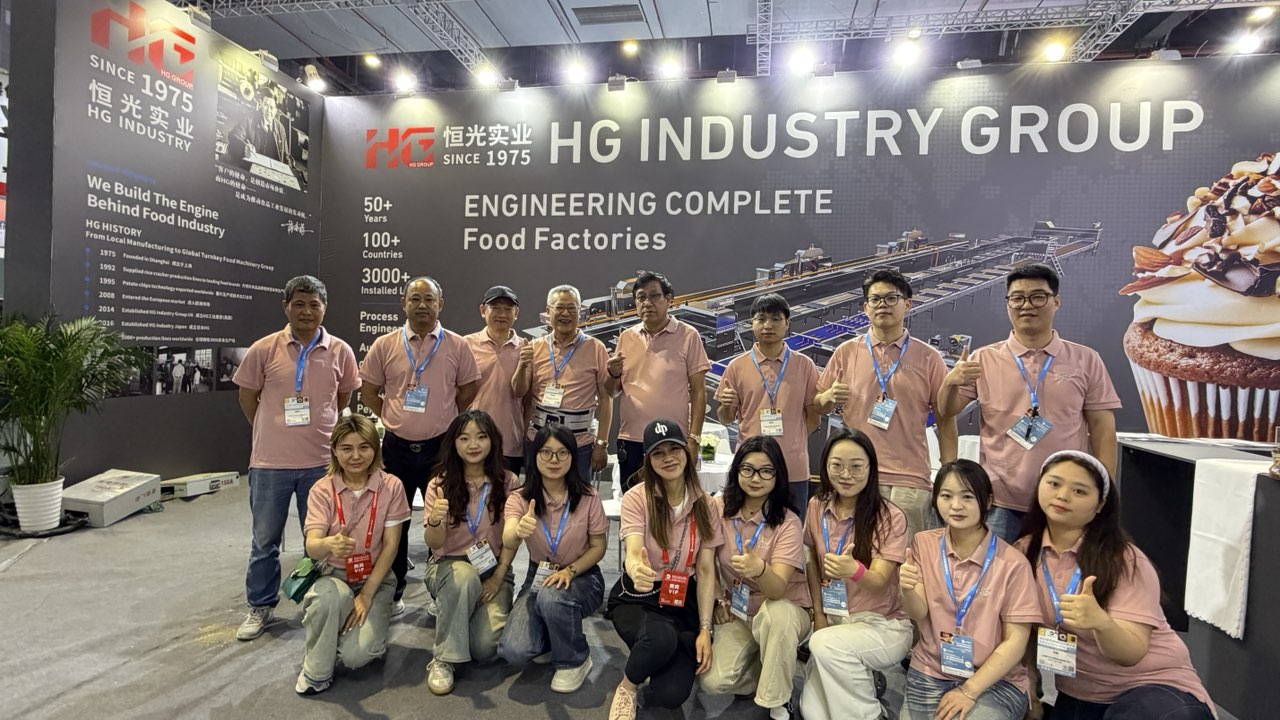
HG Group has more than 50 years of food machinery manufacturing experience and has exported biscuit and bakery processing equipment to more than 100 countries worldwide.
HG filled biscuit production lines are widely used in:
* Biscuit factories
* Bakery snack food factories
* Food processing plants
* Export food companies
* Global snack food brands
Physical running machines are available in HG factories, and customers worldwide are welcome to visit for machine inspection and product testing.
Read More
Why Choose HG Filled Biscuit Production Line?
Choose an Injection System Matched to the Baked Biscuit
The biscuit is baked and cooled before filling is injected. Feeding and positioning must present the single biscuit consistently to the injection head. Filling viscosity, temperature and injection quantity must be evaluated together.
For an existing-line upgrade, review the cooling conveyor, biscuit pitch, lane count, available space and packaging speed. Use product trials to define the injection configuration and acceptance criteria.
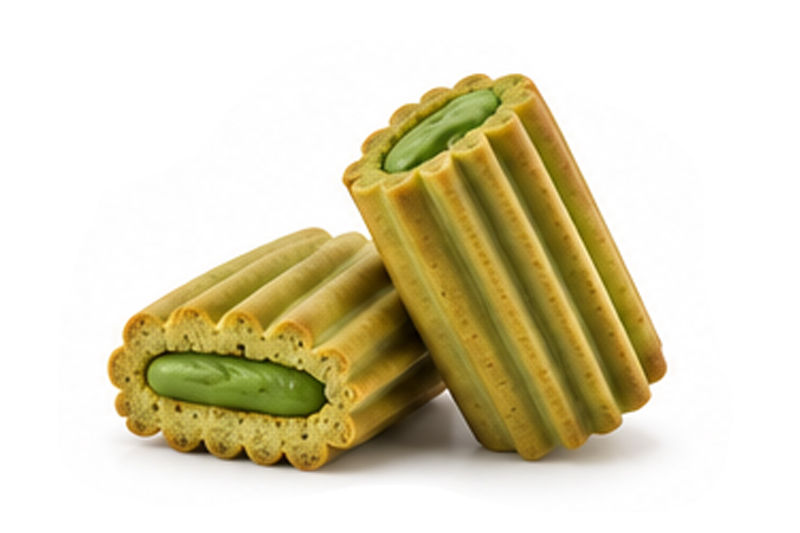
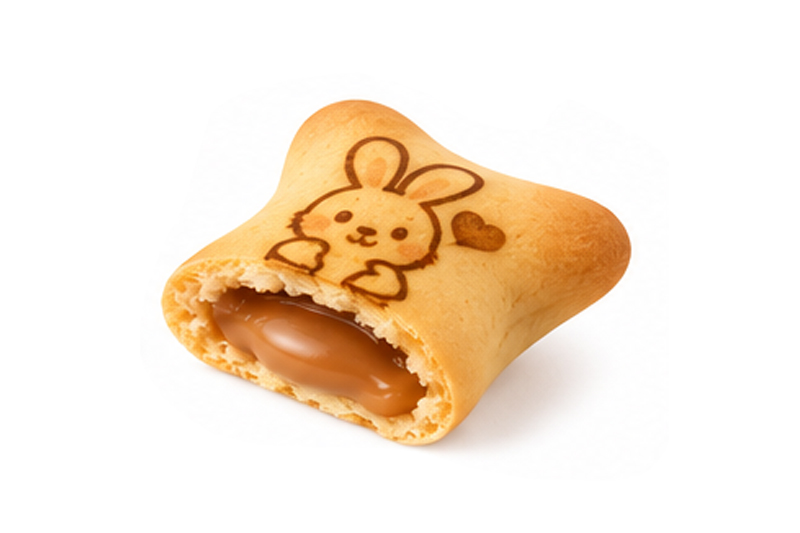
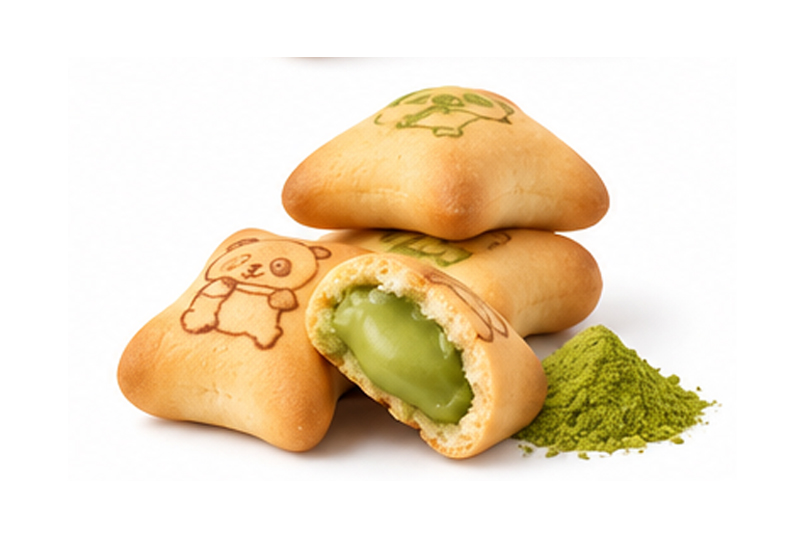
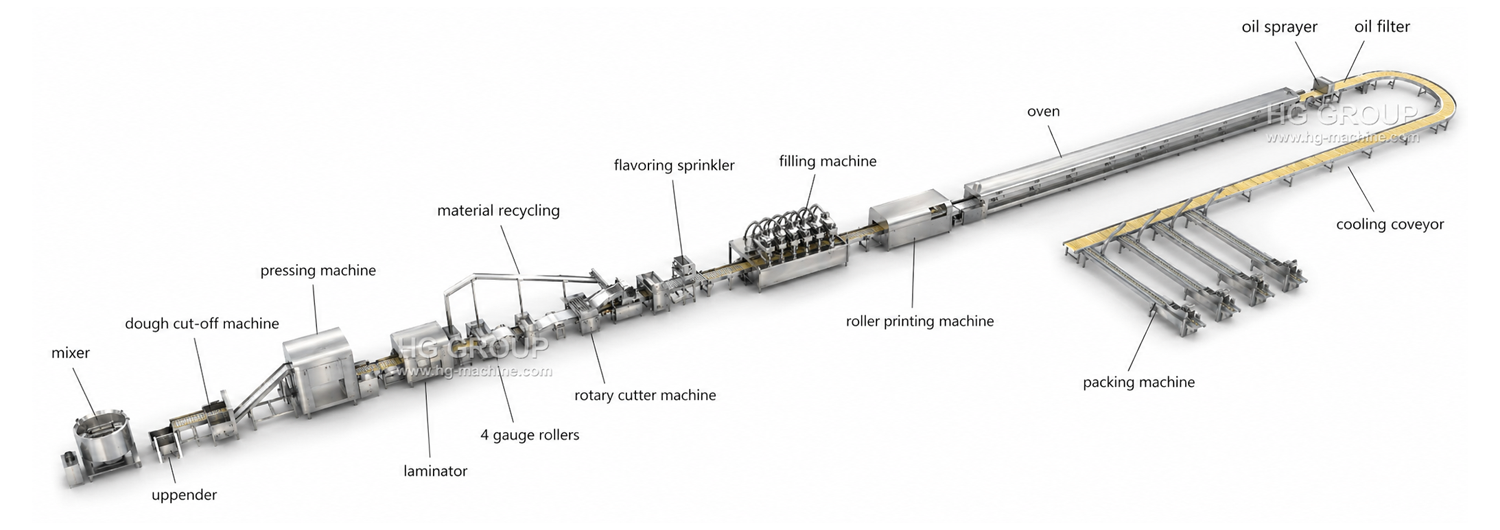
The filling section starts after biscuit baking and cooling. It feeds and positions individual biscuits for injection, then transfers the filled products toward packaging.
Control baked-biscuit dimensions and strength, cooling condition, feeding pitch, injection position, filling temperature and viscosity, deposit weight, leakage and handling damage. Inspection and rejection functions depend on the selected configuration.
For retrofit projects, record inlet and outlet heights, lanes, speed, accumulation space and packer requirements. Measure injection performance using the agreed biscuit and filling.
Before HG: Injection Issues to Evaluate
Irregular biscuit feeding, inconsistent injection position, changes in filling condition, leakage and biscuit damage can disrupt production.
With HG: Product-Matched Single-Biscuit Injection
Evaluate the cooled biscuit and filling together. Configure feeding, positioning, injection and gentle transfer, then agree checks for filling quantity, position, leakage, breakage and downstream continuity.
-
 50+ Years Since 1975
Engineering and manufacturing experience in food-processing equipment.
50+ Years Since 1975
Engineering and manufacturing experience in food-processing equipment.
-
 Project Scope and Layout
Plan soft, hard and soda biscuits production around the product, utilities and packaging interface.
Project Scope and Layout
Plan soft, hard and soda biscuits production around the product, utilities and packaging interface.
-
 Delivery Planning
Agree equipment scope, manufacturing schedule and project milestones.
Delivery Planning
Agree equipment scope, manufacturing schedule and project milestones.
-
 Operating-Cost Evaluation
Assess output, material use, staffing and utilities under defined conditions.
Operating-Cost Evaluation
Assess output, material use, staffing and utilities under defined conditions.
-
 Startup Support
Installation, commissioning, training and process support follow the agreed scope.
Startup Support
Installation, commissioning, training and process support follow the agreed scope.
-
 After-Sales Service
Remote support, spare parts and engineer assistance are arranged for the project.
After-Sales Service
Remote support, spare parts and engineer assistance are arranged for the project.
With manufacturing heritage since 1975, HG supplies food-processing equipment to customers in more than 100 countries. For soft, hard and soda biscuits, HG can coordinate factory layout, equipment manufacturing, utility planning, installation, commissioning and operator training within the project scope.
Configuration is developed around the target product, required output, factory space and local utilities. Refer to the relevant equipment specification, certificates and project cases for the supplied scope.
Global Installation Support | Custom Engineering | Turnkey Factory Expertise
HG production lines have been successfully supplied to customers across the Middle East, Europe, Asia, Africa and Latin America. With extensive export experience, HG supports international projects with machine manufacturing, shipping coordination, overseas installation and long-term technical service. Trusted in Saudi Arabia, UAE, Algeria, Egypt, Russia, India, Indonesia, Mexico and 100+ countries worldwide.















HG Post-Bake Injected Biscuit Production Line FAQ
Q1: What is a post-bake injected biscuit production line?
It injects filling into a single biscuit after baking and cooling. Biscuit dough preparation → biscuit forming → baking → cooling → single-biscuit feeding → positioning → filling injection → inspection as configured → arranging → packaging connection.
Q2: What products can the HG filled biscuit production line produce?
Post-bake injected biscuits made by adding filling to one baked biscuit. Cream, chocolate or jam filling can be evaluated using the actual biscuit structure, filling properties and selected injection module.
Q3: Is the HG filled biscuit production line fully automatic?
Coordinate baked-biscuit feeding, positioning and filling injection after cooling. Match product pitch, injection cycle, downstream inspection and packaging-feed speed. Define the upstream biscuit line and final packaging equipment separately in the project scope.
Q4: What are the advantages of HG filled biscuit production lines?
Control baked-biscuit dimensions and strength, cooling condition, feeding pitch, injection position, filling temperature and viscosity, deposit weight, leakage and handling damage. Inspection and rejection functions depend on the selected configuration.
Q5: What production capacities are available?
Capacity depends on biscuit size, lane count, injection cycle, filling quantity and packing speed. Capacity in pieces/min and the corresponding product basis.
Q6: What processing technology does HG use?
Biscuit dough preparation → biscuit forming → baking → cooling → single-biscuit feeding → positioning → filling injection → inspection as configured → arranging → packaging connection.
Q7: Can the HG filled biscuit production line produce different flavors?
Post-bake injected biscuits made by adding filling to one baked biscuit. Cream, chocolate or jam filling can be evaluated using the actual biscuit structure, filling properties and selected injection module.
Q8: Can HG provide recipe support?
Process support can evaluate the baked biscuit structure, injection access, filling behaviour and injected quantity. Trials and support are defined in the project scope.
Q9: What material is used for the machine?
Product-contact materials and cleaning procedures are defined in the equipment specification. Review access to dough or filling contact parts and the selected product-handling equipment.
Q10: Can HG provide packaging solutions?
Confirm injected-biscuit size, condition, arrangement and pack format. Coordinate injection output, inspection, arranging and packer-feed speed. Final packaging equipment follows the agreed supply scope.
Q11: How much labor can be saved with an automatic filled biscuit production line?
Staffing depends on replenishment, material preparation, machine feeding, cleaning, changeovers and packing automation. Establish the current baseline and proposed operating plan. Compared with traditional manual production, HG fully automatic filled biscuit production lines can reduce labor costs by up to 60–70%.
Q12: Which industries use filled biscuit production lines?
Industrial biscuit manufacturers that need filling injected into individual baked biscuits, including suitable new-line and retrofit projects. Confirm product compatibility using the actual biscuit and filling.
Q13: Can HG provide turnkey factory solutions?
The project scope can include layout, equipment manufacturing, installation, commissioning, training, packaging integration and after-sales support. Confirm the supplied equipment and process-support scope in the quotation.
Q14: What is the ROI period for a filled biscuit factory?
Payback depends on investment, saleable output, raw materials, staffing, utilities, maintenance and local selling conditions. Calculate it using product-specific assumptions.
Q15: Which countries already use HG filled biscuit production lines?
HG food-processing equipment is supplied to customers in more than 100 countries. Relevant project cases identify the food category, supplied equipment and location; group-level export coverage is not a list of installations for each particular line.
Q16: Why choose HG filled biscuit production lines?
Control baked-biscuit dimensions and strength, cooling condition, feeding pitch, injection position, filling temperature and viscosity, deposit weight, leakage and handling damage. Inspection and rejection functions depend on the selected configuration.
Q17: Can customers visit the HG factory?
Arrange a factory visit or trial with HG in advance. Provide the target product, samples and test requirements so relevant equipment and timing can be agreed.
Q18: Does HG provide technical training and support?
Training can cover biscuit feeding, injection settings, filling preparation, cleaning, maintenance and packaging interfaces within the supplied scope.
Q19: What types of factories are suitable for HG filled biscuit production lines?
Industrial biscuit manufacturers that need filling injected into individual baked biscuits, including suitable new-line and retrofit projects. Confirm product compatibility using the actual biscuit and filling.
Q20: What makes HG filled biscuit production lines different?
Control baked-biscuit dimensions and strength, cooling condition, feeding pitch, injection position, filling temperature and viscosity, deposit weight, leakage and handling damage. Inspection and rejection functions depend on the selected configuration.
Q21: When is filling injected into the biscuit?
After the single biscuit has been formed, baked and cooled. Injection occurs at the downstream feeding and positioning section.
Q22: What determines the injection position and quantity?
Biscuit structure, available injection access, dimensions, strength and filling properties determine the settings. Use a sample trial to establish target filling weight, positioning and leakage criteria.
Q23: Can an injection section be added to an existing biscuit line?
Evaluate the cooled biscuit and filling, conveyor heights, lanes, output, available space and packaging speed.
Q24: What information is needed for a quotation?
Send a single-biscuit sample or drawing, dimensions, piece weight, internal structure and intended injection location. Include filling type, target filling weight, known temperature or viscosity data, output, pack format, factory space, utilities and any existing-line interface information.
Industry Knowledge
Understanding Post-Bake Injected Biscuits
A post-bake injected biscuit is a single biscuit that receives filling after baking and cooling. Its internal structure, injection access and strength determine whether the intended filling process is suitable. Product selection starts with the actual biscuit sample and filling properties.
Core Process Flow
Biscuit dough preparation → biscuit forming → baking → cooling → single-biscuit feeding → positioning → filling injection → inspection as configured → arranging → packaging connection.
The biscuit is baked before the injection stage. Cooling prepares the biscuit for handling and the selected filling conditions.
Injection Equipment and Interfaces
Select the biscuit feeder, lane guides, positioning section and injection system around the biscuit dimensions, structure and strength. Match the injection cycle to product pitch and line speed. Specify inspection, product arranging and packaging interfaces in the supply scope.
Biscuit Preparation and Feeding
Prepare and form the biscuit base using the product-specific dough and tooling. After baking and cooling, evaluate dimensions, weight, structure and handling strength. These properties determine feeding and injection requirements.
Forming, Baking and Cooling Before Injection
Form and bake the biscuit first. Cool it to a condition suitable for handling and the selected filling. Check shape, dimensions and breakage before introducing the biscuit to the injection section.
Positioning and Filling Injection
Present each biscuit consistently to the injection head. Evaluate injection location and access, filling viscosity and temperature, injected quantity and injection settings. Check for leakage and damage with the actual biscuit. Injection and inspection functions follow the selected configuration.
Single-Biscuit Structures and Filling Options
Evaluate each biscuit and filling combination by sample testing. Changes in biscuit size, injection access or filling properties may require different guides, injection settings or tooling.
| Biscuit/filling option | Injection evaluation | Selection requirement |
| Single biscuit with cream filling | Post-bake cream injection | Confirm biscuit structure, injection access, cream condition and target filling weight. |
| Single biscuit with chocolate filling | Post-bake injection of a suitable chocolate filling | Confirm working temperature, flow behaviour, injection quantity and downstream product condition. |
| Single biscuit with jam or another specified filling | Evaluate filling suitability using the actual product | Confirm viscosity, any particles, injection access, leakage and cleaning requirements. |
Automation, Cleaning and Injection Checks
Define biscuit-presence, injection and rejection checks for the selected configuration. Review cleaning access to filling tanks, pipes and injection heads. Plan flavour changes and transfer to packaging. Additional weighing, metal detection or vision systems are specified separately when required.
Operating Conditions and Maintenance
Plan replenishment, cleaning, flavour changes, maintenance and spare parts around the intended operating schedule. Confirm the output basis and service scope instead of assuming a fixed number of production hours per day.
HG Industry’s Expertise in Filled Biscuit Production Lines
With over 50 years of experience in food machinery, HG Industry Group provides complete filled biscuit production line solutions tailored to different markets and capacity requirements. Its manufacturing arm, HG Food Machinery, established in 1975, has evolved into a global industrial network with seven machinery branches, two food laboratories, and an industrial university.
HG Industry integrates advanced R&D from Japan, intelligent manufacturing in Shanghai, and global service support through its international trading platform. This structure allows the company to deliver not only equipment, but also process optimization, product testing, and turnkey factory solutions.
Relevant Project References
HG supplies food-processing equipment to customers in more than 100 countries and regions. Use the project cases to identify the actual food type, equipment scope and application. Group-level brand relationships do not imply that every named customer operates this particular filled-biscuit line.
Practical Considerations Before Investing in a Line
Before selecting a filled biscuit production line, manufacturers should clearly define capacity targets, product positioning, and future expansion plans. A scalable design, reliable technical support, and proven references are often more valuable than short-term cost savings.
-
Confirm compatibility with local raw materials
-
Evaluate energy consumption and maintenance needs
-
Choose suppliers with global service capability
A professionally designed filled biscuit production line is not just a manufacturing asset, but a long-term foundation for brand growth, product innovation, and global market expansion.
Information for a Post-Bake Injection Proposal
Send a single-biscuit sample or drawing, dimensions, piece weight, internal structure and intended injection location. Include filling type, target filling weight, known temperature or viscosity data, output, pack format, factory space, utilities and any existing-line interface information.
Related Biscuit Resources
Soft / Hard / Soda Biscuit Production Line
Biscuit injection project information
Biscuit production videos and packaging integration
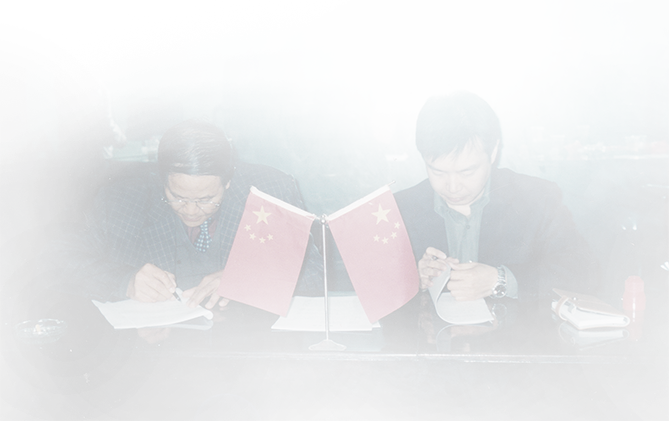
A historic signing moment from the 1970s, when HG’s founder helped drive the development of China’s food industry and began expanding into international markets.
Over the past decades, we have participated in the evolution of automated food production — from local factories to global turnkey projects across 100+ countries. That experience continues to shape every HG production line today.
Discover Our Heritage
Global Food Machinery &
Turnkey Factory Solutions

Building Long-Term Partnerships Through Shared Growth and Industrial Value.
Copyright © HG Industry Group All Rights Reserved
Food Machine Snack Food Processing Machinery

Unauthorized use of this website's content constitutes copyright infringement and may result in legal action.