 English
 中文简体
中文简体 日本語
日本語 русский
 عربى
عربى Український
 Español
 Français


Wafer Making Machine Buying Guide: What Actually Matters Before You Order One
Content
- What a Wafer Making Machine Actually Produces
- Main Types of Wafer Making Machines on the Market
- How the Baking Plates Determine Product Quality
- Batter Consistency: The Variable Most Buyers Overlook
- Comparing Manual, Semi-Automatic, and Fully Automatic Models
- Energy Source and Running Cost Considerations
- Troubleshooting Common Wafer Defects
- Checklist Before Placing an Order
Buying a wafer making machine sounds simple until you start comparing suppliers and realize every listing claims to be "high efficiency," "industrial grade," and "easy to operate." None of that tells you whether the machine will actually produce the wafer you need, at the volume you need, without breaking your production budget. This guide walks through the factors that genuinely affect output quality and long-term running cost, so you can evaluate machines on substance rather than marketing language.
What a Wafer Making Machine Actually Produces
Before comparing models, it helps to be precise about what "wafer" means in this context, since the term covers several different products. A wafer making machine is generally built to produce one of the following:
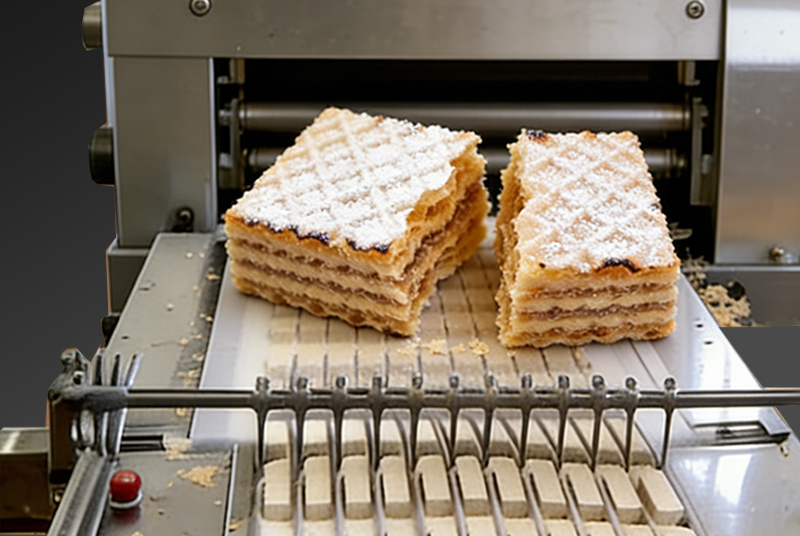
- Flat sheet wafers – thin, crisp sheets used as a base for wafer sandwiches, ice cream wafers, or layered wafer biscuits.
- Rolled wafers (wafer sticks/tubes) – thin sheets rolled into tubes while still warm and pliable, often filled with cream.
- Cone-shaped wafers – used for ice cream cones, requiring molds that shape the batter as it bakes.
- Egg roll style wafers – a thicker, denser variation popular in some regional markets.
Each of these end products requires a different plate design, baking cycle, and sometimes a different batter formulation. A machine optimized for flat sheet wafers will not automatically produce good cones, even if the manufacturer markets it as multi-purpose. The first real decision in the buying process is identifying exactly which product you intend to make, since this determines nearly every other specification you'll be evaluating.
Main Types of Wafer Making Machines on the Market
Once the end product is defined, machines generally fall into a few structural categories:
Rotary oven wafer machines use a circular arrangement of baking plates mounted on a rotating structure. Batter is deposited onto each plate as it passes a filling station, and the plate continues rotating through the baking zone before the finished wafer is removed. This design is common in mid-to-large production lines because it allows continuous output without stopping the whole system to load or unload a single plate.
Linear/chain oven wafer machines move baking plates along a straight or looped chain conveyor. These tend to offer more plates in the baking zone at once, which suits higher-volume operations, but they also take up more floor space.
Single or double-plate hand-press machines are the simplest category — essentially a hinged pair of heated plates that a worker opens, fills, closes, and times manually. These are common for small bakeries, test kitchens, or low-volume specialty producers.
Cone and specialty-shape machines are a separate category built specifically around molds rather than flat plates, since cones and rolled shapes need the batter shaped while still hot and flexible.
Matching the category to your production volume matters more than any individual feature. A rotary oven bought for a small bakery that only needs a few hundred wafers a day is often oversized, harder to maintain, and more expensive to run than the output actually requires.
How the Baking Plates Determine Product Quality
The baking plates are arguably the single most important component in the entire machine, yet they're often glossed over in sales conversations that focus on automation features instead. Three plate characteristics deserve close attention:
Material and casting quality. Most plates are cast iron or a cast iron alloy, chosen for even heat retention. Poorly cast plates develop hot spots, which show up as uneven browning or burnt edges on the finished wafer. Ask suppliers directly about the casting process and request sample photos of wafers produced on the exact plate set you'd be buying, not a generic product photo.
Pattern depth and engraving. The pattern etched into the plate determines the wafer's surface texture and, to some degree, its crispness and structural strength. Shallow engraving wears down faster and can flatten out after a few years of use, gradually changing the product's appearance.
Plate gap and clamping pressure. The distance between the top and bottom plate when closed affects wafer thickness directly. If a machine's plate gap isn't adjustable, you're locked into one thickness for the life of the equipment. If you expect to produce more than one wafer thickness, an adjustable gap is worth prioritizing even at extra cost.
Plates also wear out and need replacement over years of use, so ask upfront whether replacement plates are stocked, how much they cost, and whether they're a standard fit or a proprietary part only the original manufacturer can supply.
Batter Consistency: The Variable Most Buyers Overlook
Buyers spend a lot of time comparing machines and very little time thinking about the batter that goes into them, but the two are inseparable. A machine's rated output and quality claims are usually based on a specific batter viscosity, and if your recipe doesn't match that assumption, results will disappoint regardless of how good the equipment is.
Batter that's too thin spreads unevenly across the plate, leaving thin or torn spots. Batter that's too thick doesn't fill the plate's pattern fully, producing a wafer with poor definition and inconsistent thickness. Ambient temperature and humidity in your facility also affect batter behavior day to day, which is why some operations invest in a simple viscosity check as part of their routine rather than relying on visual judgment alone.
Before ordering, it's worth asking the supplier what batter specification their machine is calibrated for, and if possible, running a trial batch with your actual recipe rather than a demo batter provided by the seller. A machine that performs beautifully in a factory demo using an unfamiliar batter formulation may behave very differently once your own ingredients and process are introduced.
Comparing Manual, Semi-Automatic, and Fully Automatic Models
Automation level affects cost, labor requirements, and consistency, and it's usually the biggest single line item in the buying decision.
Manual machines require an operator to pour batter, close the plates, time the bake, and remove the wafer for every cycle. They're inexpensive and simple to maintain, but output is limited by how fast one person can work, and consistency depends heavily on operator skill and attention.
Semi-automatic machines typically automate the baking cycle — heating, timing, and sometimes plate opening — while a person still handles batter dosing or wafer removal. This reduces the skill dependency of manual machines and improves consistency, while keeping capital cost lower than a fully automatic line.
Fully automatic machines handle batter dosing, baking, plate opening, and wafer removal with minimal human intervention, often integrating with downstream equipment like cutting, cooling, or packaging lines. These deliver the highest and most consistent output but come with a significantly higher upfront cost, more complex maintenance, and usually a longer lead time for installation and staff training.
The right choice depends less on which option sounds most advanced and more on your actual production volume, labor availability, and how much variability in staffing you need to plan around. A fully automatic line sitting idle for part of the day because demand doesn't justify its capacity is a common and avoidable mistake.
Energy Source and Running Cost Considerations
The purchase price of a wafer making machine is only part of the total cost. Energy source and consumption affect running costs for as long as the machine is in operation, and this is worth calculating before committing to a model.
Gas-heated machines generally offer faster heat-up times and can be cheaper to run in regions where gas is inexpensive relative to electricity, but they require a gas line installation and additional safety considerations.
Electric-heated machines are simpler to install, since they only need a power connection, and offer more precise, consistent temperature control across plates. Running costs depend heavily on local electricity rates and the machine's insulation quality — poorly insulated units lose more heat and cost more to keep at temperature over a full production shift.
Beyond the heat source itself, consider:
- Plate count and simultaneous baking load – more plates baking at once means higher peak energy draw, which matters if your facility has power capacity limits.
- Insulation and heat retention – better-insulated ovens hold temperature more efficiently between cycles, reducing the energy needed to recover heat after each plate opens.
- Idle energy use – some machines consume meaningful energy just staying at temperature between batches, which matters for operations with irregular production schedules.
Asking a supplier for real energy consumption figures under production conditions — not just a nameplate wattage rating — gives a much more accurate picture of what the machine will actually cost to run over a year.
Troubleshooting Common Wafer Defects
Even a well-chosen machine will produce defects from time to time, and knowing how to read them saves a lot of guesswork once the equipment is in daily use.
Pale or undercooked wafers. Usually points to plate temperature that's too low, a bake cycle that's too short, or plates that haven't fully preheated before the first batch of the day. Check the temperature setting against the supplier's recommended range before adjusting anything else.
Burnt edges with a pale center. This is a classic sign of uneven heat distribution across the plate, often caused by hot spots from poor casting or a worn heating element. If the pattern is consistent across every wafer regardless of batter batch, the issue is almost always the plate or heating system rather than the recipe.
Wafers that stick to the plate. Can result from insufficient release agent, worn or degraded plate coating, or batter with too little fat content. Persistent sticking on plates that used to release cleanly usually signals it's time to recondition or replace the plate surface.
Torn or fragile wafers. Often traces back to batter that's too thin, a bake time that's too short to fully set the structure, or removing the wafer before it's cooled enough to firm up. Thin, delicate wafer styles are more sensitive to this than thicker egg-roll style products.
Inconsistent thickness across plates. Points to uneven clamping pressure or a plate gap that isn't holding steady, which is worth flagging to the supplier if it appears early in the machine's life rather than after years of wear.
Uneven pattern definition. Usually batter viscosity that's slightly too thick to fill the engraved pattern fully, though it can also indicate the pattern itself has started to wear down on older plates.
Keeping a simple log of defects alongside batter batch, ambient temperature, and plate temperature makes it much easier to spot whether a recurring problem is coming from the recipe, the environment, or the machine itself.
Checklist Before Placing an Order
Before confirming a purchase, it's worth working through a short checklist to make sure nothing important has been assumed rather than verified:
- Confirmed the exact wafer product (flat sheet, rolled, cone, egg-roll style) the machine is designed to produce
- Matched machine category (manual, rotary, linear, specialty mold) to actual daily production volume
- Requested sample wafers or photos produced on the specific plate set being purchased, not generic marketing images
- Verified plate material, engraving depth, and whether the plate gap is adjustable
- Confirmed availability, cost, and lead time for replacement plates
- Asked what batter viscosity/specification the machine is calibrated for
- Run or requested a trial batch using your own batter recipe, not just the supplier's demo batter
- Compared automation level (manual/semi-automatic/fully automatic) against realistic labor availability and demand, not just budget
- Requested real energy consumption figures under production conditions, not nameplate ratings only
- Confirmed installation requirements (gas line, electrical capacity, floor space) match your facility
- Clarified warranty terms, what's covered, and average response time for service or parts
- Confirmed after-sales support, including whether technical assistance is available in your time zone/language
- Asked for references or existing customers producing a similar product at a similar scale
Working through this list before signing off on an order catches most of the issues that otherwise surface only after the machine is installed and running.
A wafer making machine is a long-term production asset, and the details that matter most — plate quality, batter compatibility, automation level suited to your actual volume, and real running costs — rarely show up clearly in a spec sheet. Taking the time to verify these factors directly with a supplier, ideally through a sample run with your own batter, is the difference between a machine that fits your operation and one that simply looked good in a listing.

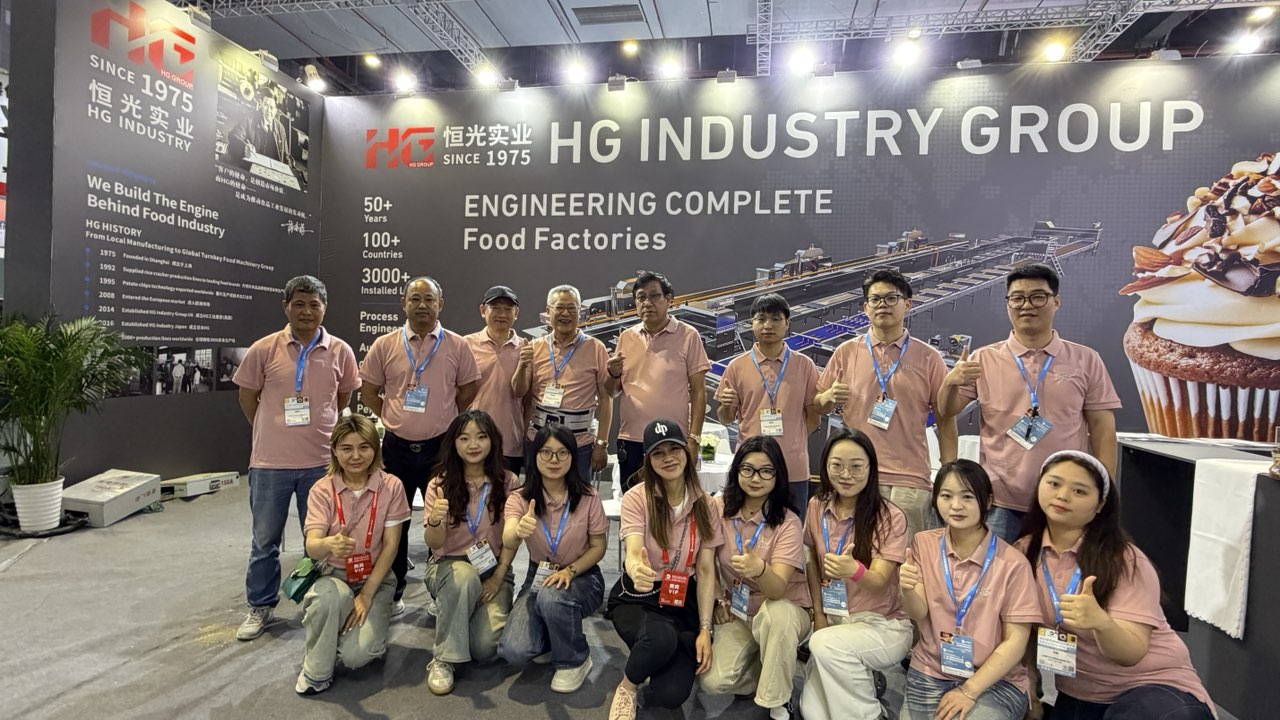
A historic signing moment from the 1970s, when HG’s founder helped drive the development of China’s food industry and began expanding into international markets.
Over the past decades, we have participated in the evolution of automated food production — from local factories to global turnkey projects across 100+ countries. That experience continues to shape every HG production line today.
Discover Our Heritage
Global Food Machinery &
Turnkey Factory Solutions

Building Long-Term Partnerships Through Shared Growth and Industrial Value.
Copyright © HG Industry Group All Rights Reserved
Food Machine Snack Food Processing Machinery

Unauthorized use of this website's content constitutes copyright infringement and may result in legal action.