 English
 中文简体
中文简体 日本語
日本語 русский
 عربى
عربى Український
 Español
 Français


Pastry Production Line: How Automatic Donut and Croissant Bread Lines Deliver Perfect Layers Every Time
Content
- 1. Why Bakeries Switch to a Pastry Production Line
- 2. How Lamination Works on an Automated Line
- 3. What a Full Pastry Production Line Includes — Two Core Configurations
- 4. Matching Line Configuration to Your Product Mix
- 5. Common Problems on a Pastry Production Line and How to Fix Them
- 6. Hygiene and Food Safety on Automated Lines
- 7. Calculating Return on Investment Before You Buy
Consistency is the hardest thing to achieve by hand in laminated dough production. A skilled baker can fold, roll, and rest croissant dough beautifully — but do it eight hours a day, five days a week, and butter temperature drifts, sheet thickness varies, and every tenth batch turns out a little different. This is exactly the problem a pastry production line is built to solve. Whether a bakery is scaling up donut output or trying to hit the exact 27-layer croissant structure customers expect every time, automated lines remove the variability that hand production can't avoid.
This article walks through why bakeries are making the switch, how lamination actually works on a machine, what equipment a full line typically includes, how to match a configuration to your product mix, common problems and fixes, hygiene considerations, and how to think through the ROI math before signing a purchase order.
1. Why Bakeries Switch to a Pastry Production Line
Most bakeries don't wake up one day and decide to automate. The decision usually gets forced by one of a few pressures:
Labor is the biggest driver. Skilled laminators — bakers who can consistently sheet, fold, and rest butter-laminated dough — are difficult to hire and expensive to retain. A single trained laminator might produce a fraction of what a compact automatic line can output in the same shift, and when that person is out sick, production quality drops immediately.
Consistency drives customer retention. Wholesale accounts, hotel chains, and retail bakery customers expect the same croissant or donut every single time. Hand lamination introduces variation in layer count, thickness, and final volume that automated dough sheeting eliminates almost entirely.
Throughput ceilings. A bakery growing beyond a certain daily volume simply cannot scale further with manual lamination tables, no matter how many staff are added. Floor space and labor scheduling become the bottleneck, not demand.
Waste reduction. Inconsistent hand-sheeted dough leads to more rework, misshapen product, and rejected batches. Precision sheeting and cutting on a production line reduces raw material waste, which matters more as butter and flour costs rise.
Product diversification. Once a line is in place, the same core equipment — sheeters, laminators, cutters, provers — can often be reconfigured to produce croissants, danishes, puff pastry, and donuts, letting a bakery diversify its menu without buying entirely separate equipment sets.
2. How Lamination Works on an Automated Line
Lamination is the process of creating alternating layers of dough and fat (usually butter or margarine) that puff apart during baking to form the flaky structure croissants and puff pastry are known for. On an automated line, this happens in a controlled, repeatable sequence:
Dough sheeting. A dough sheeter rolls mixed and rested dough into a uniform sheet of consistent thickness. Uniformity here matters enormously — even a millimeter of variation compounds through dozens of folds.
Butter/margarine encrusting. A butter block or sheet, kept at a precise temperature, is enclosed inside the dough sheet by a dedicated encrusting unit. Temperature control is critical: butter that's too cold cracks during folding, while butter that's too warm gets absorbed into the dough instead of staying as a distinct layer.
Progressive lamination (folding and re-sheeting). The dough-butter package passes through a series of rollers that repeatedly sheet and fold it — typically in 3-fold or 4-fold sequences — building up the alternating layer structure. Automated lines control roller gap, folding pattern, and dough rest time between folds with far more precision than manual work.
Resting/relaxation. Gluten needs time to relax between folds, or the dough will tear or shrink back. Automated lines often integrate cooling tunnels or rest conveyors between lamination stages to manage this without operator guesswork.
Final sheeting and cutting. Once the target layer count is reached, the laminated sheet is rolled to final thickness and cut into croissant triangles, danish squares, or other shapes by a guillotine or rotary cutter, often synchronized with automatic scrap-dough recovery.
Shaping and proofing. For croissants, shaping stations roll the cut triangles into the classic crescent or straight shape before pieces move into a proofer with controlled humidity and temperature to develop volume before baking.
The core advantage over hand lamination is that every one of these variables — sheet thickness, butter temperature, fold count, rest time — is held constant across the entire run, which is what actually produces "perfect layers every time" rather than just some of the time.
3. What a Full Pastry Production Line Includes — Two Core Configurations
Most manufacturers organize pastry lines around two core configurations, since croissant/laminated-dough production and donut production have different core equipment even though they can sometimes share upstream mixing and dough-handling stations.
Configuration A: Croissant and Laminated Pastry Line
- Dough mixer and dough feeding system
- Dough sheeter (initial sheeting)
- Butter/margarine encrusting machine
- Multi-stage laminator (progressive folding and re-sheeting rollers)
- Cooling/resting tunnel between lamination stages
- Final sheeter and gauge rollers
- Cutting station (triangle cutter for croissants, or guillotine for danish/puff pastry squares)
- Automatic curling/shaping unit for croissants
- Proofer (temperature- and humidity-controlled)
- Oven (tunnel oven for continuous baking, or rack oven for smaller runs)
- Cooling conveyor and packaging infeed
Configuration B: Automatic Donut Line
- Dough mixer and depositor/extruder
- Donut forming machine (ring cutter or extrusion-depositing head, depending on whether it's a raised or cake donut line)
- Proofer
- Fryer (continuous conveyor fryer with oil temperature control and automatic turning)
- Oil draining and cooling conveyor
- Glazing/sugaring/filling station (enrober, sugar-doser, or injection filler depending on product)
- Cooling tunnel
- Packaging infeed
A number of manufacturers now offer combination lines where the mixing, dough-feeding, and even sheeting stages are shared between the two configurations, with modular swap-in stations for croissant lamination versus donut forming/frying. This is worth asking about directly if a bakery expects to produce both product types, since it significantly reduces footprint and capital cost compared to two fully separate lines.
4. Matching Line Configuration to Your Product Mix
The right configuration depends less on "what's the best equipment available" and more on your actual product mix, batch sizes, and growth trajectory. A few practical questions guide the decision:
What's your daily/hourly output target? Entry-level compact lines might handle a few hundred kilograms of dough per hour, suitable for a mid-size wholesale bakery. Larger tunnel-oven-integrated lines can handle continuous multi-ton daily output for industrial or export production. Buying more capacity than you need ties up capital; buying too little forces a costly upgrade within a year or two.
How many SKUs do you run? A bakery producing only plain croissants can run a simpler, faster line. One producing croissants, danishes, pain au chocolat, and puff pastry sheets in the same shift needs a line with flexible cutting patterns and quick-change tooling, or throughput suffers from constant changeovers.
Do you need both donut and laminated pastry capacity? If yes, evaluate combination lines early rather than defaulting to two separate purchases — shared mixing and proofing infrastructure can cut both cost and floor space meaningfully.
What's your available floor space and ceiling height? Tunnel ovens and multi-stage laminators have a real footprint; some facilities are constrained enough that a more compact, vertically-stacked line configuration is the only realistic option.
How variable is your fat/butter type? Real butter is more temperature-sensitive than margarine or compound fats. If you're laminating with real butter for a premium product line, prioritize a laminator and encrusting unit with tighter, more responsive temperature control — cheaper units built primarily for margarine can struggle with butter's narrower workable temperature window.
What's your target automation level for shaping and packaging? Some bakeries want full end-to-end automation through primary packaging; others prefer to keep final shaping, decorating, or packing manual for artisanal positioning. This affects which stations you invest in and which you skip.
5. Common Problems on a Pastry Production Line and How to Fix Them
Even well-specified lines run into recurring issues. Most trace back to a handful of root causes:
Uneven or torn lamination layers. Usually caused by butter temperature mismatch with dough temperature, insufficient rest time between folds, or roller gap set too aggressively. Fix: recalibrate butter chiller/tempering unit, extend rest tunnel dwell time, and reduce the reduction ratio per pass.
Dough shrinking back after cutting. This is a classic sign of insufficient gluten relaxation. Fix: add or lengthen a rest stage before the final cut, and check that dough isn't being over-worked in the mixer.
Inconsistent proofing volume. Often a humidity or temperature control fault in the proofer, or dough temperature variation coming out of lamination. Fix: verify proofer sensor calibration and ensure laminated dough enters the proofer within a consistent temperature band.
Donut ring deformation during frying. Typically caused by oil temperature fluctuation or dough that's over- or under-proofed before frying. Fix: check fryer heating element response time and confirm proof time against your specific dough formulation.
Frequent cutter jamming or scrap buildup. Usually dull or misaligned cutting blades, or dough that's slightly too warm and sticky at the cutting stage. Fix: schedule blade sharpening/replacement intervals, and check that cooling tunnels ahead of the cutter are holding target temperature.
Butter leakage during lamination ("butter blowout"). Almost always a sign the butter block was too soft relative to the dough, or the reduction ratio per rolling pass was too aggressive. Fix: tighten butter temperature control and reduce sheeting pass aggressiveness, taking more passes at a gentler ratio.
Line downtime from changeovers. If you run multiple SKUs, slow tooling changeovers eat into effective capacity. Fix: standardize on quick-change cutting dies and shaping tooling, and sequence your production schedule to group similar products together.
Most of these issues are diagnosable from a single root cause — temperature control (butter or dough) or timing (rest and proof stages) — which is why manufacturers with strong PLC-based process control and sensor feedback tend to have fewer of these problems in the first place.
6. Hygiene and Food Safety on Automated Lines
Automation doesn't eliminate hygiene risk — it changes where the risk sits. A few areas deserve particular attention:
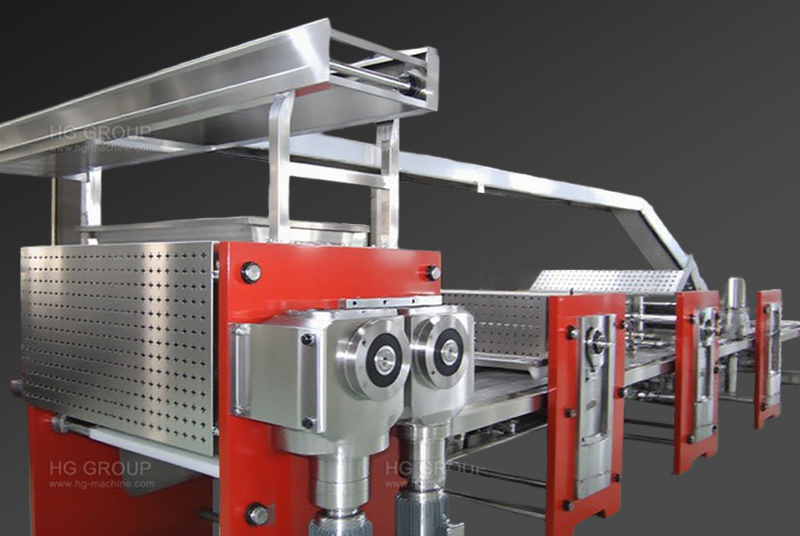
Material selection. Food-contact surfaces should be food-grade stainless steel (typically 304 or 316) with no exposed carbon steel components that can corrode or shed particles into product.
Cleanability of design. Rollers, conveyors, and cutting stations should be designed for tool-free or minimal-tool disassembly so operators can actually clean hard-to-reach areas daily rather than skipping them. Enclosed gearboxes and sealed bearings prevent lubricant contamination of product zones.
Allergen management. If the same line produces both standard and allergen-free product runs (e.g., nut-free days), the line needs a documented and validated cleaning procedure between runs, not just a quick wipe-down.
Temperature-controlled zones and microbial risk. Proofers and cooling tunnels operate in temperature/humidity ranges that can also favor microbial growth if not cleaned on schedule. Regular sanitation of proofer interiors, drip trays, and condensate drains is essential, not optional.
Compliance documentation. Depending on your export markets, expect to need compliance with standards such as CE, HACCP-aligned design, or local food safety authority requirements. Ask equipment suppliers directly which certifications their line design supports, and request documentation rather than taking verbal assurance.
Traceability. Lines with PLC control systems can often log batch parameters (temperatures, timing, line speed) automatically, which is valuable both for quality consistency and for satisfying audit or recall traceability requirements.
7. Calculating Return on Investment Before You Buy
A pastry production line is a significant capital investment, so the ROI calculation deserves more rigor than a rough payback estimate. A few components to work through:
Labor cost offset. Compare current labor cost for lamination/donut production (including overtime and turnover-related hiring costs) against the labor needed to operate and maintain the automated line. Be realistic — automated lines still need skilled operators and maintenance technicians, just fewer of them and with different skill profiles.
Raw material waste reduction. Estimate current waste/rework rate from hand production versus the waste rate typical of automated sheeting and cutting (usually significantly lower, since scrap dough is often automatically recovered and reintroduced). Even a few percentage points of flour and butter savings adds up quickly at scale.
Throughput and revenue capacity. Calculate the additional volume the line enables and what that's worth if you can actually sell it — new automation only pays off if demand exists or can be developed to fill the added capacity.
Quality-driven revenue. Consistent product can support premium wholesale contracts or retail placements that inconsistent hand-made product can't win. This is harder to quantify precisely but is real for many bakeries moving from artisanal-inconsistent to industrial-consistent quality tiers.
Total cost of ownership, not just purchase price. Factor in installation, operator training, spare parts availability, expected maintenance costs, energy consumption (ovens and fryers are typically the largest energy draws on a line), and expected equipment lifespan. A cheaper line with expensive, hard-to-source spare parts can cost more over five years than a pricier line with strong local support.
Financing structure and payback horizon. Run the numbers under a few different demand-growth scenarios (conservative, expected, optimistic) rather than a single projection, since bakery demand can be seasonal and volatile. A line that pays back in 18 months under expected demand but stretches to 4 years under a conservative scenario tells you a lot about how much risk you're actually taking on.
As a rule of thumb, most mid-size bakeries evaluating a full automated pastry line should expect payback somewhere in the 1.5–3 year range if labor savings and waste reduction are the primary drivers, though this varies significantly by local labor costs, product pricing, and utilization rate. Getting a written throughput and utility-consumption specification from the equipment supplier — and verifying it against a reference installation if possible — is worth the extra due-diligence time before signing off on the purchase.
A pastry production line isn't just about producing more — it's about producing the same excellent product, batch after batch, without depending on any single person's hands to get it right. Whether the goal is croissants with textbook lamination, donuts with consistent ring shape and fry color, or both from a shared line, the equipment decision comes down to matching configuration to product mix, planning for hygiene and maintenance from day one, and running the ROI numbers honestly before committing capital.
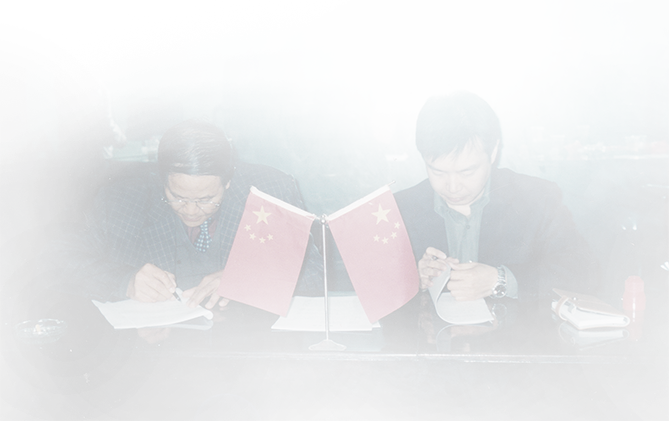
A historic signing moment from the 1970s, when HG’s founder helped drive the development of China’s food industry and began expanding into international markets.
Over the past decades, we have participated in the evolution of automated food production — from local factories to global turnkey projects across 100+ countries. That experience continues to shape every HG production line today.
Discover Our Heritage
Global Food Machinery &
Turnkey Factory Solutions

Building Long-Term Partnerships Through Shared Growth and Industrial Value.
Copyright © HG Industry Group All Rights Reserved
Food Machine Snack Food Processing Machinery

Unauthorized use of this website's content constitutes copyright infringement and may result in legal action.