 English
 中文简体
中文简体 日本語
日本語 русский
 عربى
عربى Український
 Español
 Français


The Complete Guide to Automatic Wafer Stick Production Lines: Efficiency, Technology, and Investment Value
Content
- 1. What Is an Automatic Wafer Stick Production Line?
- 2. How Does an Automatic Wafer Stick Production Line Work?
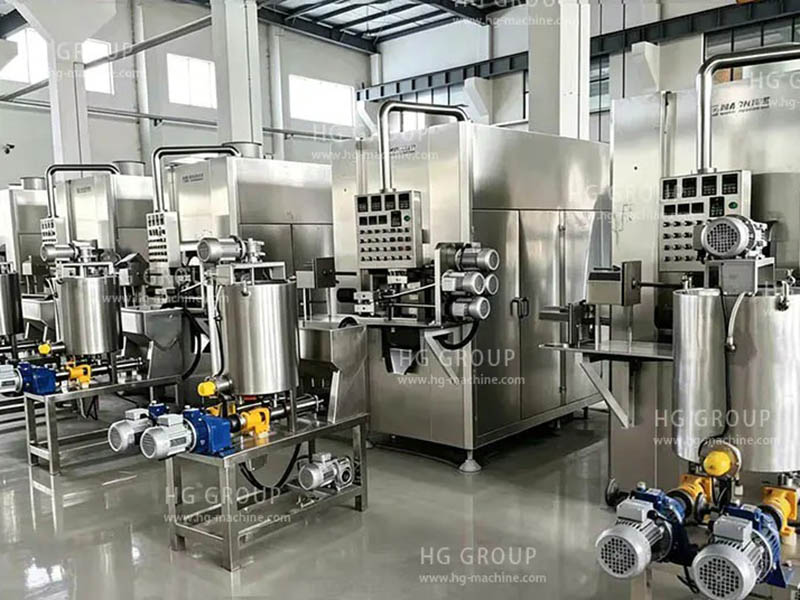
- 3. What Equipment Is Included in a Wafer Stick Production Line?
- 4. Wafer Stick Production Capacity: How to Scale Your Production?
- 5. What Products Can an Automatic Wafer Stick Production Line Make?
- 6. How Does Automation Improve Wafer Stick Production?
- 7. What Should You Consider Before Buying a Wafer Stick Production Line?
- 8. How to Choose the Right Wafer Stick Production Line Supplier?
- 9. Cost, ROI, and Future Trends
Wafer sticks — crispy, tube-shaped snacks often filled with cream or dipped in chocolate — have become a staple across bakeries, confectionery brands, and snack manufacturers worldwide. As demand grows for consistent quality and higher output, more producers are moving from manual or semi-automatic setups to fully automatic wafer stick production lines. This guide breaks down what these lines are, how they work, what to consider before investing, and how to choose the right supplier.
1. What Is an Automatic Wafer Stick Production Line?
An automatic wafer stick production line is an integrated system of machinery designed to produce wafer sticks — also known as wafer rolls, cream rolls, or egg rolls in some markets — from raw batter to finished, packaged product with minimal manual intervention.
Unlike manual production, where workers mix batter, bake individual wafers, and roll them by hand, an automatic line links every stage — batter mixing, baking, rolling, filling, cooling, and cutting — into one continuous, computer-controlled process. This allows manufacturers to produce large volumes of uniform, high-quality wafer sticks with far less labor and far greater consistency.
These lines are used to make a wide range of products, including hollow wafer sticks, cream-filled wafer rolls, chocolate-coated sticks, and multi-colored decorative varieties, making them a flexible investment for snack and confectionery businesses of different scales.
2. How Does an Automatic Wafer Stick Production Line Work?
A complete automatic wafer stick production line follows a defined sequence, with each stage feeding directly into the next:
- Batter Preparation — Flour, sugar, eggs, and other ingredients are mixed into a smooth, consistent batter in an automatic mixing tank, with recipes and viscosity controlled precisely for repeatable results.
- Baking — The batter is deposited onto rotating baking plates (baking ovens), where it's baked into thin wafer sheets at controlled temperatures.
- Rolling — While the wafer sheets are still warm and pliable, a rolling machine wraps them around a rolling rod to form the classic hollow tube shape.
- Cooling — The rolled wafer sticks pass through a cooling conveyor to set their shape and texture before further processing.
- Filling (optional) — For cream-filled varieties, a filling machine injects flavored cream into the hollow center.
- Cutting — Sticks are cut to a standardized length using automatic cutting equipment.
- Coating/Decorating (optional) — Chocolate enrobing or sugar coating can be added for premium product lines.
- Packaging — Finished wafer sticks move to counting and packaging equipment for final sealing.
Because each stage is synchronized by the central control system, the entire process runs continuously, with minimal manual handling between steps.
3. What Equipment Is Included in a Wafer Stick Production Line?
A typical line includes several core machines, each solving a specific production challenge:
- Batter Mixing Machine — Ensures consistent batter viscosity and ingredient distribution, eliminating the quality variation that comes from manual mixing.
- Wafer Baking Oven — Uses multiple baking plates to bake wafer sheets evenly, solving the problem of uneven baking that causes cracked or inconsistent wafers.
- Wafer Rolling Machine — Automatically rolls warm wafer sheets into tubes at high speed, replacing labor-intensive hand-rolling and reducing breakage.
- Cooling Conveyor — Stabilizes the shape of rolled sticks before further handling, preventing deformation.
- Cream Filling Machine — Delivers precise, consistent amounts of filling, avoiding overfilling, underfilling, or leakage.
- Cutting Machine — Trims sticks to uniform length automatically, ensuring consistent product presentation.
- Chocolate Enrobing Machine (optional) — Applies even chocolate coating for premium product variants.
- Packaging Machine — Automates counting, wrapping, and sealing to maintain freshness and reduce labor costs at the final stage.
Together, this equipment removes the bottlenecks and inconsistencies typical of manual production, giving manufacturers a repeatable, scalable process.
4. Wafer Stick Production Capacity: How to Scale Your Production?
One of the most important questions for any buyer is: how do you scale output as demand grows?
The good news is that an automatic wafer stick production line doesn't need to be replaced to increase capacity — it can be upgraded. A common and highly cost-effective upgrade path is switching from a standard rolling configuration to a 4-head wafer rolling machine. Where a single-head or double-head rolling unit processes wafer sheets sequentially, a 4-head configuration rolls multiple sticks simultaneously, which can double production output without requiring a completely new line or a larger factory footprint.
This kind of modular upgrade is particularly attractive for manufacturers who want to start with a smaller investment and scale later as orders grow, rather than over-investing in maximum capacity from day one. Other ways to scale production include:
- Adding parallel baking ovens to increase wafer sheet supply to match a higher-capacity rolling unit
- Upgrading the filling and cutting stations to match the new throughput
- Expanding cooling conveyor length to maintain proper cooling time at higher speeds
- Adding a second packaging line to keep pace with increased output
When planning capacity, it's worth discussing your 3–5 year growth targets with your supplier upfront, so the baking, rolling, and packaging stages can all be sized to expand together rather than creating new bottlenecks down the line.
5. What Products Can an Automatic Wafer Stick Production Line Make?
A well-designed line offers strong product flexibility, including:
- Hollow wafer sticks — the classic, unfilled crispy tube
- Cream-filled wafer rolls — filled with vanilla, chocolate, hazelnut, matcha, and other flavors
- Chocolate-coated wafer sticks — dipped or enrobed for a premium finish
- Multi-colored and striped wafer sticks — using colored batter for visually distinctive products
- Different sizes and diameters — from mini snack-sized sticks to larger sticks for food service or gifting
This flexibility means a single production line can support multiple SKUs and market segments, from budget snacks to premium confectionery lines.
6. How Does Automation Improve Wafer Stick Production?
Moving from manual or semi-automatic methods to a fully automatic line delivers measurable improvements across several dimensions:
- Efficiency — Continuous, synchronized processing dramatically increases output per hour compared to manual rolling and filling.
- Consistency — Automated controls maintain uniform batter viscosity, baking temperature, rolling tension, and filling volume, resulting in consistent product quality batch after batch.
- Labor Reduction — Fewer workers are needed to operate the line, lowering labor costs and reducing dependency on skilled manual labor, which can be hard to source and retain.
- Reduced Material Loss — Precise control over batter dosing, baking, and filling reduces waste from broken wafers, overfilled sticks, or inconsistent baking.
- Continuous Production — Automatic lines can run for extended shifts with minimal downtime, supporting higher daily and monthly output.
For growing manufacturers, these gains directly translate into lower per-unit production costs and a faster path to profitability.
7. What Should You Consider Before Buying a Wafer Stick Production Line?
Before investing, manufacturers should evaluate several key factors:
- Target Production Capacity — What daily/monthly output do you need now, and what will you need in 2–3 years?
- Product Range — Do you need only basic hollow sticks, or also filling, coating, and multi-color capability?
- Factory Space and Layout — Does your facility have enough space and the right layout for the full line, including buffer zones for cooling and packaging?
- Energy Requirements — What are the electricity, gas, or steam requirements, and does your facility's power supply support them?
- Packaging Needs — Will you need integrated automatic packaging, or will packaging be handled separately?
- After-Sales Support — Is local or remote technical support available? How are spare parts and maintenance handled?
- Budget and ROI Timeline — How does the upfront investment compare to your expected payback period based on projected output and margins?
Working through these questions with your supplier before finalizing a purchase helps avoid costly mismatches between equipment capability and actual business needs.
8. How to Choose the Right Wafer Stick Production Line Supplier?
Equipment quality matters, but supplier reliability often matters just as much over the life of the line. When evaluating suppliers, consider:
- Industry Experience — A supplier with 50+ years of manufacturing experience has typically encountered and solved most of the technical challenges that come with wafer production, from batter formulation issues to line synchronization problems.
- Global Track Record — Suppliers with equipment installed and running in 100+ countries have proven their machines perform reliably across different climates, power grids, and regulatory environments.
- Full Line Delivery Capability — Choose a supplier who can deliver and integrate the complete line — mixing, baking, rolling, filling, cutting, and packaging — rather than sourcing individual machines from multiple vendors and managing integration risk yourself.
- Customer Repurchase Rate — This is one of the strongest signals of genuine equipment reliability and service quality. It's worth asking directly: what percentage of your customers come back to expand their lines or order again? Our customer repurchase rate stands at 100% — every client who has purchased from us has returned for additional equipment or expansion, which reflects consistently reliable machine performance and dependable after-sales support.
- Service and Support Infrastructure — Look for suppliers offering installation support, operator training, remote troubleshooting, and readily available spare parts.
A supplier's willingness to discuss real customer outcomes — not just machine specifications — is often a good indicator of how they'll support you after the sale.
9. Cost, ROI, and Future Trends
Investment Cost — The price of an automatic wafer stick production line varies significantly based on capacity, level of automation, included equipment (such as filling and coating stations), and after-sales service packages. Entry-level lines cost less but offer lower throughput and fewer product options, while fully automated, high-capacity lines with 4-head rolling and integrated packaging represent a larger upfront investment with a stronger long-term output ceiling.
ROI Factors — Return on investment depends on several variables:
- Local labor costs (higher labor costs increase the ROI advantage of automation)
- Production volume and sales demand
- Product mix (filled and coated products typically carry higher margins than basic hollow sticks)
- Energy costs and machine efficiency
- Equipment uptime and maintenance costs over time
Most manufacturers investing in a well-specified automatic line see payback periods driven primarily by labor savings and increased output capacity, particularly when capacity upgrades like the 4-head rolling configuration are used to scale production without proportionally scaling factory space or staff.
Future Trends — The wafer stick production industry is moving toward:
- Greater automation integration, including AI-assisted quality control and predictive maintenance
- Modular, upgradeable line designs that let manufacturers scale capacity incrementally rather than replacing entire systems
- Increased product customization capability (multi-color, multi-flavor, novel shapes) to meet changing consumer preferences
- Energy-efficient baking systems to reduce operating costs and environmental impact
As competition in the snack food industry intensifies, manufacturers who invest in flexible, scalable automatic wafer stick production lines — supported by suppliers with strong service track records — will be best positioned to grow output and product variety while controlling costs.
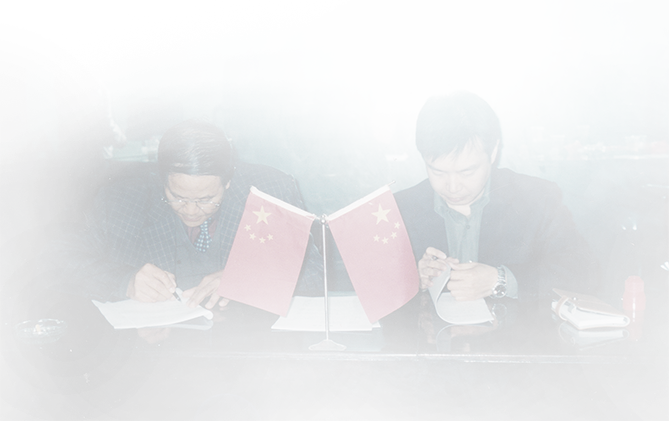
A historic signing moment from the 1970s, when HG’s founder helped drive the development of China’s food industry and began expanding into international markets.
Over the past decades, we have participated in the evolution of automated food production — from local factories to global turnkey projects across 100+ countries. That experience continues to shape every HG production line today.
Discover Our Heritage
Global Food Machinery &
Turnkey Factory Solutions

Building Long-Term Partnerships Through Shared Growth and Industrial Value.
Copyright © HG Industry Group All Rights Reserved
Food Machine Snack Food Processing Machinery

Unauthorized use of this website's content constitutes copyright infringement and may result in legal action.