 English
 中文简体
中文简体 日本語
日本語 русский
 عربى
عربى Український
 Español
 Français


Buying a Puffed Rice Cake Production Line? Here's What Actually Matters
Content
- Why Puffing Quality Is Harder to Get Right Than It Looks
- Raw Material Considerations That Affect Equipment Selection
- Common Quality Problems and What Usually Causes Them
- Scaling Decisions: When to Add Stations vs. When to Upgrade the Line
- Case Study: A 250 kg/h Snow Rice Cracker Line Built for the Russian Market
- What a Proper Equipment Trial Should Reveal
- Budgeting for Mold Replacement and Long-Term Operating Costs
- Putting It All Together Before You Commit
Why Puffing Quality Is Harder to Get Right Than It Looks
On paper, a puffed rice cake production line sounds simple — load grain, apply heat and pressure, get a puffed disc. In practice, this is one of the more sensitive food processes to scale, because the puffing reaction depends on a tight combination of moisture content, pressure timing, and temperature working together correctly in every single cycle. A small deviation in any one of these variables can produce cakes that are dense in the center, cracked at the edges, or inconsistent in thickness across a single batch. This is why buyers researching equipment often run into more quality complaints with puffing lines than with standard baking lines — the margin for error is smaller, and the equipment needs to compensate for natural variation in raw grain.
Raw Material Considerations That Affect Equipment Selection
The type of grain you plan to process should directly influence which puffed rice cake machine you choose, since not all equipment handles every grain type equally well. Pure rice, multigrain blends, and specialty grains like quinoa or buckwheat each behave differently under pressure, and some molding systems are better calibrated for specific grain densities than others.
Single-Grain vs. Multigrain Processing
If your product line is built around a single grain type, such as pure rice cakes, equipment can often be optimized with fixed mold and pressure settings for consistent results. Multigrain products introduce more variability, since different grains expand at different rates under the same pressure conditions, which means the equipment needs more flexible pressure and timing controls to produce an even texture across the blend.
Organic and Specialty Grain Sourcing
Brands targeting health-conscious or organic markets often source grain with less standardized moisture content than commercial commodity grain. This makes a reliable moisture conditioning system even more important, since inconsistent incoming raw material is harder to compensate for without it.
Common Quality Problems and What Usually Causes Them
Buyers evaluating equipment can save themselves trouble later by understanding the most frequent quality issues reported with puffed rice cake lines and what typically causes them. This list reflects the issues that come up most often during equipment trials and early production runs.
| Quality Issue | Likely Cause |
|---|---|
| Dense or unpuffed center | Grain moisture too low or pressure release timing too fast |
| Cracked or crumbling edges | Excess moisture or worn mold surface causing uneven release |
| Inconsistent thickness between cakes | Uneven grain filling weight at the molding stage |
| Discoloration or scorching | Mold temperature too high or cycle time too long |
Scaling Decisions: When to Add Stations vs. When to Upgrade the Line
As demand grows, buyers face a choice between adding more molding stations to an existing line or investing in a fully upgraded production system. Adding stations is generally the more cost-effective route when current equipment is performing reliably and the bottleneck is simply throughput. However, if quality issues are already showing up at current volume, adding capacity without addressing the underlying control precision usually just multiplies the problem across more output. A useful rule of thumb: if defect rates are below a few percent and consistent, scaling horizontally with more stations makes sense; if defect rates are already inconsistent or trending upward, it's worth upgrading control systems before expanding capacity.
Case Study: A 250 kg/h Snow Rice Cracker Line Built for the Russian Market
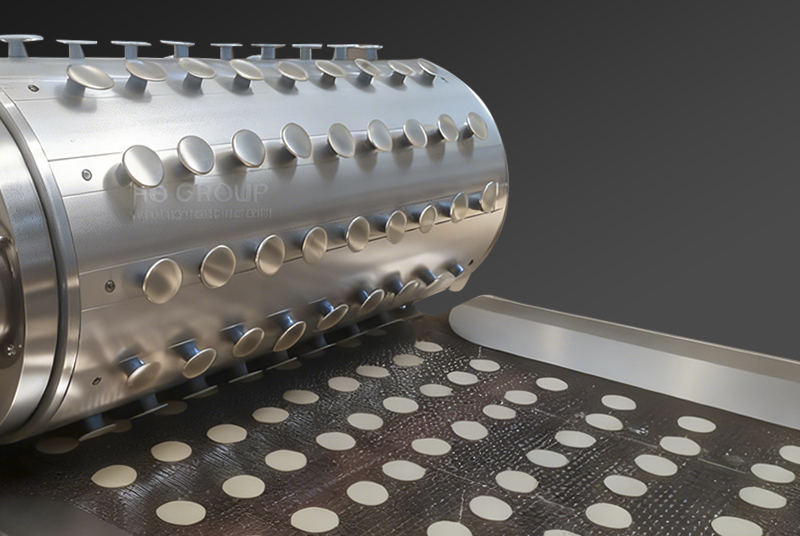
The principles above aren't just theoretical — they show up directly in how real production lines get specified for export. One recent example is a fully automatic snow rice cracker line built for a customer in Russia, rated at 250 kg/h.
The line brings together snow rice cracker processing technology with roots in Japan and Taiwan, but adapted for Chinese rice varieties and reconfigured for larger-scale, continuous output. Rather than a single-purpose puffing machine, the setup is a complete four-stage line — milling, forming, puffing, and seasoning/packaging — so raw rice and the finished, seasoned cracker come off the same integrated system.
A few details from this build line up closely with the buying considerations discussed earlier:
- Automatic steam temperature control. The line uses solenoid-valve-based temperature control on its steam system, which speaks directly to the moisture-and-temperature sensitivity covered above — automated control here reduces the risk of the dense centers or scorching that come from manual temperature drift between cycles.
- High-adsorption cake arranging machine. A newer-generation cake arranging unit on this line reaches a 99% adsorption rate, which matters for the thickness-consistency problem noted in the quality table: uneven handling at the arranging/transfer stage is a common hidden source of batch-to-batch variation, even when the molding itself is dialed in.
- Built for export-scale throughput. At 250 kg/h, this is squarely a "scale up the line, not just add stations" build — the kind of investment that makes sense once a producer has already validated consistent, low-defect output at a smaller scale and is now committing to a fully engineered system rather than incremental capacity.
For buyers evaluating a similar jump — from pilot-scale puffing equipment to a full export-ready cracker line — this kind of build is a useful reference point: it shows what an integrated milling-to-packaging system looks like once moisture control, forming precision, and puffing consistency have all been engineered to work together at volume, rather than bolted on separately.
What a Proper Equipment Trial Should Reveal
Spec sheets can't tell you how a puffed rice cake production line will actually perform with your specific grain source, so requesting a trial run with your own raw material is one of the most valuable steps before committing to a purchase. During a trial, pay attention to how consistent the puffing results are across at least 50–100 consecutive cycles, not just the first few samples, since early cycles often look better than sustained production once molds and pressure systems are running continuously. It's also worth observing how quickly the supplier's technical team can diagnose and adjust settings if quality issues appear during the trial, since this is a strong indicator of what ongoing support will look like after installation.
- Request a trial using your actual grain source, not the supplier's standard demo grain
- Ask to see consistency across a sustained run, not just a handful of opening samples
- Measure and weigh finished cakes to confirm thickness and weight consistency
- Observe mold cleaning and changeover time between different grain types or sizes
- Confirm noise levels and vibration are within acceptable limits for your facility
Budgeting for Mold Replacement and Long-Term Operating Costs
One cost that buyers frequently underestimate is mold replacement, since molds endure repeated high-pressure and high-heat cycles that gradually wear down surface precision. Worn molds are often the hidden cause behind quality issues that appear months after a line has been running smoothly, making it worth budgeting for periodic mold replacement as a routine operating cost rather than treating it as an unexpected expense. Before purchasing, ask suppliers directly about expected mold lifespan in number of cycles, replacement lead time, and whether molds are sourced exclusively from the original manufacturer or available from third-party suppliers, which can affect both cost and availability over the equipment's lifetime.
Putting It All Together Before You Commit
Buying a puffed rice cake production line involves more variables than most other snack equipment purchases, simply because the puffing process is less forgiving of inconsistency than baking or extrusion. Buyers who take the time to test equipment with their actual raw materials, understand the root causes behind common quality issues, and budget realistically for mold maintenance tend to end up with a much smoother production ramp-up than those who select equipment based on output specs alone. The 250 kg/h Russian export line above is a good illustration of where that discipline leads: an integrated system where moisture control, forming precision, and puffing consistency were engineered together from the start. Taking a methodical approach here pays off well beyond the initial purchase, since consistent puffing quality is what ultimately determines whether the product holds up on retail shelves.
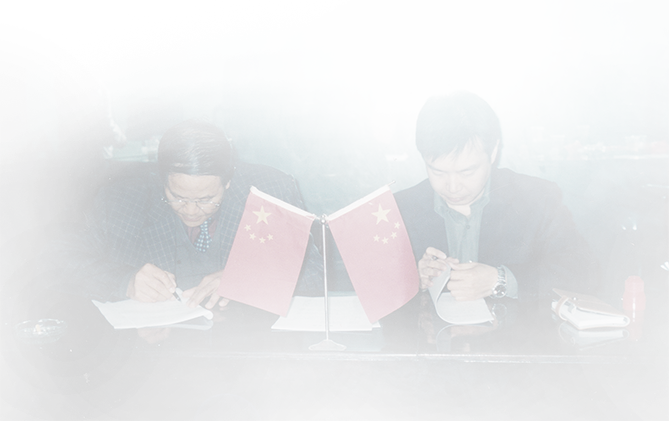
A historic signing moment from the 1970s, when HG’s founder helped drive the development of China’s food industry and began expanding into international markets.
Over the past decades, we have participated in the evolution of automated food production — from local factories to global turnkey projects across 100+ countries. That experience continues to shape every HG production line today.
Discover Our Heritage
Global Food Machinery &
Turnkey Factory Solutions

Building Long-Term Partnerships Through Shared Growth and Industrial Value.
Copyright © HG Industry Group All Rights Reserved
Food Machine Snack Food Processing Machinery

Unauthorized use of this website's content constitutes copyright infringement and may result in legal action.