 English
 中文简体
中文简体 日本語
日本語 русский
 عربى
عربى Український
 Español
 Français


How a Cookies Production Line Works: A Complete Guide for Bakery Operators
Content
- What Is a Cookies Production Line and Why Does It Matter?
- Key Stages of a Cookie Manufacturing Line
- Types of Cookie Production Lines by Configuration
- Equipment You'll Find on a Commercial Cookie Line
- Factors That Affect Cookie Production Line Efficiency
- How to Choose the Right Cookie Production Line for Your Business
- Common Cookie Types and Their Ideal Production Method
- Maintenance Tips to Keep Your Cookie Line Running Smoothly
- Final Thoughts on Building or Upgrading a Cookies Production Line
What Is a Cookies Production Line and Why Does It Matter?
A cookies production line is a series of interconnected machines and processes that take raw ingredients — flour, sugar, butter, eggs, and flavorings — and transform them into finished, packaged cookies at scale. Whether you're running a small commercial bakery or a large industrial facility, understanding how a cookie production line works is essential to improving output, maintaining consistent quality, and keeping costs under control. Modern cookie manufacturing lines can produce tens of thousands of cookies per hour, and every stage of the line plays a critical role in the final product.
This article walks you through each stage of a cookie manufacturing line, the equipment involved, common configurations, and how to choose the right setup for your production goals.
Key Stages of a Cookie Manufacturing Line
A full-scale cookie production line typically follows a sequential flow from ingredient handling to final packaging. Each station feeds directly into the next, so a bottleneck at any point can slow the entire operation. Here's how a standard line breaks down:
Ingredient Dosing and Mixing
The first step in any biscuit or cookie production line is accurately measuring and combining ingredients. Industrial mixers — typically planetary or sigma blade mixers — combine dry and wet ingredients to form a uniform dough. Automated dosing systems connected to silos and hoppers feed flour, sugar, and other dry ingredients by weight, reducing human error and ensuring batch-to-batch consistency. Liquid ingredients like butter, eggs, and flavorings are pumped in with precision metering equipment.
Dough Sheeting and Laminating
After mixing, the dough is fed into a sheeter, which rolls it into a continuous, even sheet at a controlled thickness. For layered products like puff cookies or crackers, a laminator folds and stacks the dough multiple times to create distinct layers. Proper sheeting is critical — inconsistent thickness leads to uneven baking and rejected product.
Forming and Cutting
Once the dough is at the right thickness, it moves to the forming station. Depending on the cookie type, this could involve a rotary molder (for soft, high-fat doughs), a wire-cut machine (for chunky drop cookies with inclusions like chocolate chips or nuts), or a die-cut stamping system (for crisp, shaped biscuits). Each method produces a different dough piece shape and texture, and the choice of forming method fundamentally affects the final product.
Baking
The formed dough pieces travel on a conveyor belt through a tunnel oven — the heart of any automated cookie production line. Industrial tunnel ovens can be direct gas-fired, indirect fired, or electric, and they're divided into multiple temperature zones. This allows bakers to control the rate of moisture evaporation, browning, and texture development across the length of the oven. Baking times typically range from 5 to 15 minutes depending on cookie type and thickness.
Cooling
After baking, cookies must be cooled before any coating, sandwiching, or packaging can take place. Spiral coolers or straight cooling conveyors allow the product temperature to drop to near ambient levels in a controlled environment. Skipping adequate cooling causes condensation, crumbling during packaging, and significantly shortens shelf life.
Enrobing, Sandwiching, or Filling (Optional)
Not all cookies require a secondary process, but many popular products do. Sandwich cookie lines include a cream depositor that places a precise amount of filling between two biscuit halves. Enrobing machines coat cookies in chocolate or compound coatings. Jam-filled or caramel-topped cookies require depositing systems timed to the line speed. These secondary stations dramatically expand your product range but also add complexity to the line.
Packaging
The final stage of a cookie production line is packaging. Cookies are typically fed into flow wrappers, tray sealers, or vertical form-fill-seal (VFFS) machines. Stacking systems arrange cookies into neat rows before they enter the packaging machine. Metal detectors and checkweighers are integrated at this stage to catch any contaminated or underweight packs before they leave the facility.
Types of Cookie Production Lines by Configuration
Cookie production lines aren't one-size-fits-all. The right configuration depends on your product type, output targets, and budget. Here's a comparison of the most common setups:
|
Line Type |
Best For |
Output Range |
Automation Level |
|
Semi-Automatic Line |
Small to mid-size bakeries |
100–500 kg/hr |
Medium |
|
Fully Automatic Line |
Large-scale industrial production |
500–3,000+ kg/hr |
High |
|
Flexible Multi-Product Line |
Diverse SKU production |
200–1,000 kg/hr |
High with quick-changeover |
|
Dedicated Single-Product Line |
High-volume single SKU |
1,000–5,000 kg/hr |
Very High |
A flexible multi-product cookie line is increasingly popular because it allows manufacturers to switch between wire-cut, rotary molded, and sheeted products with relatively quick changeovers, reducing downtime when switching product formats.
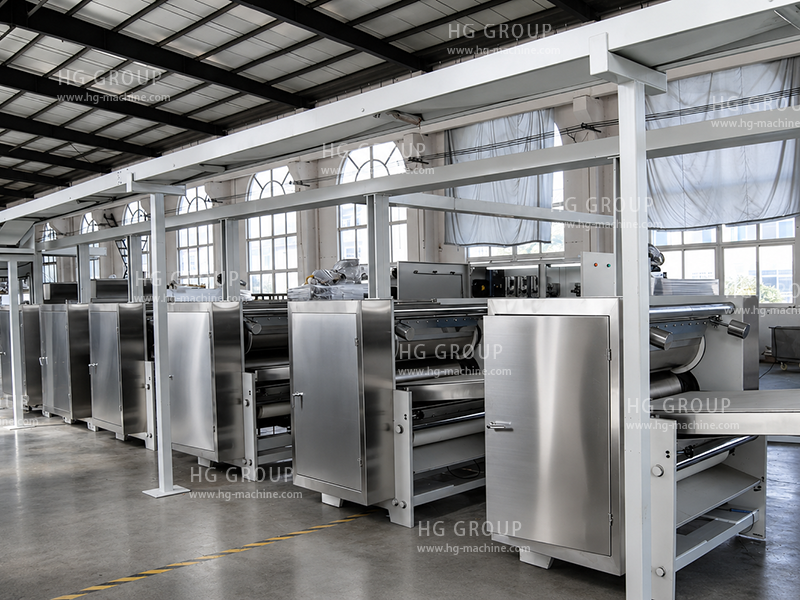
Equipment You'll Find on a Commercial Cookie Line
Each piece of equipment on a commercial cookie line is purpose-built for its role. Below are the major machines you'll encounter and what to look for when evaluating them:
- Industrial Dough Mixer:Look for variable speed control, stainless steel construction, and a capacity matched to your hourly output target. Continuous mixers are preferred on high-speed lines.
- Rotary Moulder:The mould roller should be easily swappable to allow different cookie shapes without lengthy downtime. Food-grade rubber pressure rollers are standard.
- Wire-Cut Machine:Essential for drop cookies with chunky mix-ins. The cutting wire must be tensioned correctly to produce clean cuts without dragging inclusions.
- Tunnel Oven:Multi-zone temperature control is a must. Steel mesh or mesh belt conveyors provide good airflow. Look for energy-efficient burners and heat recovery systems.
- Cooling Conveyor or Spiral Cooler:Spiral coolers save floor space and offer a longer cooling path in a compact footprint — ideal for facilities with limited square footage.
- Cream Sandwich Unit:Used for cream-filled cookies, it deposits and presses filling between two biscuit halves with accurate weight control.
- Flow Wrapper / VFFS Machine:Packaging speed must match line output. Servo-driven machines offer greater accuracy and lower film waste than older cam-driven models.
Factors That Affect Cookie Production Line Efficiency
Even a well-designed cookie baking line can underperform if certain operational factors aren't managed carefully. Here are the most common efficiency killers and how to address them:
Dough Consistency
Dough that's too soft, too stiff, or improperly rested causes problems at virtually every downstream station — from forming to baking. Standardize your ingredient temperatures, mixing times, and resting protocols. Use inline dough rheology sensors if your budget allows; they detect consistency issues before the dough reaches the former.
Oven Profiling
Most production issues blamed on forming or packaging actually originate in the oven. Regularly profile your oven using temperature loggers placed across the belt width to identify hot spots or cold zones. Even minor temperature deviations of 10–15°C can cause color variation, texture inconsistency, or moisture content issues that fail quality standards.
Line Speed Synchronization
Every station on a cookie production line operates at a specific speed, and they must all be synchronized. A mismatch between the former output speed and the oven belt speed results in dough piece overlap, breakage, or gaps that waste oven capacity. Modern PLC-controlled lines handle this automatically, but older lines require careful manual calibration.
Changeover Time
Switching between product types — say, from a chocolate chip wire-cut to a shortbread rotary mold — involves swapping rollers, adjusting belt speeds, cleaning product contact surfaces, and re-profiling the oven. Reducing changeover time directly increases line utilization. Apply SMED (Single-Minute Exchange of Die) principles: standardize tooling, use quick-release clamps, and pre-stage parts before shutdown.
How to Choose the Right Cookie Production Line for Your Business
Selecting a cookie production line is a significant capital investment, and getting it wrong is expensive. Use the following criteria to guide your decision:
- Product Range:If you plan to make multiple cookie types, prioritize flexibility. If you're running a single high-volume SKU, a dedicated line with maximum throughput makes more sense.
- Target Capacity:Calculate your required output in kilograms per hour, then size your line with 15–20% headroom for growth and unplanned downtime.
- Facility Layout:Tunnel ovens are long — some industrial ovens run 30–60 meters. Confirm your facility can accommodate the linear footprint of a full line before purchasing.
- Automation Level:Higher automation reduces labor costs per unit but requires skilled maintenance staff and higher upfront investment. Balance automation level with your workforce capabilities.
- Supplier Support:Choose equipment suppliers who offer local technical support, spare parts availability, and training. Downtime on a production line costs more than the support contract.
- Compliance and Food Safety:Ensure all equipment meets your regional food safety standards (FDA, CE, or equivalent) and is designed for easy cleaning to prevent contamination.
Common Cookie Types and Their Ideal Production Method
Different cookies demand different forming methods. Matching the product to the right production method prevents quality problems and equipment wear:
|
Cookie Type |
Recommended Forming Method |
Key Equipment |
|
Shortbread / Butter Cookies |
Rotary Moulding |
Rotary Moulder, Tunnel Oven |
|
Chocolate Chip / Drop Cookies |
Wire Cutting |
Wire-Cut Machine, Tunnel Oven |
|
Crackers / Hard Biscuits |
Sheeting and Die Cutting |
Sheeter, Laminator, Rotary Cutter |
|
Sandwich Cookies |
Rotary Moulding + Sandwiching |
Moulder, Oven, Cream Sandwich Unit |
|
Enrobed / Chocolate-Coated Cookies |
Rotary or Wire-Cut + Enrobing |
Enrober, Cooling Tunnel |
Maintenance Tips to Keep Your Cookie Line Running Smoothly
Preventive maintenance is one of the most impactful investments a bakery can make. An unplanned breakdown during a production run is far more costly than routine upkeep. Follow these practical maintenance habits:
- Daily Cleaning:Remove dough residue from all product contact surfaces after each shift. Accumulated dough is a food safety risk and can jam moving parts.
- Weekly Belt Inspection:Check oven and cooling conveyor belts for wear, tracking issues, or loose links. A broken belt mid-run can ruin hours of product.
- Monthly Lubrication:Follow the manufacturer's lubrication schedule for all bearings, chains, and gearboxes. Use food-grade lubricants only.
- Quarterly Oven Calibration:Verify thermocouple accuracy and burner performance. Replace worn ignitors or clogged burner nozzles before they cause temperature inconsistencies.
- Annual Overhaul:Schedule a full engineering review of the entire line annually, including electrical systems, safety interlocks, and structural wear on frames and conveyors.
Final Thoughts on Building or Upgrading a Cookies Production Line
A well-configured cookies production line is the backbone of any serious commercial baking operation. Whether you're setting up a new facility or upgrading an existing one, the key is to plan around your specific product mix, capacity targets, and long-term growth ambitions. Don't just buy the cheapest machines available — invest in reliable equipment with strong after-sales support, and design the line with flexibility and food safety built in from the start.
By understanding each stage of the cookie baking production process — from dough mixing to final packaging — you'll be better equipped to make smart purchasing decisions, troubleshoot problems quickly, and build a line that consistently delivers high-quality product at the output your business needs.
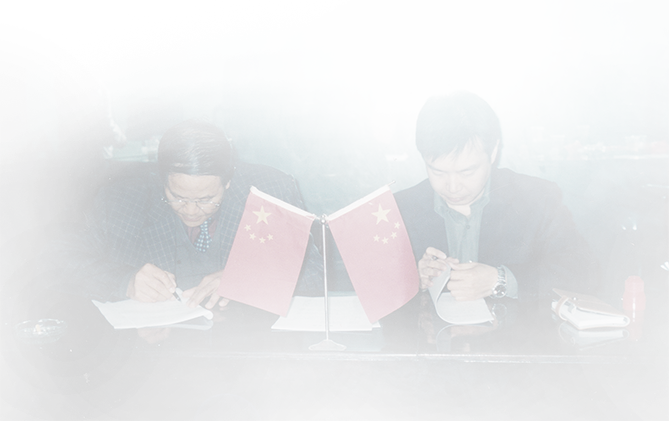
A historic signing moment from the 1970s, when HG’s founder helped drive the development of China’s food industry and began expanding into international markets.
Over the past decades, we have participated in the evolution of automated food production — from local factories to global turnkey projects across 100+ countries. That experience continues to shape every HG production line today.
Discover Our Heritage
Global Food Machinery &
Turnkey Factory Solutions

Building Long-Term Partnerships Through Shared Growth and Industrial Value.
Copyright © HG Industry Group All Rights Reserved
Food Machine Snack Food Processing Machinery

Unauthorized use of this website's content constitutes copyright infringement and may result in legal action.