 English
 中文简体
 日本語
 русский
 عربى
 Український
 Español
 Français


Cup Cake Production Line: The Complete Guide to Equipment, Process & Costs
Content
- 1. Introduction
- 2. What Is a Cup Cake Production Line?
- 3. Key Machines in a Cup Cake Production Line
- 4. How a Cup Cake Production Line Works: Step-by-Step Process
- 5. Types of Cup Cake Production Lines
- 6. Key Benefits of Investing in an Automated Line
- 7. How to Choose the Right Cup Cake Production Line
- 8. HG Bangladesh Cupcake Production Plant: A Real 800 kg/h Project
- 9. Cup Cake Production Line Cost & ROI
- 10. Maintenance & Troubleshooting Tips
- 11. FAQ
- 12. Conclusion + CTA
1. Introduction
Cupcakes are one of the fastest-growing segments in industrial bakery. Supermarkets, convenience chains, café groups and export distributors all want soft, uniform, individually portioned cakes with a long shelf life, and they want them in volume. Hand-filled molds and small batch ovens cannot deliver that consistency or output.
This is where a cup cake production line comes in. A well-designed line takes batter in at one end and delivers evenly baked, accurately weighed, cooled and packed cakes at the other, with minimal labor. This guide explains what a cup cake production line is, which machines it contains, how the process works, how to choose the right capacity, and what it costs. It also draws on HG's real project experience, including the HG Bangladesh Cupcake Production Plant (800 kg/h).
2. What Is a Cup Cake Production Line?
A cup cake production line is a continuous, automated system that handles every stage of cupcake manufacturing: batter depositing, baking, cooling, optional filling and decorating, and packaging. Instead of operators moving trays between standalone machines, a conveyor-based layout carries the product through each stage at a controlled speed.
HG's fully automatic Custard / Cup Cake Production Line is developed from our original equipment to meet the varied needs of food manufacturers. Its main characteristics are:
- Food-grade construction: the entire line, including the equipment outside the oven, is made of high-quality stainless steel.
- Reliable controls: key electronic components come from well-known domestic and international brands, for stable long-term operation.
- Product flexibility: the line produces center-filled custard pies and cup cakes, and can also make cakes in various shapes simply by changing the molds.
3. Key Machines in a Cup Cake Production Line
Batter Mixing and Feeding System
Consistent batter is the foundation of consistent cakes. Mixing and feeding equipment keeps batter homogeneous and supplies the depositor at a steady rate.
High-Precision Vertical Filling / Depositing System
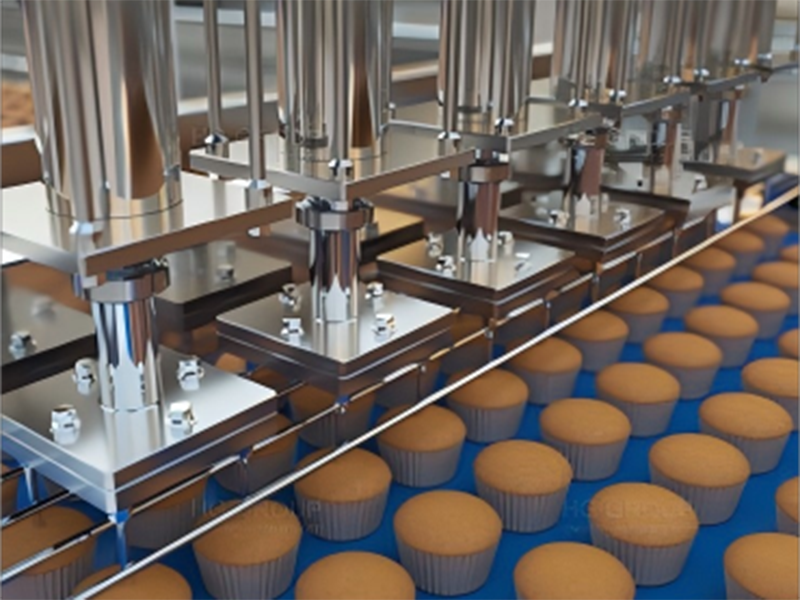
The depositor portions batter into cups or molds. HG's advanced high-precision vertical filling system holds weight tolerance within ±1 g per cake, which directly reduces giveaway, keeps product size uniform and helps meet retail weight standards. It can also inject center fillings such as cream or custard.
Custom Molds
Molds define the product. Custom mold design is available for different cake styles, so the same line can switch between cupcakes, custard pies and other shapes without a new line.
Hot Air Circulation Tunnel Oven
The oven is the heart of the line. HG's Hot Air Circulation Tunnel Oven is a newly developed baking system based on advanced imported technology. It uses an efficient gas combustion and hot-air circulation heating system for uniform baking.
- Multiple independently controlled temperature zones (front, middle, rear, upper and lower).
- Once the temperature is set, a motor-driven valve mechanism automatically regulates airflow and heat distribution.
- Heat is delivered to the baking chamber through upper and lower air ducts so both sides of the cake bake evenly.
Key advantages: rapid heating, stable temperature control, minimal temperature fluctuation and automatic temperature regulation. The result is a soft texture, good taste, uniform surface color and an attractive appearance.
Cooling Conveyor
Cakes must cool to a controlled temperature before packing to avoid condensation and deformation. A stainless steel cooling conveyor handles this in-line.
Packaging Equipment
Packaging (flow wrap, tray or pillow-pack) connects to the end of the line. In HG's standard specifications, line length is quoted excluding the packing section, since pack formats vary by customer.
4. How a Cup Cake Production Line Works: Step-by-Step Process
- Batter preparation: ingredients are mixed to a stable, aerated batter and fed to the depositor.
- Mold / cup placement: molds or paper cups travel on the conveyor to the filling station.
- Precise depositing: the vertical filling system portions each cake to within ±1 g. Center-filled products receive their filling at this stage.
- Baking: molds enter the tunnel oven and pass through the temperature zones in sequence. Gas-fired hot air circulation bakes each cake evenly from above and below.
- Demolding and cooling: baked cakes leave the oven, are removed from molds where required, and cool on the conveyor.
- Decorating (optional): glazing, jam, cream or toppings can be added.
- Packaging: cakes are counted, arranged and packed for distribution.
Because the process is continuous, product quality depends on stable settings rather than operator skill, which is the main reason automated lines produce more consistent results.
5. Types of Cup Cake Production Lines
By product type
- Plain cupcake lines:batter deposited into cups or molds and baked.
- Center-filled / custard cake lines:add a vertical filling step to inject cream or custard.
- Multi-shape cake lines:changeable molds allow different shapes on the same equipment.
By capacity
HG's standard custard / cup cake line is offered in two common models:
|
Specification |
Model 1 |
Model 2 |
|
Production capacity |
6 T/day |
9 T/day |
|
Power |
28 kW |
35 kW |
|
Gas consumption |
28–30 m³/h |
30–35 m³/h |
|
Equipment length |
68 m (excluding packing) |
68 m (excluding packing) |
|
Width |
800 mm |
1000 mm |
For larger factories, HG also designs customized high-capacity lines, such as the 800 kg/h plant described below.

6. Key Benefits of Investing in an Automated Line
- Consistent quality: ±1 g weight accuracy and controlled baking give every cake the same size, color and texture.
- Higher output with less labor: continuous operation replaces manual depositing and tray handling.
- Lower waste: accurate portioning reduces overweight cakes and rejects.
- Hygiene and durability: full stainless steel construction is easy to clean and resists wear.
- Energy efficiency: the hot-air circulation tunnel oven heats quickly and holds temperature with minimal fluctuation, so gas is used efficiently.
- Flexibility: mold changes let you launch new shapes and fillings without buying a new line.
- Scalability: a documented, repeatable process makes it easier to expand to multiple lines or markets.
7. How to Choose the Right Cup Cake Production Line
Define your target capacity. Start from daily or hourly demand, then add room for growth. A line sized only for today's orders will limit you within a year or two. Compare your target with standard options (6 T/day, 9 T/day) or a custom high-capacity design (for example 800 kg/h).
Match the product range. Decide whether you need plain cupcakes, center-filled cakes or custard pies, and which mold shapes. Confirm the depositor can handle your batter viscosity and fillings.
Check utilities and space. Standard lines are long, around 68 m excluding packaging, so confirm your floor plan. Verify gas supply (28–35 m³/h for the standard models), electrical capacity (28–35 kW) and ventilation.
Evaluate the oven. Ask about the number of temperature zones, how airflow is controlled, and temperature uniformity across the belt width.
Inspect build quality. Look for stainless steel throughout, branded electrical components and clear after-sales support.
Plan packaging early. Pack format drives downstream equipment and layout; decide it before finalizing the line.
Ask for reference projects. A supplier that can show operating plants with real output figures is far lower risk than one offering only brochures.
8. HG Bangladesh Cupcake Production Plant: A Real 800 kg/h Project
HG has delivered an automated cupcake production plant in Bangladesh with a rated capacity of 800 kg/h. The project illustrates how the line's main technologies work together at industrial scale:
- Capacity: 800 kg/h of continuous cupcake output.
- Filling: high-precision vertical filling with weight tolerance within ±1 g per cake, supporting uniform product and tight cost control.
- Baking: a high-capacity hot air circulation tunnel oven with multi-zone temperature control for even color and soft texture across the full belt.
- Molds: custom mold design matched to the customer's cake style.
- Construction: stainless steel throughout, with reliable branded electrical components.
For food manufacturers serving high-volume retail and distribution channels, this type of line delivers stable daily output without the quality swings of semi-manual production.
9. Cup Cake Production Line Cost & ROI
There is no single price for a cup cake production line. Total investment depends mainly on:
- Capacity: 6 T/day, 9 T/day or a customized line such as 800 kg/h.
- Product complexity: center filling, multiple shapes and decorating add equipment.
- Molds: custom mold sets for each product style.
- Packaging: the choice and speed of packing equipment.
- Installation and commissioning: site conditions, utilities and training.
Operating costs are driven by gas (28–35 m³/h for standard models), electricity (28–35 kW), ingredients, packaging materials and a small operating team.
Estimating ROI is straightforward:
Annual gross profit = (selling price per kg − ingredient, packaging and utility cost per kg) × annual output − labor and maintenance
Payback period = total investment ÷ annual net profit
To see how output translates into volume, remember that 6 T/day is 6,000 kg of cakes daily, and 9 T/day is 9,000 kg. The ±1 g weight accuracy and the energy-efficient oven both improve margin per kg, which shortens payback. HG can prepare a project-specific cost and ROI estimate once your capacity, product and local utility data are known.
10. Maintenance & Troubleshooting Tips
Daily
- Clean depositor nozzles, hoppers and contact surfaces after each shift.
- Check mold condition and conveyor tracking.
- Verify oven temperature settings before startup.
Weekly / Monthly
- Inspect burners, gas lines and air ducts.
- Lubricate chains, bearings and drive components per the manual.
- Check motor-driven valves and temperature sensors for accurate response.
Common issues
|
Problem |
Likely cause |
Fix |
|
Cake weight varies |
Worn depositor seals, batter temperature or viscosity change |
Replace seals, stabilize batter conditions, recalibrate |
|
Uneven color |
Zone temperature imbalance or blocked air duct |
Recheck zone settings, clean ducts |
|
Cakes stick to molds |
Insufficient release agent or worn mold surface |
Adjust release application, repair or replace molds |
|
Collapsed or dense cakes |
Under-aerated batter or wrong baking profile |
Adjust mixing and oven temperature curve |
|
Filling leakage |
Wrong injection depth or filling viscosity |
Adjust filling position and recipe |
Preventive maintenance and a small stock of wear parts keep downtime low.
11. FAQ
What is the capacity of a standard cup cake production line? HG's standard models produce 6 T/day or 9 T/day. Customized lines, such as the 800 kg/h Bangladesh plant, are available for higher volumes.
How much space does a line need? The standard line is about 68 m long excluding the packing section, and 800 mm or 1000 mm wide depending on the model.
Can one line make different cake types? Yes. The line can produce center-filled custard pies and cup cakes, and other cake shapes can be made by changing the molds.
How accurate is the portioning? The high-precision vertical filling system keeps weight tolerance within ±1 g per cake.
What energy does the oven use? The tunnel oven is gas-fired with hot-air circulation. Standard models consume roughly 28–35 m³/h of gas, with total power of 28–35 kW for the line.
Is the equipment food-safe? The entire line, including equipment outside the oven, is made of high-quality stainless steel.
Can the line be customized? Yes. Mold design, capacity, filling options and layout can all be tailored to your product and factory.
12. Conclusion + CTA
A cup cake production line turns an inconsistent, labor-heavy process into a stable, scalable one. The combination of precise ±1 g depositing, a multi-zone hot-air circulation tunnel oven, flexible molds and full stainless steel construction gives manufacturers uniform, high-quality cakes at industrial volume, as proven in HG's 800 kg/h Bangladesh Cupcake Production Plant.
Ready to plan your cup cake production line? Contact HG with your target capacity, product types and factory conditions. Our engineers will recommend the right model, provide a layout and prepare a detailed quotation and ROI estimate.
Request a quote today and let HG help you build a cupcake production line that fits your market.
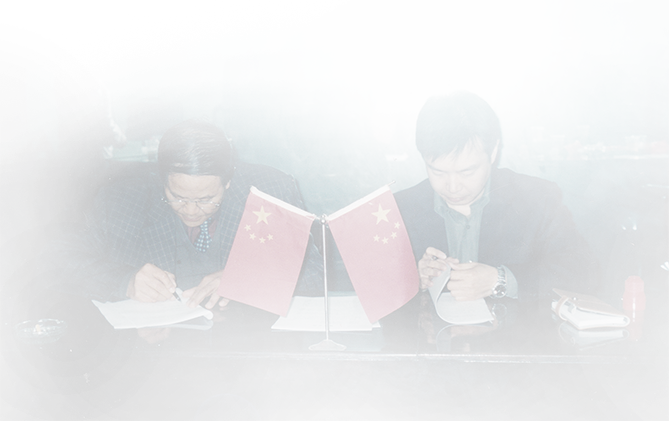
A historic signing moment from the 1970s, when HG’s founder helped drive the development of China’s food industry and began expanding into international markets.
Over the past decades, we have participated in the evolution of automated food production — from local factories to global turnkey projects across 100+ countries. That experience continues to shape every HG production line today.
Discover Our Heritage
Global Food Machinery &
Turnkey Factory Solutions

Building Long-Term Partnerships Through Shared Growth and Industrial Value.
Copyright © HG Industry Group All Rights Reserved
Food Machine Snack Food Processing Machinery

Unauthorized use of this website's content constitutes copyright infringement and may result in legal action.