 English
 中文简体
中文简体 日本語
日本語 русский
 عربى
عربى Український
 Español
 Français

Automatic Langue de Chat Production Line: Equipment, Process, Capacity & Cost
Content
- 1. Introduction
- 2. What Is Langue de Chat?
- 3. Overview of a Langue de Chat Production Line
- 4. Key Equipment and Process Stages
- 5. Single-Layer vs. Sandwich Products: Process Differences
- 6. Key Features of a High-Quality Production Line
- 7. How to Choose the Right Production Line
- 8. Common Challenges and Solutions
- 9. Applications and Business Opportunities
- 10. Conclusion & Call to Action
1. Introduction
Langue de chat, or cat’s tongue cookies, are thin, crisp, buttery biscuits with a delicate flat shape. They sell as simple single-layer cookies, and they also work as the base for premium sandwich products such as chocolate-filled wafer biscuits, a format familiar from well-known “white lover” style confectionery.
The appeal for manufacturers is clear: attractive margins, strong gifting demand and a product that fits both bakery and confectionery channels. The challenge is that the cookie is thin, fragile and sensitive to batter consistency, oven profile and handling. A stable, automated line is what separates a profitable product from one with high breakage and uneven quality.
This guide explains how an automatic langue de chat production line is configured, what to look for in each stage, and how capacity, layout and cost should be evaluated before you invest.
2. What Is Langue de Chat?
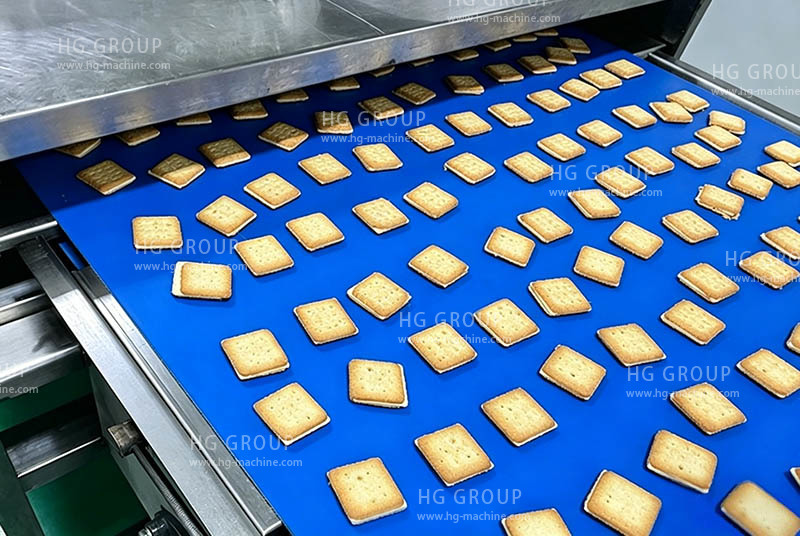
Langue de chat is a French-style biscuit made from a fluid batter of butter, sugar, egg whites, flour and flavoring. The batter is deposited in elongated strips, baked quickly and cooled into a thin, crisp cookie with lightly golden edges.
Its defining qualities are:
- Thin, uniform thickness
- Crisp, melt-in-the-mouth texture
- Clean, consistent shape and edges
- Light, buttery flavor that pairs well with chocolate, cream and fillings
Because the dough is a liquid batter rather than a solid dough, the production process differs from that of rotary-molded or wire-cut biscuits.
3. Overview of a Langue de Chat Production Line
An automatic line carries the product through five connected stages:
- Batter preparation and depositing (forming)
- Baking
- Cooling and conveying
- Sandwiching with chocolate or cream (for filled products)
- Counting, arranging and packaging
For single-layer cookies, the line can end after cooling and go straight to packaging. For sandwich products, a filling and assembly section is added. Sourcing these stages from one supplier as a complete line helps keep speeds, belt widths and product spacing matched, which reduces handover problems between machines.
4. Key Equipment and Process Stages
4.1 Batter Mixing and Depositing
The batter must be smooth, aerated consistently and free of lumps. A mixing system with temperature control keeps viscosity stable through a production run. Depositing is done by a servo-driven depositor with a multi-nozzle head, which places precise strips onto the baking belt or tray.
What matters here:
- Accurate deposit weight and length
- Adjustable strip shape and spacing
- Stable batter flow with no dripping or tailing
4.2 Oven
A tunnel oven bakes the thin cookies in a short time. Multiple heating zones allow control of top and bottom heat, humidity release and color development.
What matters here:
- Even heat across the full belt width
- Independent zone adjustment
- Efficient moisture extraction for crispness
- Choice of heating method (electric, gas or thermal oil) to suit your site
4.3 Cooling and Conveying
Freshly baked cookies are soft and extremely fragile. Gentle transfer from the oven belt, followed by a cooling conveyor of sufficient length, lets them firm up before any handling. Poor cooling is a leading cause of cracks and warping later in the line.
4.4 Chocolate Sandwiching
For filled products, cookies are paired and joined with a layer of chocolate or cream. The process includes:
- Chocolate or filling depositing with controlled temperature and quantity
- Cookie alignment and pairing, where one cookie is placed or turned over onto the filling
- Light pressing and setting, followed by cooling so the filling sets firmly
Filling weight and placement directly affect appearance, taste balance and shelf stability.
4.5 Counting and Packaging
Finished cookies pass to an automatic arranging and counting system, then into a packaging machine such as a flow wrapper, tray feeder or box line. For fragile, thin biscuits, gentle handling and accurate spacing are essential.
5. Single-Layer vs. Sandwich Products: Process Differences
| Aspect | Single-layer cookie | Sandwich cookie |
|---|---|---|
| Line stages | Forming, baking, cooling, packaging | Adds filling, pairing, setting |
| Equipment | Shorter line | Additional chocolate/filling unit and assembly section |
| Shape requirement | Good appearance | Matching size and flatness for clean pairing |
| Breakage risk | Moderate | Higher, due to extra handling |
| Product positioning | Everyday and gift biscuit | Premium confectionery-style product |
| Packaging | Stacks or trays | Individual wrapping or trays, often protective |
Sandwich products need more consistent cookies, because two uneven pieces cannot be joined cleanly. Cooling the filling properly also affects whether the product holds its shape in transport and storage.
6. Key Features of a High-Quality Production Line
Forming Accuracy
Precise depositing keeps length, width and thickness uniform from the first cookie to the last. This lowers rejects and gives consistent pack counts.
Baking Uniformity
Even color and moisture across the belt prevent soft spots, burnt edges and inconsistent crispness. Multi-zone control makes recipe changes and fine-tuning easier.
Breakage Control
For a fragile product, this is often what decides profitability. Look for:
- Smooth belt-to-belt transfers
- Adequate cooling length before handling
- Low drop heights and gentle turning or stacking mechanisms
- Reject and waste handling that does not disturb good product
Chocolate Sandwich and Automatic Packaging Configuration
A well-matched line synchronizes the sandwiching unit with upstream output and downstream packaging speed, so no stage becomes a bottleneck.
Hygiene and Ease of Cleaning
Food-grade stainless steel contact parts, accessible structures and simple cleaning procedures reduce downtime and support food safety standards.
Automation and Control
A central PLC and touchscreen interface allow recipe storage, parameter monitoring and quick changeovers between products.
7. How to Choose the Right Production Line
Before requesting quotations, define these points:
- Product type: single-layer, sandwich or both
- Output goals: how much you plan to produce and how many hours you plan to run each day
- Filling type: chocolate, cream, or other
- Packaging format: bags, trays, boxes, or mixed
- Factory conditions: available floor area, ceiling height, power, gas, water and compressed air
- Budget and growth plans: whether you want to start small and expand later
Capacity, Layout and Factory Conditions
Line capacity is not set by one machine. It depends on how the depositing head, oven, cooling section, sandwiching unit and packaging equipment work together, and the slowest stage defines the real output. The right configuration therefore starts from your own production target and product type, rather than a generic figure.
Your supplier should work with you to confirm:
- How the line is sized to match your target output
- The overall line length and footprint that fit your workshop
- Utility requirements, such as power, heating energy and compressed air
- The staffing approach for operation, feeding and packing
Layout can be straight, L-shaped or U-shaped, depending on the workshop. Allow space for ingredient storage, a cooling or conditioning area, packaging materials and finished-goods handling. A good supplier will provide a layout drawing based on your site before the order is placed.
Understanding Cost
Equipment cost is shaped mainly by:
- Line capacity and automation level
- Whether a sandwiching section is included
- Oven size and heating type
- Packaging configuration
- Material and build quality
- Installation, commissioning and training
- Spare parts and after-sales support
Look at total cost of ownership rather than purchase price alone. Energy use, waste rate, labor, maintenance and downtime all affect long-term returns. Because configurations vary widely, the most reliable way to understand cost is to request a quotation based on your product, output goals and factory conditions.
8. Common Challenges and Solutions
| Challenge | Typical cause | Solution |
|---|---|---|
| Uneven cookie size | Unstable batter or depositing | Temperature-controlled batter, servo depositor calibration |
| Uneven color | Oven zone imbalance | Multi-zone tuning, belt-wide heat check |
| High breakage | Rough transfers, short cooling | Gentle transfers, longer cooling conveyor |
| Sandwich misalignment | Inconsistent cookie shape | Tighter forming control, accurate pairing mechanism |
| Filling leakage or squeezing out | Excess filling, wrong temperature | Controlled deposit volume and pressing force |
| Packaging jams | Poor spacing or fragile pieces | Proper arranging system and speed matching |
9. Applications and Business Opportunities
An automatic langue de chat line supports several business models:
- Branded premium biscuits for retail and gifting
- Chocolate sandwich wafers and cookies positioned as high-end confectionery
- OEM and private-label production for supermarkets, cafés and hotel chains
- Seasonal gift boxes for holidays and festivals
- Product extension: different flavors such as matcha, cocoa, coffee or fruit, and different filling types
Strong consumer demand for thin, premium and gift-ready biscuits makes this a flexible product category for both new entrants and established bakeries.
10. Conclusion & Call to Action
A successful langue de chat project depends on controlling the whole process: precise forming, even baking, careful cooling, accurate sandwiching and gentle packaging. A fully integrated line reduces breakage, improves consistency and gives you a stable path to premium products.
HG provides complete production line solutions covering forming, baking, cooling, sandwiching and packaging, tailored to your product, output goals and factory conditions.
Contact us today with your target product and workshop details to receive a customized line layout and quotation. You can also request a video of the equipment in operation and product samples.
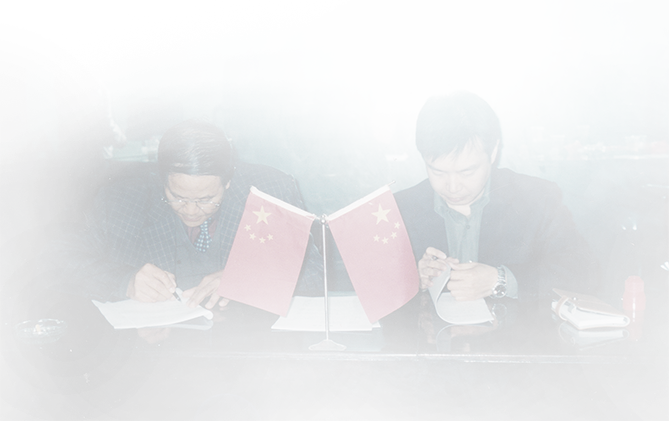
A historic signing moment from the 1970s, when HG’s founder helped drive the development of China’s food industry and began expanding into international markets.
Over the past decades, we have participated in the evolution of automated food production — from local factories to global turnkey projects across 100+ countries. That experience continues to shape every HG production line today.
Discover Our Heritage
Global Food Machinery &
Turnkey Factory Solutions

Building Long-Term Partnerships Through Shared Growth and Industrial Value.
Copyright © HG Industry Group All Rights Reserved
Food Machine Snack Food Processing Machinery

Unauthorized use of this website's content constitutes copyright infringement and may result in legal action.