 English
 中文简体
 日本語
 русский
 عربى
 Український
 Español
 Français


Inside the Potato Chips Production Line: Technology, Process, and What to Look for When Investing in Your Plant
Content
- 1. Introduction
- 2. Overview of a Modern Potato Chips Production Line
- 3. Step-by-Step Process and Core Equipment
- 4. Key Technical Considerations When Choosing a Line
- 5. Industry Trends & Innovations
- 6. Common Challenges & How Advanced Equipment Solves Them
- 7. Why Partner with HG
- 8. Conclusion & Call to Action
1. Introduction
Potato chips remain one of the most popular snack foods in the world, and demand keeps growing across both mature and emerging markets. Consumers want consistent crunch, clean flavor, attractive color, and increasingly, healthier options such as reduced-oil or reduced-acrylamide products. Behind every perfect chip is a carefully engineered potato chips production line that turns raw tubers into packaged, shelf-stable snacks with minimal waste and maximum consistency.
For snack manufacturers, investing in a new line is a major decision. The right equipment can lower your cost per kilogram, stabilize quality, and open doors to new product formats. The wrong choice can lock in high energy bills, excessive oil use, and frequent downtime for years.
This article walks through how a modern potato chips production line works, explains the core equipment at each stage, and highlights the technical factors, industry trends, and common challenges you should consider before you invest.
2. Overview of a Modern Potato Chips Production Line
A potato chips production line is a continuous, integrated system in which raw potatoes enter at one end and finished, packaged chips leave at the other. Depending on the output requirement, lines are generally grouped into three categories:
- Small-scale lines (roughly 50–150 kg/h of finished product):Often semi-automatic, suited to startups, regional brands, and pilot production.
- Medium-scale lines (roughly 200–500 kg/h):Largely automated, with continuous fryers and more advanced control.
- Large-scale lines (500 kg/h and above):Fully automated, high-throughput systems with integrated oil management, heat recovery, and online inspection.
Regardless of size, the process follows the same logical sequence: handling, peeling, slicing, washing and blanching, de-watering, frying, seasoning, and inspection and packaging. Each stage affects the next, so a weakness upstream (for example, uneven slice thickness) will show up downstream as inconsistent color, oil content, or texture. That is why it is better to evaluate a line as a complete system rather than as a collection of individual machines.
3. Step-by-Step Process and Core Equipment
3.1 Raw Potato Handling
Quality starts with the raw material. Chipping potatoes should have high dry matter (typically 20–24%), low reducing sugars, and a uniform size and shape. High sugar content leads to dark, bitter chips and higher acrylamide formation during frying.
Core equipment at this stage includes:
- Receiving hoppers and bucket or belt elevatorsthat gently move potatoes without bruising.
- Destoners and de-stoning washersthat remove stones, soil, and debris.
- Storage and conditioning systemsthat keep potatoes in a controlled temperature range, since cold storage increases sugars.
- Sorting and grading equipmentthat removes green, damaged, or undersized tubers.
Good handling reduces losses and protects downstream equipment from damage.
3.2 Peeling
Peeling removes the skin while keeping flesh loss as low as possible. The two most common technologies are:
- Abrasive (carborundum) peelers:Rotating rollers or a drum with an abrasive surface scrub the skin away. They are cost-effective, widely used, and suitable for most chip applications.
- Steam peelers:Pressurized steam loosens the skin, which is then removed with water spray. They deliver lower peel loss but require more investment and utility capacity.
Some producers choose to leave the skin on for kettle-style or "rustic" products, in which case a thorough washing and brushing step replaces peeling. After peeling, a short inspection and trimming conveyor allows operators to remove remaining eyes, defects, and discolored spots.
3.3 Slicing
Slicing is arguably the most critical step for final product quality. Uniform thickness determines how evenly chips fry, how much oil they absorb, and how they feel in the mouth.
- Centrifugal slicersuse a rotating impeller to push potatoes against fixed knives. They offer high capacity and consistent slices, and are the industry standard for most continuous lines.
- Slice thicknesstypically ranges from about 1.0 to 2.2 mm for classic chips, with thicker cuts for kettle-style or ridged products.
- Cutting stylesinclude flat, wavy (crinkle), and ridged, which can be changed by swapping knife sets.
Sharp, precisely mounted knives are essential. Dull blades tear cells, release excess starch, and create ragged edges that affect frying quality. Look for slicers with quick-change knife systems to reduce downtime.
3.4 Washing & Blanching
Right after slicing, the surface of each slice is coated with free starch. If it is not removed, slices stick together, fry unevenly, and may darken.
- Washing:Slices pass through a water bath or spray washer that removes surface starch. Starch-laden water can be collected and recovered as a by-product.
- Blanching (optional but valuable):Brief exposure to hot water leaches out reducing sugars and deactivates enzymes. This improves color uniformity and can significantly reduce acrylamide formation.
Water consumption is a key consideration here. Modern lines include water recirculation and starch recovery systems to cut both utility costs and environmental impact.
3.5 De-watering / Drying
Surface water must be removed before the slices enter the fryer. Excess moisture causes violent splashing, accelerates oil degradation, increases energy use, and can produce soggy chips.
- Vibrating de-watering conveyorsshake off bulk water.
- Air knives or hot-air dryersremove remaining surface moisture.
- Centrifugal de-waterersare used in some configurations for batch or small-line operation.
Effective de-watering is one of the cheapest ways to extend oil life and stabilize product quality, yet it is often under-specified when buyers focus only on the fryer.
3.6 Frying
Frying converts the raw slice into a crisp, golden chip. It reduces moisture from roughly 80% to about 1–2% while developing flavor and color. Two main fryer types dominate the industry:
- Continuous fryers:Slices travel through hot oil on a controlled path, with paddles or submerger belts managing residence time. They provide high capacity, tight temperature control, and consistent output, making them ideal for medium to large production.
- Batch (kettle) fryers:Slices are fried in smaller batches, typically with stirring, producing a harder, crunchier texture. They suit premium or artisanal products and smaller capacities.
Key fryer design features to evaluate:
- Heating method:Thermal oil, steam, gas-fired, or electric. Each has implications for energy cost, temperature stability, and safety.
- Oil filtration and circulation:Continuous filtration removes fines and extends oil life.
- Oil temperature control:Typically in the range of 160–190 °C, with tight tolerance to avoid under- or over-frying.
- Exhaust and heat recovery:Capturing vapor and waste heat reduces operating cost.
After frying, a de-oiling step (such as a vibrating conveyor, hot-air blower, or centrifugal de-oiler) removes surface oil, helping to produce lower-fat chips.
3.7 Seasoning
Seasoning gives chips their identity. Even distribution is critical for both taste and visual appeal.
- Drum seasonerstumble chips gently while powders or oils are applied, allowing uniform coating.
- Seasoning feeders and dosing systemsmeter powder in proportion to chip flow, which prevents over- or under-seasoning.
- Oil or slurry spray systemssupport the adhesion of seasonings for specific flavors.
Look for seasoning systems that minimize chip breakage, offer easy cleaning between flavor changes, and include dust collection to keep the plant hygienic.
3.8 Inspection & Packaging
The final stage protects the product and the brand.
- Inspection:Optical sorters or inspection conveyors remove burnt, undercooked, or discolored chips. Metal detectors and X-ray systems add a layer of food safety assurance.
- Weighing:Multi-head weighers provide accurate portioning, reducing giveaway.
- Packaging:Vertical form-fill-seal (VFFS) machines are used for pillow bags, with nitrogen flushing to extend shelf life and cushion fragile chips. Other options include canister filling and pre-made pouch systems.
- End-of-line:Case packers, labeling, and palletizing equipment complete the line for high-volume plants.

4. Key Technical Considerations When Choosing a Line
When evaluating suppliers and equipment, consider the following factors in addition to price.
- Capacity and scalabilitySelect a line that meets your current demand but allows for expansion. Modular designs make it easier to add capacity later without replacing the entire system.
- Product flexibilityIf you plan to produce multiple products, such as flat, wavy, or kettle-style chips, confirm that the line can switch formats quickly and cleanly.
- Energy efficiencyFrying and drying are the most energy-intensive stages. Look for heat recovery systems, efficient burners or heat exchangers, and well-insulated equipment. Over a 10-year lifetime, energy cost can exceed the original equipment price.
- Oil management and qualityOil is one of your largest ongoing costs. Effective filtration, controlled oil turnover, and accurate temperature control directly influence both flavor and cost per kilogram.
- Automation and controlA PLC-based control system with HMI, recipe storage, and data logging improves consistency and reduces dependence on operator skill. Remote monitoring and diagnostics are increasingly valuable.
- Hygiene and materialsFood-grade stainless steel (such as SUS304 or SUS316 where required), sanitary design, and easy-clean features reduce contamination risk and cleaning time. Equipment should align with relevant food safety standards in your target market.
- Yield and waste reductionPeeling loss, slice fines, broken chips, and oil carried out with the product all affect yield. Small improvements here translate into significant annual savings.
- After-sales supportSpare parts availability, technical training, installation assistance, and responsive service often matter more than small differences in purchase price.
5. Industry Trends & Innovations
The snack industry is evolving quickly, and production line technology is evolving with it.
- Healthier snacking:Reduced-fat chips, lower-sodium seasoning, and acrylamide-reduction strategies are now mainstream requests. Vacuum frying, advanced de-oiling, and optimized blanching are being adopted to meet them.
- Energy and sustainability:Producers are seeking heat recovery, water recycling, starch recovery, and lower-emission heating options to reduce both costs and environmental footprint.
- Smart manufacturing:Sensors, data analytics, and remote monitoring allow plants to track oil quality, moisture, temperature, and throughput in real time, supporting predictive maintenance and consistent quality.
- Optical sorting and inspection:Higher-resolution cameras and smarter algorithms detect defects more accurately, protecting brand reputation while reducing waste.
- Premium and novel formats:Kettle-style, skin-on, thick-cut, and fabricated chips are growing segments, driving demand for flexible lines that can handle more than one product type.
- Plant-based and alternative ingredients:Many manufacturers are expanding into sweet potato, cassava, and vegetable chips, which require equipment adaptable to different raw materials.
6. Common Challenges & How Advanced Equipment Solves Them
|
Challenge |
Typical Cause |
How Advanced Equipment Helps |
|
Dark or uneven chip color |
High reducing sugars, poor washing, uneven frying temperature |
Effective washing and blanching, precise fryer temperature control, better raw material sorting |
|
High oil content |
Excess surface moisture, low frying temperature, no de-oiling step |
Efficient de-watering, stable oil temperature, integrated de-oiling equipment |
|
Broken chips |
Rough conveying, long drops, aggressive tumbling |
Gentle conveying design, optimized transfer heights, low-impact seasoning drums |
|
Uneven seasoning |
Inconsistent dosing or poor tumbling |
Metered seasoning feeders and properly designed drums |
|
Short oil life |
Fines in oil, poor filtration, excess moisture |
Continuous filtration, effective de-watering, controlled oil turnover |
|
High acrylamide |
Raw material sugars, high frying temperature |
Blanching, raw material control, optimized frying curves |
|
High energy consumption |
Poor insulation, no heat recovery |
Heat recovery systems, efficient heating design, insulated equipment |
|
Frequent downtime |
Hard-to-clean design, worn components |
Sanitary design, quick-change parts, automated cleaning where possible |
Many of these problems are connected. For example, better de-watering reduces oil absorption, extends oil life, lowers energy use, and improves crispness at the same time. This is why a well-integrated line outperforms a collection of mismatched machines.
7. Why Partner with HG
Choosing the right equipment supplier is just as important as choosing the right technology. HG focuses on delivering complete, reliable solutions for snack food manufacturers, from single machines to fully integrated potato chips production lines.
Here is what a partnership with HG is designed to offer:
- Customized line design:Each plant has different capacity targets, product ranges, utilities, and layout constraints. HG works with customers to design a line that fits their specific goals instead of forcing a one-size-fits-all configuration.
- Complete turnkey capability:From raw potato handling to packaging, HG can supply and coordinate the entire line, helping ensure that every stage works together smoothly.
- Quality-focused engineering:Food-grade materials, sanitary design principles, and precision manufacturing support stable performance and long service life.
- Efficiency by design:Attention to oil management, heat recovery, and water use helps customers control operating costs over the long term.
- Automation and control options:Configurable control systems allow you to choose the right balance between automation level and investment.
- Support from planning to production:Technical consultation, installation guidance, operator training, and after-sales service help you reach stable production faster and keep it running.
Whether you are launching your first snack brand or expanding an established operation, a dependable equipment partner reduces risk and shortens the path to profitable production.
8. Conclusion & Call to Action
A potato chips production line is far more than a series of machines. It is an integrated process in which raw material quality, slicing precision, moisture control, frying stability, seasoning accuracy, and packaging protection all work together to determine the taste, cost, and consistency of your product.
When you plan your investment, look beyond the headline price. Evaluate energy use, oil management, automation, hygiene, flexibility, and long-term support. Pay attention to industry trends such as healthier snacks, smarter controls, and sustainable operation, so that your line stays competitive for years to come.
If you are considering a new or upgraded potato chips production line, contact HG today to discuss your capacity goals, product plans, and budget. Our team can help you evaluate your options and design a solution that fits your business, so you can bring consistent, high-quality chips to market with confidence.
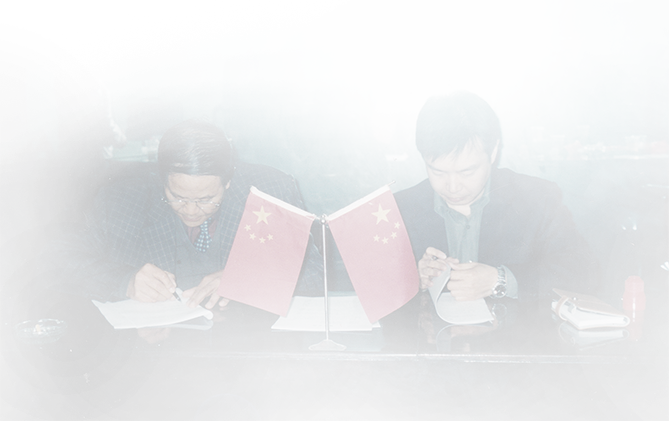
A historic signing moment from the 1970s, when HG’s founder helped drive the development of China’s food industry and began expanding into international markets.
Over the past decades, we have participated in the evolution of automated food production — from local factories to global turnkey projects across 100+ countries. That experience continues to shape every HG production line today.
Discover Our Heritage
Global Food Machinery &
Turnkey Factory Solutions

Building Long-Term Partnerships Through Shared Growth and Industrial Value.
Copyright © HG Industry Group All Rights Reserved
Food Machine Snack Food Processing Machinery

Unauthorized use of this website's content constitutes copyright infringement and may result in legal action.