 English
 中文简体
 日本語
 русский
 عربى
 Український
 Español
 Français

Automatic Fried Rice Cracker Production Line: Process, Equipment, and Buying Guide
Content
- 1. Introduction
- 2. What Is an Automatic Fried Rice Cracker Production Line?
- 3. How Does an Automatic Fried Rice Cracker Production Line Work?
- 4. Key Equipment in the Production Line
- 5. Top Benefits of Choosing an Automatic Production Line
- 6. Technical Parameters and Capacity Options
- 7. Types of Fried Rice Crackers You Can Produce
- 8. How to Choose the Right Automatic Fried Rice Cracker Production Line
- 9. Cost and ROI of a Fried Rice Cracker Production Line
- 10. Maintenance and Operation Tips
- 11. FAQ
- 12. Conclusion + CTA
1. Introduction
Rice crackers are one of the fastest-growing categories in the snack industry. Consumers across Asia, North America, and Europe want crunchy, gluten-free, and visually appealing snacks, and fried rice crackers meet all three demands. From Chinese guoba and Korean nurungji chips to Southeast Asian rice chips and Japanese-style senbei, the market keeps expanding.
Hand-made or semi-manual production, however, can't keep up with this demand. Output is inconsistent, labor costs are high, and food safety is hard to control. That's why more snack factories, start-ups, and food entrepreneurs are investing in an automatic fried rice cracker production line.
This guide explains what the line is, how it works, which machines it includes, what it costs, and how to choose the right one for your business.
2. What Is an Automatic Fried Rice Cracker Production Line?
An automatic fried rice cracker production line is an integrated set of machines that turns raw rice (usually glutinous or japonica rice) into finished, seasoned, packaged fried rice crackers with minimal manual handling.
A complete line typically covers:
- Rice washing, soaking, and steaming
- Cooling and forming
- Drying
- Frying (or puffing, then frying)
- De-oiling and seasoning
- Cooling, conveying, and packaging
Because the machines are linked by conveyors and controlled by a central panel or PLC, the line delivers stable product quality, consistent shape and thickness, and predictable hourly output. Lines range from compact semi-automatic setups to fully automatic factories producing hundreds of kilograms per hour.
3. How Does an Automatic Fried Rice Cracker Production Line Work?
Specific workflows vary by product style, but most lines follow these steps.
Step 1: Rice cleaning and soaking. Rice is washed to remove dust and impurities, then soaked so the grains absorb enough water to cook evenly.
Step 2: Steaming or cooking. The soaked rice goes into a continuous steamer or cooker until it is fully gelatinized. This step largely determines the final texture.
Step 3: Cooling and conditioning. Cooked rice is cooled, and sometimes rested or lightly aged, so it can be formed without sticking.
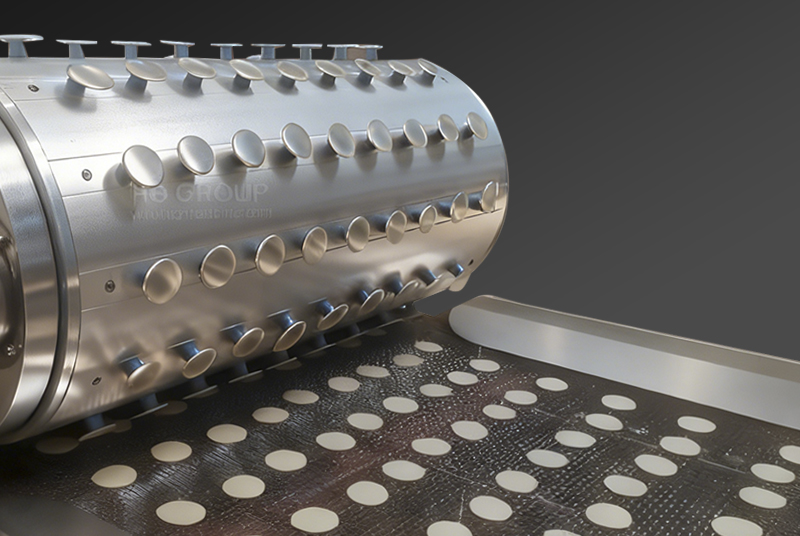
Step 4: Forming. Depending on the design, the rice is pressed, rolled, or extruded into sheets, rounds, squares, or custom shapes. A cutting unit then ensures uniform size and thickness.
Step 5: Drying. The formed pieces pass through a hot-air dryer to reach the target moisture level. Proper drying is critical, because moisture that is too high or too uneven leads to poor puffing and oil absorption.
Step 6: Frying. The dried pieces enter a continuous fryer, where they puff and turn crisp and golden. Oil temperature and frying time are controlled precisely.
Step 7: De-oiling and seasoning. Excess oil is removed, then a seasoning drum or tumbler coats the crackers evenly with salt, spices, sugar, cheese, seaweed, or other flavors.
Step 8: Cooling and packaging. Crackers are cooled, inspected, and sent to a weighing and packaging machine, usually pillow-bag or pouch packing, often with nitrogen flushing to extend shelf life.
4. Key Equipment in the Production Line
A typical automatic fried rice cracker production line includes the following machines.
| Equipment | Main Function |
|---|---|
| Rice washing and soaking machine | Cleans rice and prepares grains for cooking |
| Continuous rice steamer/cooker | Gelatinizes rice evenly |
| Cooling conveyor | Lowers rice temperature for forming |
| Rice cracker forming machine | Presses, rolls, or extrudes rice into shape |
| Cutting machine | Cuts sheets into uniform pieces |
| Hot-air dryer | Reduces moisture to the target level |
| Continuous fryer | Puffs and fries crackers to a crisp texture |
| De-oiling machine | Removes excess surface oil |
| Seasoning machine | Coats products with flavor evenly |
| Cooling conveyor | Prepares crackers for packing |
| Weighing and packaging machine | Measures, fills, and seals finished product |
| Control cabinet (PLC) | Coordinates temperature, speed, and timing |
Optional add-ons: oil filtration system, exhaust and fume treatment, metal detector, and a heating system (electric, gas, or thermal oil) matched to your site.
5. Top Benefits of Choosing an Automatic Production Line
Higher output and efficiency. Continuous operation lets you produce consistent volumes around the clock, far beyond what manual work can achieve.
Consistent quality. Automated forming, temperature control, and seasoning reduce variation in size, color, crispness, and flavor between batches.
Lower labor costs. One automated line typically needs far fewer operators than a manual process producing the same volume.
Better food safety and hygiene. Food-grade stainless steel construction and reduced human contact lower contamination risks and help you meet HACCP, ISO, or local standards.
Reduced waste and oil use. Precise control cuts broken products, over-frying, and excessive oil absorption, and filtration systems extend oil life.
Scalability and flexibility. Many lines can be adjusted for different shapes, thicknesses, and flavors, and expanded later as demand grows.
6. Technical Parameters and Capacity Options
Specifications differ by manufacturer and configuration, so the figures below are typical reference ranges. Always confirm exact data with your supplier.
| Parameter | Small Line | Medium Line | Large Line |
|---|---|---|---|
| Capacity (finished product) | 50–100 kg/h | 150–300 kg/h | 400 kg/h and above |
| Heating method | Electric / gas | Electric / gas / thermal oil | Gas / thermal oil |
| Control system | Semi-automatic | PLC automatic | Full PLC with touchscreen |
| Operators needed | 3–5 | 5–8 | 8–12 |
| Floor space | Compact | Medium | Large (dedicated workshop) |
| Frying type | Batch or small continuous | Continuous fryer | High-capacity continuous fryer |
Other specifications to ask about:
- Material (SUS304 stainless steel is standard for food contact parts)
- Power consumption and voltage compatibility
- Fuel or energy consumption per hour
- Product thickness and size adjustment range
- Oil capacity and filtration method
- Noise level and exhaust requirements
7. Types of Fried Rice Crackers You Can Produce
A flexible production line can make a wide range of products:
- Crispy rice chips (guoba-style): thin, crunchy squares or rounds
- Round puffed rice crackers: light, airy, and popular for family snack packs
- Glutinous rice crackers: chewy-crisp texture with a rich rice flavor
- Seaweed rice crackers: rice pieces combined with nori or seaweed seasoning
- Spicy and savory flavored crackers: chili, BBQ, cheese, onion, or seafood flavors
- Sweet rice crackers: coated with sugar glaze, honey, or caramel
- Shaped or novelty crackers: stars, rings, animals, or branded shapes for children's snacks
- Mixed grain crackers: blends with corn, millet, oats, or brown rice for health-focused markets
Changing the mold, cutter, seasoning formula, and frying curve lets one line serve multiple product lines and customer segments.
8. How to Choose the Right Automatic Fried Rice Cracker Production Line
Use this checklist before you buy.
1. Define your target product and market. Decide on cracker type, shape, flavor, and positioning (premium, mass-market, export) first. The product determines the machine configuration.
2. Set realistic capacity goals. Estimate current demand and 2–3 years of growth. Starting slightly above current needs avoids a premature upgrade without wasting capital.
3. Check the level of automation. Compare semi-automatic and fully automatic options against your labor costs and skill levels.
4. Evaluate build quality and materials. Look for food-grade stainless steel, solid welding, reliable motors and bearings, and recognized electrical components.
5. Review energy efficiency. Heating and frying consume significant energy. Ask about heat recovery, insulation, and fuel options (electricity, natural gas, LPG, or thermal oil).
6. Confirm customization ability. Make sure the supplier can adjust molds, sizes, and layout for your workshop.
7. Check the supplier's track record. Request video demonstrations, customer cases, factory visits, and references. Ask whether test runs with your own raw materials are possible.
8. Understand after-sales support. Installation guidance, operator training, spare parts supply, warranty terms, and remote or on-site service all matter for long-term uptime.
9. Verify compliance. Confirm that the equipment meets the safety, electrical, and food-contact standards of your country (such as CE, or local requirements).
9. Cost and ROI of a Fried Rice Cracker Production Line
What affects the price:
- Production capacity
- Degree of automation
- Heating system type
- Number of forming and seasoning units
- Packaging machine specification
- Customization and optional modules
- Shipping, installation, and training
Typical investment ranges (estimates only): small lines may start in the tens of thousands of US dollars, while medium to large fully automatic lines can reach into the hundreds of thousands. Request a detailed written quotation to compare exactly what is included.
Other costs to budget:
- Raw materials (rice, oil, seasonings)
- Packaging materials
- Labor, utilities, and facility rental
- Maintenance, spare parts, and quality testing
- Marketing and distribution
How to estimate ROI:
- Calculate monthly production volume.
- Subtract raw material, labor, energy, packaging, and overhead costs from your selling price to find the per-kilogram profit.
- Divide total investment by monthly net profit to estimate the payback period.
Well-run snack lines often aim for a payback period of one to three years, but this depends heavily on your pricing, sales channels, and capacity utilization. Higher utilization and a strong brand shorten payback considerably.
10. Maintenance and Operation Tips
Daily
- Clean conveyors, cutters, and seasoning drums after each shift.
- Check oil level, oil temperature, and oil quality in the fryer.
- Inspect safety guards and emergency stops.
Weekly
- Filter or replace fryer oil as needed to prevent off-flavors and acrylamide buildup.
- Lubricate chains, bearings, and moving parts according to the manual.
- Check belts, seals, and heating elements for wear.
Monthly and periodic
- Calibrate temperature sensors and weighing systems.
- Inspect electrical connections and control panels.
- Deep clean the dryer and exhaust system.
Operation best practices
- Keep rice moisture and cooking time consistent, since small variations affect puffing.
- Don't overload the dryer or fryer.
- Train operators on startup, shutdown, and emergency procedures.
- Keep a log of batch parameters so quality issues can be traced quickly.
- Stock key spare parts such as belts, heating elements, and sensors to avoid long downtime.
11. FAQ
Q1: What raw materials are used in an automatic fried rice cracker production line?
Most lines use glutinous rice, japonica rice, or rice blends, plus edible oil for frying and seasonings. Some lines can also process mixed grains.
Q2: How much space do I need?
It depends on capacity. Small lines can fit in a compact workshop, while large continuous lines need a dedicated, well-ventilated production hall. Ask your supplier for a layout drawing.
Q3: Can one line make different shapes and flavors?
Yes. By changing molds, cutters, and seasoning formulas, you can produce multiple shapes and flavors on the same line.
Q4: Is the line suitable for a start-up?
Yes. Compact or semi-automatic models let new businesses begin with lower investment and expand later.
Q5: How many workers are needed?
Roughly 3–5 for small lines and up to 8–12 for large lines, depending on automation and packaging methods.
Q6: How long does installation take?
Usually from a few days to a few weeks, depending on line size, site readiness, and engineer availability.
Q7: Can I test my own rice before buying?
Many reputable suppliers offer sample testing or trial runs. Ask for this before placing an order.
Q8: How can I reduce oil content in the final product?
Use proper drying, accurate frying temperature, and a de-oiling unit. Some lines also offer hot-air puffing as a lower-oil alternative.
12. Conclusion + CTA
An automatic fried rice cracker production line helps snack producers increase output, stabilize quality, cut labor costs, and meet growing demand for crunchy, gluten-free snacks. The key is to match the line to your product, capacity, budget, and market goals rather than simply buying the biggest machine.
Before you decide, define your product, compare suppliers carefully, ask for trial runs, and review after-sales support in detail. A well-chosen line becomes a long-term asset that grows with your business.
Ready to start your fried rice cracker project?
Contact our team for a free consultation, customized production line design, and detailed quotation. Tell us your target capacity, product type, and workshop size, and we'll recommend the most suitable solution for you.
Get Your Free Quote Today
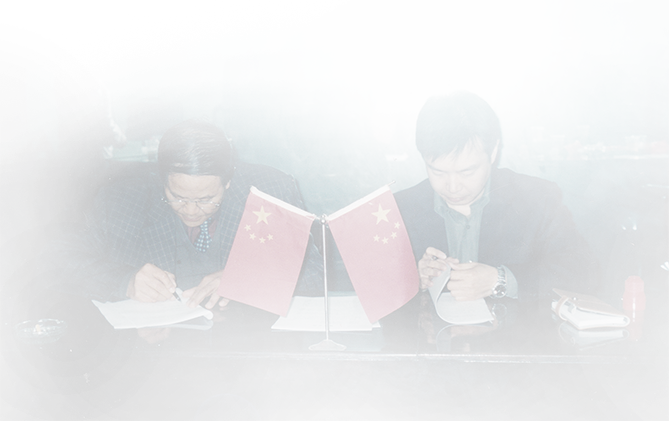
A historic signing moment from the 1970s, when HG’s founder helped drive the development of China’s food industry and began expanding into international markets.
Over the past decades, we have participated in the evolution of automated food production — from local factories to global turnkey projects across 100+ countries. That experience continues to shape every HG production line today.
Discover Our Heritage
Global Food Machinery &
Turnkey Factory Solutions

Building Long-Term Partnerships Through Shared Growth and Industrial Value.
Copyright © HG Industry Group All Rights Reserved
Food Machine Snack Food Processing Machinery

Unauthorized use of this website's content constitutes copyright infringement and may result in legal action.