 English
 中文简体
中文简体 日本語
日本語 русский
 عربى
عربى Український
 Español
 Français


How a Cookies Production Line Actually Works — And How to Set One Up Right
Content
- What Is a Cookies Production Line and Why Does It Matter?
- The Key Stages of a Cookie Manufacturing Line
- How to Choose the Right Cookie Production Line for Your Business
- Common Problems on Cookie Production Lines and How to Fix Them
- Hygiene and Food Safety Standards for Cookie Lines
- Automating and Scaling Your Cookie Production Line
- Final Thoughts on Building a Reliable Cookies Production Line
What Is a Cookies Production Line and Why Does It Matter?
A cookies production line is a series of connected machines and workstations that automate the process of making cookies at scale — from mixing raw ingredients all the way to sealed, shelf-ready packaging. Whether you're running a small bakery looking to scale up or managing a large commercial facility, understanding how a production line works can help you cut costs, improve consistency, and increase output without sacrificing quality.
Modern cookie manufacturing lines are engineered to handle hundreds or even thousands of units per minute. They eliminate the variability that comes with hand-made production and give operators precise control over every stage of the baking process. If you're serious about growing your cookie business, the production line is the backbone of your operation.
The Key Stages of a Cookie Manufacturing Line
A fully integrated cookie production line typically moves through several distinct phases. Each stage connects to the next in a continuous flow, minimizing manual handling and reducing contamination risk. Here's how a standard line breaks down:
Ingredient Mixing and Dough Preparation
This is where everything begins. Industrial mixers — often planetary or sigma-blade types — combine flour, sugar, fats, eggs, flavorings, and leavening agents in precise ratios. Automated dosing systems weigh and feed each ingredient into the mixer, removing human error from recipes. For large operations, continuous mixing systems can process dough in an uninterrupted flow rather than batch by batch, which significantly boosts throughput.
Temperature control at this stage is critical. Dough that's too warm can cause spreading problems during baking, while dough that's too stiff won't pass through forming equipment cleanly. Many modern lines include temperature-controlled mixing chambers to address this.
Dough Forming and Shaping
Once the dough is ready, it moves to the forming station. Depending on the cookie type, this stage uses one of several methods:
- Rotary molding — dough is pressed into engraved molds on a rotating drum; ideal for short-dough cookies like butter biscuits.
- Wire-cut forming — a screw extruder pushes dough through a die, and a wire cuts off portions; works well for soft or chunky cookies with inclusions like chocolate chips or nuts.
- Depositing — soft doughs or batters are piped directly onto the baking band via nozzles; commonly used for macaroons and drop cookies.
- Sheeting and cutting — dough is rolled into a flat sheet and stamped with cutters; used for crackers and flat-style cookies.
Choosing the right forming method for your product type is one of the most important decisions when setting up a cookie baking line. The wrong equipment can lead to misshapen pieces, excessive waste, or production bottlenecks.
Baking
The oven is the heart of any cookie production line. Industrial tunnel ovens use a continuous stainless steel or wire mesh baking band that carries cookies through heating zones at a controlled speed. Different zones can be set to different temperatures, giving operators control over browning, moisture evaporation, and texture development. Gas-fired, electric, and hybrid ovens are all common, with gas typically offering faster heat-up times and lower energy costs at scale.
Bake time and band speed are adjusted based on cookie size, thickness, and desired moisture content. Getting these parameters right is critical — underbaked cookies will be soft and have shorter shelf life, while overbaked ones will be too dark and brittle.
Cooling
Cookies exit the oven at temperatures between 150°C and 200°C and must be cooled to around 30–35°C before they can be handled or packaged. Cooling conveyors — either straight or spiral — use forced ambient or chilled air to bring down the temperature gradually. Cooling too quickly can cause cracking, while insufficient cooling leads to condensation in packaging, which destroys texture and encourages mold growth.
Sandwiching, Enrobing, or Decorating (Optional)
Many premium cookies go through additional processing after baking. Sandwich cookie lines use cream depositors to apply fillings between two cookie halves. Enrobing machines coat cookies in chocolate or yogurt coatings by passing them through a curtain of liquid coating. Decorating stations can add icing, sprinkles, or jam. These secondary processes add value to the product but also add complexity to the line layout.
Packaging
The final stage is automated packaging, which protects the product and prepares it for retail or bulk distribution. Common packaging formats for cookies include flow-wrapped trays, pillow packs, stand-up pouches, and cartons. Packaging lines often include metal detectors, checkweighers, and vision systems to catch defective or underweight packs before they leave the facility. High-speed lines can run dozens of packs per minute, with robotic pick-and-place systems handling delicate cookies that can't be pushed or shuffled mechanically.
How to Choose the Right Cookie Production Line for Your Business
Not every cookie line is built for every business. The right setup depends on your output goals, product mix, facility space, and budget. Here are the main factors to evaluate:
| Factor | What to Consider |
| Production capacity | Measure in kg/hour. Match line capacity to current and projected demand with room to grow. |
| Product variety | Multi-product lines need quick changeover capability. Single-product lines can be more optimized. |
| Dough type | Hard doughs, soft doughs, and batters each require different forming equipment. |
| Floor space | Tunnel ovens can be 20–60 meters long. Spiral coolers save floor space in tight facilities. |
| Automation level | Higher automation reduces labor costs but increases capital expenditure and maintenance needs. |
| Budget | Entry-level semi-automatic lines start around $50,000–$150,000; fully automated lines can exceed $1 million. |
It's also worth visiting equipment manufacturers' showrooms or requesting trials with your own dough formulations before committing to a purchase. A line that works perfectly for one recipe may struggle with another.
Common Problems on Cookie Production Lines and How to Fix Them
Even well-designed lines run into issues. Here are some of the most frequent problems operators face, along with practical solutions:
Inconsistent Cookie Weight or Size
This usually traces back to dough inconsistency — variations in hydration, temperature, or resting time affect how dough behaves in the former. Check your ingredient dosing system for accuracy and ensure dough temperature is tightly controlled. Calibrate forming equipment regularly and inspect molds for wear.
Sticking to the Baking Band
Cookies sticking to the band can indicate too much sugar in the formulation (which caramelizes and causes adhesion), a worn or dirty band, or incorrect baking temperature in the early zones. Regular band cleaning and applying a light release agent can help. Check your recipe if the problem persists after mechanical fixes.
Uneven Browning
Dark edges with pale centers — or vice versa — usually signal uneven heat distribution in the oven. Have the oven professionally calibrated and check that burners or heating elements are functioning uniformly across the width of the baking band. Also verify that cookies are spaced evenly as they enter the oven.
Cracking After Cooling
Thermal shock during cooling is a common culprit. If cookies cool too fast, the surface contracts more rapidly than the interior, causing surface cracks. Slow down the cooling process or use a staged cooling setup where temperature drops more gradually. Low-fat formulations are especially prone to this issue.
Hygiene and Food Safety Standards for Cookie Lines
Running a cookie baking production line means operating under strict food safety requirements. Most markets require compliance with standards such as HACCP, BRC, IFS, or SQF, depending on your target region and retail customers. Here's what that typically means in practice:
- All product-contact surfaces must be made from food-grade stainless steel or approved food-safe plastics, and must be easy to disassemble and clean.
- Allergen control procedures must be in place if the line handles multiple recipes, especially those containing nuts, dairy, or gluten.
- Metal detection or X-ray inspection systems should be installed before packaging to catch any physical contaminants.
- Cleaning-in-place (CIP) or cleaning-out-of-place (COP) systems must be documented, validated, and followed consistently.
- Employee training on personal hygiene, GMP (Good Manufacturing Practice), and pest control must be ongoing and documented.
Investing in hygienic equipment design from the start is far cheaper than retrofitting machinery or facing a product recall later. When evaluating equipment suppliers, ask specifically about hygiene certifications and cleanability features.
Automating and Scaling Your Cookie Production Line
Scaling up a cookie line isn't just about buying bigger machines — it's about redesigning the entire flow so that no single station becomes a bottleneck. A common mistake is upgrading the oven capacity without upgrading the forming or packaging equipment, which simply moves the constraint to a different point in the line.
Modern cookie production automation includes PLC (Programmable Logic Controller) systems that monitor and adjust machine parameters in real time, SCADA dashboards that give operators a plant-wide view of line performance, and integrated ERP connections that track yield, waste, and OEE (Overall Equipment Effectiveness). These tools help identify inefficiencies quickly and enable data-driven decisions about where to invest next.
If you're scaling from semi-manual to fully automated production, it's often smarter to do it in phases — automate forming and baking first, stabilize those processes, and then tackle packaging. This approach reduces implementation risk and gives your team time to build operational competence at each stage.
Final Thoughts on Building a Reliable Cookies Production Line
A well-designed cookies production line is one of the most powerful investments a cookie manufacturer can make. It brings consistency, speed, and scalability that simply aren't achievable through manual production. But getting it right requires careful planning — from matching equipment to your dough type, to building in quality control checkpoints, to ensuring every part of the line meets food safety standards.
Work with experienced equipment suppliers who understand your product category, visit reference installations before buying, and plan for maintenance from day one. A cookie manufacturing line that's well-maintained and properly operated can run reliably for decades — and be the foundation for a highly profitable baking business.
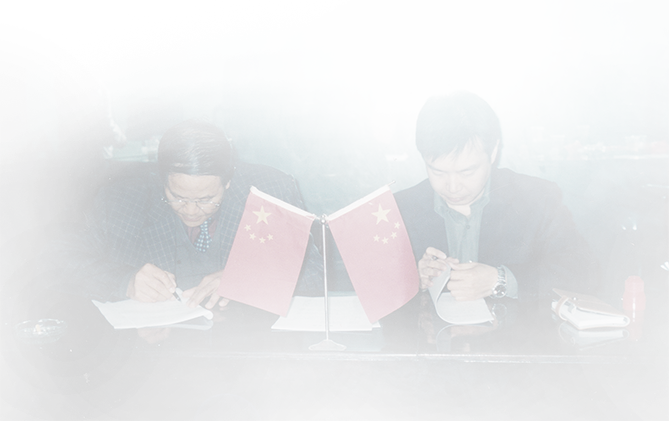
A historic signing moment from the 1970s, when HG’s founder helped drive the development of China’s food industry and began expanding into international markets.
Over the past decades, we have participated in the evolution of automated food production — from local factories to global turnkey projects across 100+ countries. That experience continues to shape every HG production line today.
Discover Our Heritage
Global Food Machinery &
Turnkey Factory Solutions

Building Long-Term Partnerships Through Shared Growth and Industrial Value.
Copyright © HG Industry Group All Rights Reserved
Food Machine Snack Food Processing Machinery

Unauthorized use of this website's content constitutes copyright infringement and may result in legal action.