 English
 中文简体
中文简体 日本語
日本語 русский
 عربى
عربى Український
 Español
 Français


Wafer Stick Production Line: Complete Guide to Equipment, Process & Efficiency
Content
- What Is a Wafer Stick Production Line?
- Core Equipment in a Wafer Stick Manufacturing Line
- Step-by-Step Wafer Stick Production Process
- Comparing Semi-Automatic vs. Fully Automatic Wafer Stick Lines
- Key Factors That Affect Wafer Stick Quality
- How to Choose the Right Wafer Stick Production Line for Your Business
- Common Problems and Troubleshooting Tips
- Maintenance Best Practices to Extend Equipment Lifespan
- Industry Trends Shaping Wafer Stick Production
What Is a Wafer Stick Production Line?
A wafer stick production line is a complete set of industrial equipment designed to continuously manufacture crispy, rolled wafer sticks — the kind commonly filled with cream, chocolate, or other flavored pastes. Unlike flat wafer sheet production, a wafer stick line involves a specialized rolling and baking process that transforms liquid batter into thin, crunchy tubes. These production lines range from semi-automatic setups suitable for small bakeries to fully automatic systems capable of producing hundreds of thousands of sticks per hour for large-scale snack manufacturers.
The demand for wafer sticks has grown significantly across Asia, Europe, and emerging markets, making efficient wafer roll production equipment a critical investment for confectionery businesses. Whether you're entering the market for the first time or upgrading an existing facility, understanding how this line works is the foundation for making smart decisions.
Core Equipment in a Wafer Stick Manufacturing Line
A complete wafer stick manufacturing line is made up of several interconnected machines, each performing a distinct function. The quality and efficiency of your output depends heavily on how well these components work together.
Batter Mixing System
The process starts with a batter mixer, which blends flour, water, sugar, oil, eggs, and other additives into a smooth, consistent liquid. Industrial mixers used in wafer stick lines typically feature precise temperature control and variable speed settings to maintain batter viscosity. Inconsistent batter leads to uneven baking, so this station is more critical than it might initially appear.
Baking Oven with Mold Plates
The batter is then fed onto specially designed mold plates inside a continuous tunnel oven or rotary baking machine. These plates are engraved with patterns that define the texture of the wafer surface. Gas-fired or electric heating elements bake the batter into thin, pliable sheets within seconds. The oven temperature, baking duration, and plate pressure all directly affect the crispness and color of the final product.
Rolling and Forming Unit
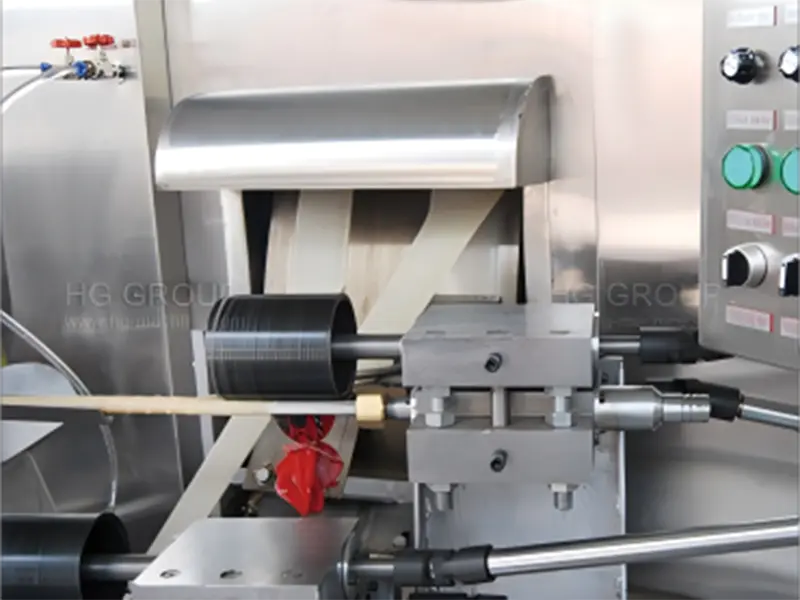
Immediately after baking, while the wafer sheet is still warm and flexible, it passes through a rolling unit where it is tightly wound into a cylindrical stick shape. The rolling speed must be synchronized with the baking speed to prevent tearing or deformation. High-end automatic wafer stick lines use servo motors and PLC control systems to maintain this synchronization with minimal human intervention.
Cream Filling Machine
For filled wafer sticks, a cream injector is integrated into the line. This machine pumps flavored paste — such as chocolate cream, vanilla, or hazelnut filling — into the hollow core of each rolled stick. The filling pressure and volume are adjustable, allowing manufacturers to produce both lightly filled and densely filled variants using the same equipment.
Cooling Conveyor
After filling, the sticks travel along a cooling tunnel or conveyor belt where controlled airflow brings the product temperature down quickly. Proper cooling is essential to set the cream filling and prevent the sticks from softening before packaging. The length and airflow intensity of the cooling section should match your production speed and ambient factory temperature.
Cutting and Sorting Station
Once cooled, the continuous wafer roll is cut into uniform stick lengths by a rotary or guillotine-style cutting mechanism. Sensors detect defective pieces — those that are broken, underfilled, or misshapen — and reject them automatically before they reach the packaging stage. This reduces waste and ensures consistent product quality reaching the end consumer.
Packaging Machine
The final station is the packaging unit, which can be configured for flow wrapping, pillow bag packaging, or tray sealing depending on your retail format. Automatic feeders count and align the sticks before they are sealed in moisture-resistant packaging to preserve crispness and shelf life.
Step-by-Step Wafer Stick Production Process
Understanding the full production flow helps operators identify bottlenecks and maintain quality at each stage. Here is a simplified overview of how a standard automatic wafer stick line operates from start to finish:
- Batter preparation: Raw ingredients are weighed and blended in the mixer to achieve the target viscosity and air incorporation level.
- Batter feeding: The liquid batter is pumped or gravity-fed onto the open mold plates at a controlled flow rate.
- Baking: Mold plates close and pass through the oven zone, baking the batter into a thin, flat sheet in 60–120 seconds depending on the recipe.
- Rolling: The hot, pliable sheet is immediately rolled into a tube shape around a forming mandrel.
- Cream injection: Filling is injected into the center of the rolled stick while it is still warm enough to bond with the cream.
- Cooling: Sticks pass through the cooling section to firm up the structure and set the filling.
- Cutting and inspection: Finished rolls are cut to length and inspected for defects by optical sensors or manual quality checks.
- Packaging and dispatch: Accepted sticks are counted, packaged, and prepared for distribution.
Comparing Semi-Automatic vs. Fully Automatic Wafer Stick Lines
Choosing between a semi-automatic and fully automatic wafer stick line is one of the most important decisions you'll make when setting up or expanding your production facility. The right choice depends on your budget, production volume target, labor availability, and long-term growth plans.
| Feature | Semi-Automatic Line | Fully Automatic Line |
| Initial Investment | Lower | Higher |
| Labor Required | Moderate to High | Low |
| Output Capacity | 50,000–150,000 sticks/hr | 200,000–600,000+ sticks/hr |
| Product Consistency | Moderate | High |
| Flexibility for Recipes | High (manual adjustments) | High (programmable presets) |
| Maintenance Complexity | Lower | Higher |
| Best For | Small to mid-size producers | Large-scale manufacturers |
Key Factors That Affect Wafer Stick Quality
Even with a well-equipped wafer roll production line, quality problems can arise if the process parameters are not properly managed. The following factors have the greatest influence on the final product quality:
Batter Consistency and Viscosity
The batter must be mixed to a consistent viscosity before every production run. Too thick and the batter won't spread evenly on the mold plate; too thin and the baked sheet will be fragile and tear during rolling. Most manufacturers use a viscosity meter and establish a standard range specific to their recipe. Temperature of the mixing water also plays a major role — colder water can cause the fat in the recipe to solidify and create lumps.
Oven Temperature Calibration
Uneven oven temperatures lead to inconsistently baked sheets — some too pale and soft, others too dark and brittle. It's important to calibrate the oven regularly using temperature probes across different zones. Most modern wafer stick machines divide the oven into multiple independent heating zones, allowing fine control over the temperature profile from entry to exit.
Rolling Tension and Speed
The rolling unit must apply consistent tension to form tight, uniform cylinders. If the sheet cools even slightly before reaching the rolling mandrel, it becomes brittle and cracks instead of rolling smoothly. This is why the transition from the oven exit to the rolling unit is kept as short and fast as possible in a well-designed wafer stick production system.
Cream Filling Temperature
Cream filling must be maintained at the correct temperature during injection — typically between 35°C and 45°C for most fat-based fillings. Filling that is too cold will be too thick to inject evenly, while filling that is too warm may not set properly during cooling, leading to leakage or soft texture in the final product.
How to Choose the Right Wafer Stick Production Line for Your Business
With so many suppliers offering wafer stick machines at varying price points, narrowing down the right system requires a clear understanding of your own production goals and constraints. Here are the most important criteria to evaluate:
- Production capacity: Define your required output in sticks per hour or kilograms per shift. Oversizing your line wastes capital; undersizing limits your growth.
- Product variety: If you plan to produce multiple flavors, sizes, or filling types, confirm that the line supports quick changeovers and recipe storage.
- Energy consumption: Gas vs. electric heating, oven insulation quality, and motor efficiency all impact your operating costs significantly over time.
- Hygiene and cleanability: Food-grade stainless steel construction, tool-free disassembly of contact parts, and CIP (clean-in-place) compatibility are important for food safety compliance.
- After-sales support: Check whether the supplier offers on-site installation, operator training, remote diagnostics, and spare parts availability in your region.
- Certifications: Look for CE marking, ISO certification, or compliance with local food machinery regulations to ensure safety and facilitate export if needed.
Common Problems and Troubleshooting Tips
Even experienced operators encounter recurring issues on their wafer stick lines. Knowing how to diagnose and fix common problems quickly minimizes downtime and product waste.
| Problem | Likely Cause | Recommended Fix |
| Sticks cracking during rolling | Sheet has cooled too much before rolling | Increase oven exit temperature or shorten transfer distance |
| Uneven color on wafer surface | Uneven oven temperature or dirty mold plates | Recalibrate heating zones; clean and season mold plates |
| Filling leaking from ends | Overfilling or insufficient cooling | Reduce fill volume; extend or lower the cooling tunnel temperature |
| Sticks sticking to mold plates | Insufficient oil in batter or worn non-stick coating | Adjust oil ratio in recipe; re-coat or replace mold plates |
| Inconsistent stick diameter | Batter flow rate fluctuating | Check batter pump calibration and mixer output consistency |
Maintenance Best Practices to Extend Equipment Lifespan
A wafer stick production line is a significant capital investment, and proper maintenance is essential to protect that investment and maintain consistent output quality over the years.
- Daily cleaning: Remove batter residue from mold plates, rollers, and the batter dispensing system at the end of every shift to prevent buildup that affects baking evenness and hygiene.
- Weekly lubrication: Apply food-safe lubricants to all moving mechanical parts including chains, gears, and conveyor bearings according to the manufacturer's schedule.
- Monthly oven inspection: Check heating elements, thermocouples, and insulation panels monthly. Replace any components showing signs of wear before they cause a production halt.
- Quarterly calibration: Recalibrate temperature sensors, flow meters, and filling volume settings every quarter to ensure process parameters stay within your quality specifications.
- Spare parts inventory: Keep critical wear parts such as mold plates, belts, seals, and nozzle tips in stock to minimize downtime during unexpected breakdowns.
Industry Trends Shaping Wafer Stick Production
The global wafer stick market continues to evolve, and production line technology is advancing alongside changing consumer preferences and manufacturing demands. Several key trends are influencing how manufacturers invest in and operate their wafer stick lines today.
Energy efficiency is a growing priority. Newer wafer stick machines feature improved oven insulation, heat recovery systems, and variable-frequency drives on motors, reducing energy consumption by 15–30% compared to older generation equipment. This not only lowers operating costs but also supports sustainability commitments that are increasingly important for retail partnerships and export markets.
There is also growing demand for healthier and premium wafer stick variants — whole grain wafers, reduced-sugar fillings, functional ingredient additions, and allergen-free recipes. Modern automatic wafer stick lines are being designed with greater recipe flexibility and faster changeover capabilities to support this product diversification without sacrificing throughput.
Smart manufacturing integration is another major direction. PLC and HMI-controlled wafer roll production equipment is increasingly being connected to factory-level MES (Manufacturing Execution Systems) and remote monitoring platforms, giving production managers real-time visibility into output rates, energy usage, downtime events, and quality metrics across multiple lines simultaneously.

A historic signing moment from the 1970s, when HG’s founder helped drive the development of China’s food industry and began expanding into international markets.
Over the past decades, we have participated in the evolution of automated food production — from local factories to global turnkey projects across 100+ countries. That experience continues to shape every HG production line today.
Discover Our Heritage
Global Food Machinery &
Turnkey Factory Solutions

Building Long-Term Partnerships Through Shared Growth and Industrial Value.
Copyright © HG Industry Group All Rights Reserved
Food Machine Snack Food Processing Machinery

Unauthorized use of this website's content constitutes copyright infringement and may result in legal action.