 English
 中文简体
中文简体 日本語
日本語 عربى
عربى русский
 Español
 Український
 Français
How a Popcorn Production Line Works: Equipment, Stages & Buying Guide
What Is a Popcorn Production Line and Why Does It Matter?
A popcorn production line is a series of industrial machines and processing steps that turn raw corn kernels into the finished, flavored popcorn bags you see on store shelves. Whether you're running a small snack business or scaling up to a commercial factory, understanding how a popcorn manufacturing line works helps you make smarter decisions about equipment, output quality, and operating costs. Modern popcorn production lines are highly automated, capable of processing hundreds of kilograms of popcorn per hour with minimal manual labor.
The global snack food market continues to grow, and popcorn sits at the center of that boom. Consumers want consistent flavor, texture, and freshness — all of which depend directly on the quality and configuration of the production line. A poorly designed line leads to uneven popping, inconsistent seasoning, and high product waste. A well-engineered popcorn processing line, on the other hand, delivers repeatable results batch after batch.
Core Stages of a Commercial Popcorn Production Line
Every industrial popcorn line follows a logical sequence of stages. Each stage directly affects the quality of the final product, so understanding what happens at each step is essential for operators and buyers alike.
Raw Material Handling and Pre-Processing
The process begins with receiving and cleaning raw corn kernels. Industrial vibrating screens and air classifiers remove dust, broken kernels, and foreign debris. Clean, uniform kernels are essential — oversized or undersized kernels pop unevenly, which reduces yield and affects texture. Some production lines also include a moisture conditioning step, where kernels are brought to an optimal moisture content (typically 13–14%) to maximize popping expansion ratio.
Popping System
The popping machine is the heart of any popcorn manufacturing line. There are three main popping technologies used in commercial settings:
- Continuous rotary poppers: Kernels pass through a rotating drum heated by gas or electric elements. These are best suited for high-volume, non-stop production runs.
- Batch kettle poppers: Oil and kernels are loaded into a heated kettle in cycles. This method gives classic kettle corn texture and is popular for artisan or flavored popcorn lines.
- Hot air (convection) poppers: No oil is used; superheated air pops the kernels. This is the preferred method for low-fat and health-positioned popcorn products.
The choice of popping technology affects not only flavor and texture but also downstream equipment choices, energy costs, and compliance with health regulations.
Seasoning and Flavoring Application
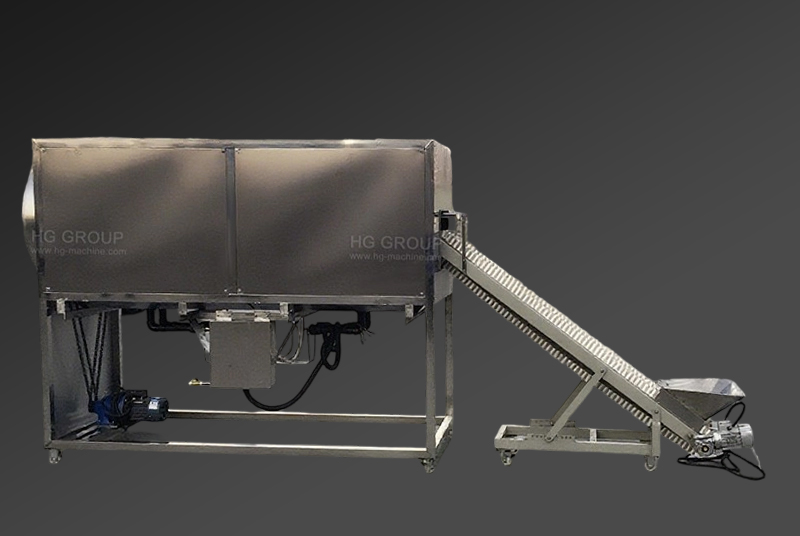
Once popped, the product moves into a coating drum or seasoning applicator. Liquid coatings (oil, butter, caramel) are sprayed through atomizing nozzles, while dry seasonings (salt, cheese powder, chili) are applied via tumbling drums. Precision dosing is critical here — too little seasoning makes a bland product, while over-seasoning wastes ingredients and can clog packaging machinery. High-end production lines use load cells and feedback-controlled dispensers to maintain consistent seasoning ratios within ±1% tolerance.
Cooling and Drying
Freshly popped and seasoned popcorn is hot and slightly moist. A cooling conveyor or fluidized bed cooler brings the temperature down quickly, which sets coatings, reduces moisture, and prevents clumping in the packaging stage. Inadequate cooling is one of the most common causes of shelf-life problems and stale popcorn complaints. Cooling tunnels with controlled airflow can reduce product temperature from over 80°C to near ambient in under two minutes.
Inspection and Rejection
Quality control equipment on a modern popcorn line typically includes optical sorters that use cameras and air jets to eject unpopped kernels (called "old maids"), burnt pieces, or discolored product. Metal detectors and X-ray inspection systems are also integrated into lines supplying major retailers, as part of HACCP and food safety compliance requirements.
Packaging
Popcorn is bulky and fragile, so packaging machinery must handle it gently to avoid crushing. Vertical form-fill-seal (VFFS) machines are the industry standard, creating pillow bags or gusseted bags from film rolls. Weighers (typically multihead combination weighers) portion the product into accurate target weights before it drops into the bag. Nitrogen flushing is commonly used to displace oxygen inside the bag, extending shelf life and protecting flavor. High-output lines can produce 60–120 bags per minute depending on bag size.
Key Equipment in a Popcorn Processing Line
The table below summarizes the main machines used across a standard automated popcorn production line, their function, and important performance metrics to look for when purchasing:
| Equipment | Function | Key Metric |
| Vibrating Cleaner/Sifter | Removes dust, debris, broken kernels | Throughput (kg/h), mesh size |
| Continuous Popper / Kettle | Pops kernels using heat and/or oil | Pop rate, expansion ratio, energy use |
| Seasoning Drum | Applies dry or liquid coatings evenly | Coating uniformity, RPM, capacity |
| Cooling Conveyor / Fluid Bed | Rapidly cools product after popping | Cooling rate (°C/min), belt length |
| Optical Sorter | Ejects unpopped or defective kernels | Detection accuracy, false reject rate |
| Multihead Weigher | Portions product to target bag weight | Weighing accuracy (±g), speed (wpm) |
| VFFS Packaging Machine | Forms, fills, and seals bags | Bags per minute, seal quality, film compatibility |
| Metal Detector / X-Ray | Final safety inspection for contaminants | Detection sensitivity (mm), compliance standards |
How to Size a Popcorn Production Line for Your Business
Choosing the right line capacity is one of the most important — and most commonly miscalculated — decisions when setting up a popcorn factory. Buying too little capacity leaves you unable to meet demand peaks. Buying too much ties up capital in idle machinery. Here's a practical way to think through sizing:
- Start with annual sales targets: Work backwards from your projected sales volume. If you plan to sell 500 tonnes of finished popcorn per year and operate 250 days annually across two 8-hour shifts, you need roughly 125 kg/hour of output capacity.
- Account for yield loss: Not all kernels pop successfully. A typical industrial popping yield is 85–92%. Your raw material input rate must be sized accordingly.
- Build in headroom: Industry practice is to size the line at 120–130% of your current target capacity to allow for demand growth and scheduled downtime.
- Consider SKU complexity: If you produce multiple flavors, changeover time between SKUs effectively reduces available production hours. Lines with quick-release components and CIP (clean-in-place) systems minimize this downtime.
Automation Levels: From Semi-Auto to Fully Automated Popcorn Lines
Not every popcorn business needs a fully automated production line. The right automation level depends on output volume, labor costs, and budget. Here's how the three common configurations compare:
Semi-Automatic Lines
Semi-automatic lines typically automate the popping and seasoning steps but rely on manual feeding, manual inspection, and semi-manual packaging. These are suitable for startups or artisan producers outputting less than 100 kg/hour. Labor costs are higher per unit, but capital investment is significantly lower — often in the $30,000–$80,000 range for a basic setup.
Mid-Level Automated Lines
These lines integrate automatic kernel feeding, continuous popping, automated seasoning, and a VFFS packaging system. Human operators oversee the line, handle changeovers, and perform quality checks, but the product flows through continuously without manual handling. This configuration is appropriate for producers in the 100–500 kg/hour range, with investment typically between $150,000 and $400,000.
Fully Automated Lines
High-capacity fully automated popcorn production lines integrate every stage from kernel intake to case packing under a central PLC or SCADA control system. Sensors monitor temperature, seasoning rates, bag weights, and seal integrity in real time, with automated rejection and alerts. These lines are designed for large-scale producers shipping to national or international retail chains, with capacities exceeding 500 kg/hour and investment costs typically above $600,000.
Common Problems on Popcorn Production Lines and How to Fix Them
Even well-designed lines run into issues. Knowing the root causes helps operators troubleshoot faster and reduce downtime.
- High unpopped kernel rate ("old maids"): Usually caused by incorrect kernel moisture content, inconsistent heat distribution in the popper, or aged/damaged kernels. Solution: test incoming moisture regularly, calibrate popper temperatures, and audit your raw material supplier.
- Uneven seasoning distribution: Often the result of worn drum baffles, incorrect drum speed, or improper oil-to-seasoning ratios. Solution: inspect drum internals monthly and validate seasoning application weights per batch.
- Clumping and sticking in packaging: Caused by insufficient cooling before packaging or excess oil/sugar in the coating. Solution: extend cooling conveyor dwell time or reduce coating levels, and check ambient humidity in the packaging area.
- Inconsistent bag weights: Multihead weigher issues, product bridging in hoppers, or incorrect target weight programming. Solution: run regular weigher calibrations and check product flow paths for blockages.
- Poor seal integrity on bags: Caused by contamination of the seal area (oil or seasoning on film), incorrect jaw temperature, or worn sealing elements. Solution: perform daily jaw temperature checks and keep seal areas clean.
Food Safety and Compliance Considerations
Any commercial popcorn production line must meet food safety standards relevant to its target markets. In the US, this means FDA registration and compliance with FSMA (Food Safety Modernization Act) preventive controls. In the EU, producers must comply with EC No. 852/2004 on food hygiene. Major retailers typically require additional third-party certifications such as BRC Global Standard, SQF, or IFS Food.
From an equipment design standpoint, food-grade stainless steel (304 or 316 grade) contact surfaces, hygienic welds, and easy-disassembly components are essential. Avoid equipment with hollow frames, dead-end tubes, or horizontal ledges where product can accumulate and harbor bacteria. Ask equipment suppliers specifically about their hygienic design certifications and cleaning validation data.
Tips for Buying a Popcorn Production Line
Whether you're buying a turnkey popcorn line or sourcing individual machines, these practical tips will help you avoid costly mistakes:
- Request a factory acceptance test (FAT) before shipment, running your actual product through the line at full speed.
- Ask for documented OEE (Overall Equipment Effectiveness) benchmarks from existing customer installations, not just theoretical specs.
- Confirm spare parts availability and lead times — motors, sealing elements, and wear parts should be available within 5–7 business days.
- Check that the control system uses standard industrial components (Siemens, Allen-Bradley, Omron) rather than proprietary hardware that locks you into a single service provider.
- Negotiate a site acceptance test (SAT) clause so final payment is contingent on the line performing to spec at your facility.
- Visit a reference site where the same line model is running in production — never buy based solely on brochures or video demonstrations.
A well-specified, properly installed popcorn manufacturing line is a long-term asset. Taking the time to evaluate suppliers rigorously upfront pays back significantly in reduced downtime, consistent product quality, and lower total cost of ownership over the life of the equipment.
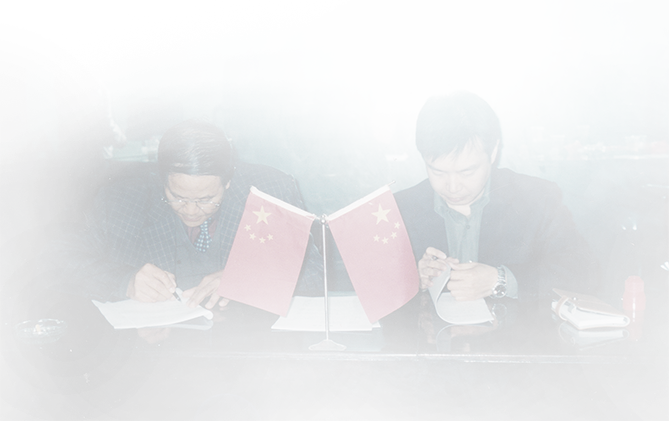 Built on decades of industrial experience since 1975.
Over the past decades, we have participated in the evolution of automated food production — from local factories to global turnkey projects across 100+ countries. That experience continues to shape every HG production line today.
Discover Our Heritage
Global Food Machinery &
Turnkey Factory Solutions
Copyright © HG Industry Group All Rights Reserved
Food Machine Snack Food Processing Machinery

Unauthorized use of this website's content constitutes copyright infringement and may result in legal action.