 English
 中文简体
中文简体 日本語
日本語 русский
 عربى
عربى Український
 Español
 Français


How a Pastry Production Line Works: Equipment, Automation & Buying Guide
Content
Running a bakery at scale means one thing above everything else: consistency. A croissant produced at 7 a.m. on Monday must look and taste exactly like the one produced at 6 p.m. on Friday. That's not something you can achieve with manual labor alone past a certain volume. A pastry production line solves this problem by integrating the entire manufacturing process—from raw ingredient dosing to finished product packaging—into a controlled, repeatable workflow. This guide breaks down how these lines actually work, what equipment they include, and how to choose the right setup for your operation.
What a Pastry Production Line Actually Does
A pastry production line is a sequence of interconnected machines and workstations that automate or semi-automate the manufacture of pastry products. Rather than standalone machines each operated by a separate worker, a production line moves dough and product continuously through each processing stage—mixing, laminating, forming, filling, proofing, baking, cooling, and packaging—in a controlled and repeatable flow.
The businesses that use pastry manufacturing lines range widely. A regional bakery scaling up from manual production might install a semi-automatic line producing 500 to 1,000 croissants per hour. A large industrial bakery might run a fully automated pastry line turning out tens of thousands of units per hour with minimal human intervention. The key point is that a "production line" isn't a single machine—it's a system, and the right system depends entirely on what you're producing and how much of it.
Common product types covered by industrial pastry lines include laminated pastries (croissants, Danish, puff pastry), choux products (éclairs, cream puffs), filled pastries (turnovers, hand pies), layer cakes, tarts, muffins, and donuts. Each product type has specific requirements at the forming and lamination stages, but the surrounding infrastructure—mixing, baking, cooling, packaging—follows the same general architecture.
The Main Stages of a Pastry Production Line
Understanding what happens at each stage of the line is essential before evaluating equipment or suppliers. Every stage affects the stages that follow it, which is why problems in a pastry line are often misdiagnosed—a defect visible at the baking stage frequently originates in the lamination or mixing step.
Ingredient Dosing and Handling
Industrial pastry lines begin with automated dosing systems that weigh and dispense flour, water, fat, sugar, salt, yeast, and other ingredients in precise proportions for each recipe. Flour silos with pneumatic conveying, automated liquid dosing valves, and recipe management software are standard in high-volume facilities. Even small variations in water content or fat ratio in laminated dough produce measurable differences in final texture and baked volume. Semi-industrial operations typically use manual weighing with batch mixing, but automated dosing becomes cost-effective at volumes above roughly 500 kg of dough per shift.
Dough Mixing
Pastry doughs for laminated products—croissants, Danish, puff pastry—are intentionally mixed to an under-developed state compared to bread doughs. Over-developed gluten causes the dough to spring back during sheeting, making lamination difficult and inconsistent. Industrial lines use spiral or horizontal mixers with variable speed and programmable mixing curves. Batch sizes range from 50 kg to 500 kg or more. High-volume operations may use continuous mixers that process dough in a steady stream rather than discrete batches, eliminating the dwell time between batches that limits throughput on batch mixing systems.
Lamination and Sheeting
Lamination is the defining stage for croissants, Danish pastry, and puff pastry. A block of butter or fat is enclosed in the dough, and the combined piece is repeatedly folded and sheeted to create hundreds of alternating layers. Industrial lamination lines use dough sheeters with automated fold mechanisms and precise gap control. The number of folds determines the final layer count—a typical croissant uses 27 layers, while puff pastry may use 64 to 144 or more. Consistent layer thickness requires precise pressure control and chilled dough; production rooms for laminated pastry are typically maintained at 16–18°C to prevent the butter from melting into the dough during processing.
Forming and Cutting
Once the laminated dough sheet is at the correct thickness, it moves to the forming stage. Forming equipment varies significantly by product:
- Croissant lines use automated triangular cutters followed by rolling machines that shape each triangle into a crescent.
- Danish pastry lines use die-cut stamps or rotary cutters combined with filling depositors.
- Choux products are deposited through multi-nozzle systems onto baking trays or conveyor belts in precise portion weights.
- Filled pastries use encrusting machines that co-extrude dough and filling simultaneously, eliminating a separate filling step.
Scrap dough from cutting is typically recovered automatically and reintroduced into the lamination process, reducing waste and material cost.
Filling and Depositing
Many pastries require filling—either before baking (pre-filled turnovers, Danish with cream cheese or fruit compote) or after baking (éclairs, cream puffs, layered cakes). Industrial filling systems use volumetric depositors that dispense precisely measured amounts of cream, jam, ganache, or custard. For liquid fillings like fondant or syrup, rotating valve depositors prevent dripping between portions. Post-bake filling is typically done inline using injection nozzles positioned on a cooling conveyor, maintaining hygiene and portion consistency at production speed.
Proofing
Yeast-leavened pastries—croissants, Danish, brioche-based products—require a controlled proofing stage after forming. Industrial proofers are temperature- and humidity-controlled chambers sized to hold the volume of product produced by the upstream forming equipment during the proof time required by the formula. A typical croissant proof runs 90 to 120 minutes at 28–30°C and 75–80% relative humidity. Incorrect proofing conditions—particularly excess humidity—collapse the laminated layers and destroy the honeycomb structure that gives these products their characteristic texture.
Baking
Industrial pastry lines use tunnel ovens—long, continuous baking chambers through which product moves on a mesh belt or tray conveyor at a controlled speed. Tunnel ovens allow different temperature zones along the baking length, enabling the operator to define a precise baking curve: high initial heat for oven spring, then a sustained middle zone for setting and browning, then a lower exit zone. Steam injection in the early zones is common for croissants and choux products. Convection, sole (bottom) heat, and deck configurations are selected based on the product. Baking outputs on commercial tunnel ovens range from a few hundred kilograms per hour to several tons per hour on the widest belt configurations.
Cooling
Pastry products must be cooled to a safe core temperature before packaging—typically below 25°C for ambient-packaged products, or to freezing temperatures for frozen pastry. Spiral cooling conveyors are standard for this stage: the product travels upward through a tall spiral path inside a refrigerated enclosure, which minimizes the floor footprint relative to the cooling time required. Blast freezing is used for products destined for the frozen market, bringing core temperature to −18°C or below before packaging. Insufficient cooling before sealing packaging leads to condensation inside the pack, accelerating mold growth and reducing shelf life.
Packaging
The final stage groups, wraps, and seals the finished product. Packaging equipment on automated pastry lines includes flow wrappers for individually wrapped items, tray sealers for retail trays, and vertical form-fill-seal machines for bagged products. Checkweighers and metal detectors are integrated inline for quality control and regulatory compliance. Robotic pick-and-place systems handle loading of fragile or irregular products—such as cream-filled éclairs—that can't be handled by conventional belt-and-pusher systems without damage.
Automation Levels: Semi-Automatic vs. Fully Automatic Lines
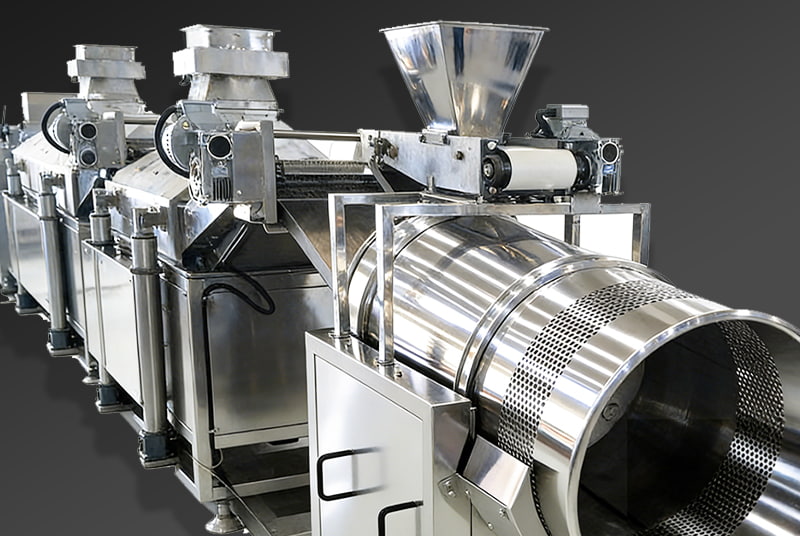
One of the most practical decisions when specifying a pastry production line is where on the automation spectrum the line should sit. More automation is not always the right answer—capital cost, product flexibility, and available technical support all factor in.
|
Factor |
Semi-Automatic Line |
Fully Automatic Line |
|
Typical output |
500–5,000 units/hour |
5,000–50,000+ units/hour |
|
Labor requirement |
3–8 operators |
1–3 operators (monitoring) |
|
Capital investment |
Lower |
Significantly higher |
|
Product flexibility |
Higher — easier to change formats |
Lower — changeovers take longer |
|
Consistency |
Good, some operator variation |
Excellent, highly repeatable |
|
Best suited for |
Regional bakeries, multiple SKUs |
Industrial bakeries, high-volume SKUs |
A common mistake is over-specifying automation for a product range that requires frequent changeovers. A fully automated croissant line optimized for one product size may take four to six hours to reconfigure for a different format—during which time it produces nothing. For bakeries with a diverse SKU portfolio and moderate volumes per SKU, a semi-automatic line with modular tooling often delivers better overall equipment effectiveness (OEE) than a high-speed dedicated line.
How to Size a Pastry Production Line Correctly
Capacity planning is where most pastry line investments go wrong. The correct approach starts from demand, not from equipment specifications.
Start with daily output requirements
Calculate how many units per day you need to produce at peak demand, then work backward through baking time, oven capacity, and forming speed to determine the throughput required at each stage of the line. Include shift patterns and planned downtime—most lines run at 75–85% of nameplate capacity once changeovers, cleaning, and minor stoppages are accounted for. A line rated at 2,000 croissants per hour might realistically deliver 1,500–1,700 per effective operating hour.
Account for proofing time
For yeast-leavened pastries, proofing time is a fixed biological constraint that determines how much product must be in the proofer at any given time. A 90-minute proof at a forming rate of 1,500 pieces per hour means the proofer must hold 2,250 pieces simultaneously. Undersizing the proofer is one of the most common bottlenecks on newly commissioned pastry lines.
Match the oven to the cooling system
The cooling system must be sized to clear baked product at the same rate the oven delivers it. A spiral cooler with insufficient residence time pushes product that is still too warm into the packaging stage. This creates condensation inside sealed packs and accelerates spoilage—a quality problem that traces back directly to a capacity mismatch between baking and cooling equipment.
Hygiene and Sanitation Requirements
Pastry production environments handle ingredients that support microbial growth—cream, eggs, fruit fillings, fresh dairy. Equipment design for these environments must meet food-grade standards that go beyond basic stainless steel construction.
- Open frame construction:Equipment should be designed without hollow sections, unsealed joints, or horizontal surfaces where product residue or water can accumulate.
- IP-rated electrical components:Motors, sensors, and control panels in wash-down areas should carry IP65 or higher ratings to withstand pressure washing.
- Removable contact parts:Forming dies, depositor heads, and conveyor belts should be removable without tools for cleaning and sanitation between production runs.
- CIP compatibility:Mixing bowls and dosing systems on high-volume lines are increasingly designed for clean-in-place (CIP) systems that circulate cleaning solution through pipework without disassembly.
- Zoning:Allergen management on multi-product lines requires physical separation or strict cleaning validation between runs containing allergens such as nuts, dairy, or gluten.
Certification to EHEDG (European Hygienic Engineering and Design Group) or 3-A standards provides independent verification that equipment is designed to be cleanable to a food-safe standard. These certifications matter for bakeries supplying major retailers or food service accounts where third-party audits are routine.
What to Evaluate When Choosing a Pastry Line Supplier
The equipment purchase is only part of the investment. The supplier relationship—installation, commissioning, training, spare parts availability, and technical support—determines how quickly a new line reaches full productivity and how it performs over its operational life.
Factory acceptance testing (FAT)
Before a line ships, insist on a factory acceptance test at the supplier's facility running your actual product formulas at the specified output rate. A FAT that uses only test product or runs below the specified speed is not a meaningful validation. Any deficiencies discovered at FAT are resolved at the supplier's cost; deficiencies discovered after installation and commissioning are far more expensive to correct.
Spare parts and lead times
Ask the supplier for a recommended critical spare parts list and current lead times for components with long delivery windows—servo drives, specialized forming tooling, and control system components can have lead times of eight to sixteen weeks or more. A production line that stops because a critical spare is unavailable for three months is far more costly than the inventory investment in maintaining the right parts on hand.
Local service capability
A technically capable machine supported only by remote diagnostics and a distant service team creates unacceptable risk for a line that runs two or three shifts per day. Evaluate whether the supplier has service engineers who can be on-site within 24 to 48 hours, not just a phone number.
References from comparable operations
Ask for customer references from bakeries producing the same product type at a comparable output volume, and visit those facilities if possible. How a croissant line performs in a controlled demonstration environment and how it performs running three shifts a day in a commercial bakery are two different things—speaking with operators and maintenance teams who run the equipment daily gives you information no sales presentation can.
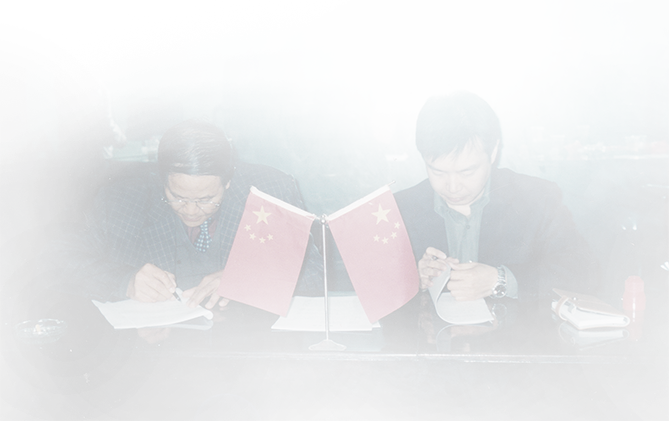
A historic signing moment from the 1970s, when HG’s founder helped drive the development of China’s food industry and began expanding into international markets.
Over the past decades, we have participated in the evolution of automated food production — from local factories to global turnkey projects across 100+ countries. That experience continues to shape every HG production line today.
Discover Our Heritage
Global Food Machinery &
Turnkey Factory Solutions

Building Long-Term Partnerships Through Shared Growth and Industrial Value.
Copyright © HG Industry Group All Rights Reserved
Food Machine Snack Food Processing Machinery

Unauthorized use of this website's content constitutes copyright infringement and may result in legal action.