 English
 中文简体
中文简体 日本語
日本語 русский
 عربى
عربى Український
 Español
 Français


How a Cookie Production Line Works: A Complete Guide for Bakers and Manufacturers
Content
- What Is a Cookie Production Line and Why Does It Matter?
- The Main Stages of a Cookie Production Line
- Key Equipment You Need for a Cookie Manufacturing Line
- How to Choose the Right Cookie Production Line for Your Business
- Common Problems on Cookie Production Lines and How to Fix Them
- Food Safety and Compliance on Cookie Production Lines
- Tips for Improving Cookie Production Line Efficiency
- The Future of Cookie Production Lines
What Is a Cookie Production Line and Why Does It Matter?
A cookie production line is a series of automated or semi-automated machines and processes designed to manufacture cookies at scale — from mixing raw ingredients all the way to packaging finished products. Whether you're running a small bakery looking to scale up or a large commercial food manufacturer, understanding how a cookie production line works can dramatically improve your output quality, reduce labor costs, and keep your product consistent batch after batch.
Modern cookie manufacturing lines vary widely in complexity, but they all share the same core goal: produce uniform, high-quality cookies efficiently and safely. As consumer demand grows and competition in the baked goods market intensifies, investing in the right cookie production equipment is no longer optional — it's a business necessity.
The Main Stages of a Cookie Production Line
A complete cookie manufacturing line typically flows through several well-defined stages. Each stage has dedicated equipment, and the smooth handoff between stages determines overall line efficiency. Here's a breakdown of the core steps:
1. Ingredient Mixing and Dough Preparation
Everything starts with the dough. Industrial mixing machines — typically planetary mixers or continuous mixers — blend flour, sugar, fat, eggs, flavoring, and leavening agents in precise ratios. Automated dosing systems ensure each ingredient is measured accurately, eliminating human error and ensuring recipe consistency. The type of mixer matters: soft cookie doughs need gentle mixing to avoid gluten overdevelopment, while harder biscuit doughs may require more intensive mixing cycles.
2. Dough Shaping and Forming
Once the dough is ready, it moves to the forming section. Different types of cookies require different forming methods. The most common industrial forming techniques include:
- Rotary molding: Dough is pressed into engraved molds on a rotating drum, ideal for short-dough cookies like butter cookies and shortbread.
- Wire-cut forming: A continuous dough log is extruded and cut with a wire, perfect for drop cookies and chunky-textured products.
- Depositing (drop depositing): Soft or liquid doughs are deposited onto a baking band using a piston-and-nozzle system — ideal for macarons or meringue-type products.
- Sheeting and cutting: Dough is rolled flat and cut with die-cutters into shapes. Commonly used for sugar cookies and crackers.
3. Baking
The baking tunnel oven is the heart of any cookie production line. Continuous tunnel ovens use a conveyor belt to move cookies through different temperature zones, allowing precise heat control throughout the bake. Common oven types include:
| Oven Type | Best For | Key Feature |
| Direct Gas-Fired (DGF) | Crackers, hard cookies | High radiant heat, quick browning |
| Indirect Gas-Fired (IGF) | Soft cookies, layered biscuits | Gentle, even heat distribution |
| Convection (Hot Air) | Delicate cookies, meringues | Uniform airflow, precise moisture control |
| Hybrid (DGF + Convection) | High-volume variety lines | Flexibility for multiple SKUs |
4. Cooling
Freshly baked cookies are fragile and need to cool properly before handling. Spiral cooling conveyors or flat-band cooling tunnels bring the product temperature down to room level — typically below 35°C — before the cookies move to packaging. Rushing this step leads to breakage, moisture condensation inside packs, and shortened shelf life. Cooling time varies by cookie thickness, fat content, and ambient temperature.
5. Sandwiching, Enrobing, or Decoration (Optional)
Many cookie lines include post-baking value-added steps. Sandwich cookie lines use cream depositors and a stacking/sandwiching unit to apply fillings like vanilla cream, chocolate, or jam between two cookie shells. Enrobing machines coat cookies in chocolate or compound coating. Sprinklers and decorating units can add sugar crystals, icing drizzles, or flavor toppings before final packaging.
6. Packaging
The final stage of the cookie production line is packaging. This includes counting and grouping cookies, placing them into trays or sleeves, and sealing bags or boxes. High-speed flow wrappers, vertical form-fill-seal (VFFS) machines, and tray sealers are commonly used. Most modern packaging systems integrate checkweighers, metal detectors, and vision inspection systems to reject out-of-spec products before they reach the consumer.
Key Equipment You Need for a Cookie Manufacturing Line
When planning or upgrading a cookie production line, here are the core machines to consider:
- Industrial dough mixer: Planetary or sigma-blade type, depending on dough consistency.
- Dough forming machine: Rotary molder, wire cutter, sheeter/cutter, or depositor — matched to your cookie type.
- Tunnel baking oven: Length, zones, and heat source selected based on product and capacity requirements.
- Cooling conveyor: Flat or spiral design based on available floor space.
- Filling or enrobing unit: Only needed if making sandwich or coated cookies.
- Packaging machine: Flow wrapper or VFFS machine with integrated quality-check systems.
- Metal detector and checkweigher: Non-negotiable for food safety compliance.
How to Choose the Right Cookie Production Line for Your Business
There's no one-size-fits-all cookie line. The right setup depends on several factors unique to your operation. Before purchasing equipment, work through these key questions:
What Types of Cookies Will You Produce?
A line designed for soft-baked chocolate chip cookies is very different from one built for crispy sandwich biscuits. Soft cookies need gentler dough handling, shorter bake times, and soft-type packaging, while hard biscuits require intensive dough sheeting, longer tunnel ovens, and sturdier packaging formats. If you plan to produce multiple SKUs, look for modular or flexible forming equipment that can switch between formats with minimal changeover time.
What Is Your Target Capacity?
Cookie line capacities typically range from 100 kg/hour for compact semi-automatic lines to over 2,000 kg/hour for fully automated industrial cookie lines. Start by calculating your current demand plus a realistic growth buffer for the next 3–5 years. Undersizing your line forces you to run extra shifts or buy another line prematurely; oversizing ties up capital and leads to poor OEE (overall equipment effectiveness).
What Level of Automation Makes Sense?
Semi-automatic lines use machines for forming and baking but rely on workers for loading, transfer, and packaging. Fully automatic cookie production systems handle everything from ingredient dosing to palletizing with minimal human intervention. Full automation dramatically reduces labor costs and contamination risk but requires higher upfront investment and skilled maintenance staff. Many mid-size bakeries operate hybrid lines — automating high-touch or high-risk steps while keeping some manual flexibility.
Common Problems on Cookie Production Lines and How to Fix Them
Even well-designed cookie lines run into production issues. Here are the most common problems and practical solutions:
- Inconsistent cookie weight or size: Usually caused by dough temperature fluctuations or worn forming molds. Implement dough temperature control and schedule mold inspections regularly.
- Uneven baking (pale edges vs. burnt centers): Check oven zone temperatures and conveyor belt speed. Uneven baking often indicates clogged burners or airflow imbalance in convection ovens.
- Cookies sticking to the mold or belt: Typically a fat ratio issue in the recipe or worn non-stick coatings on the band. Review the recipe fat content and check band condition.
- High breakage rate during packaging: Often caused by inadequate cooling time or aggressive handling at conveyor transfer points. Extend cooling time and add gentle-handling transfer guides.
- Short shelf life / moisture issues: Improper packaging seal or too-high moisture content when entering the pack. Verify cookie moisture at exit of cooling and check packaging seal integrity.
Food Safety and Compliance on Cookie Production Lines
Operating a cookie production line means meeting strict food safety standards. Most markets require compliance with regulations such as HACCP (Hazard Analysis and Critical Control Points), FDA food safety modernization rules, or EU food hygiene regulations. Key compliance practices for cookie lines include:
- Installing metal detectors and X-ray inspection systems to catch physical contamination before packaging.
- Using food-grade stainless steel and hygienic machine designs that are easy to clean and sanitize.
- Implementing allergen control procedures, especially for lines that run gluten, nut, or dairy-containing products.
- Maintaining detailed batch records and traceability systems for every production run.
- Scheduling regular deep cleaning, preventive maintenance, and equipment calibration according to a documented schedule.
Tips for Improving Cookie Production Line Efficiency
Once your cookie line is running, continuous improvement is the name of the game. Here are proven strategies to boost throughput and reduce waste:
- Track OEE (Overall Equipment Effectiveness): Measure availability, performance, and quality rate for each machine. An OEE below 65% signals serious improvement opportunities.
- Standardize changeover procedures: Use SMED (Single-Minute Exchange of Die) principles to reduce the time lost when switching between cookie formats or flavors.
- Monitor dough temperature in real time: Dough temperature is one of the biggest variables affecting forming quality and bake consistency. Invest in inline temperature sensors.
- Rework scrap dough systematically: Define and document the maximum ratio of rework dough that can be blended back into fresh dough without affecting quality, and enforce it strictly.
- Train operators on first-level maintenance: Operators who can handle basic adjustments and troubleshoot minor faults reduce downtime far more than calling maintenance for every issue.
The Future of Cookie Production Lines
The cookie industry is evolving fast, and production lines are evolving with it. Several trends are reshaping how cookie manufacturers plan and operate their lines:
- Healthier formulations: Growing demand for reduced-sugar, gluten-free, high-protein, and plant-based cookies is pushing manufacturers to adapt their dough handling and baking processes to new ingredient profiles that behave very differently from traditional doughs.
- Flexible short-run production: Retailers are demanding more SKU variety with smaller batch sizes. Modular cookie lines that can switch formats in under 30 minutes are gaining popularity.
- Industry 4.0 integration: Smart sensors, cloud-based SCADA systems, and AI-driven process control are being integrated into new cookie production systems to enable predictive maintenance and real-time quality adjustments.
- Energy efficiency: Tunnel ovens are major energy consumers. New designs with better insulation, heat recovery systems, and precise zone control are helping manufacturers reduce energy costs significantly.
- Sustainable packaging integration: Lines are being retrofitted to handle compostable films and recyclable tray materials, which often require adjustments to sealing temperatures and packaging machine settings.
Whether you're building a new facility from scratch or upgrading an existing biscuit line, understanding every stage of the cookie production process — and how the equipment, recipe, and operational practices all connect — is the foundation for making smart investment decisions and running a profitable, high-quality operation.
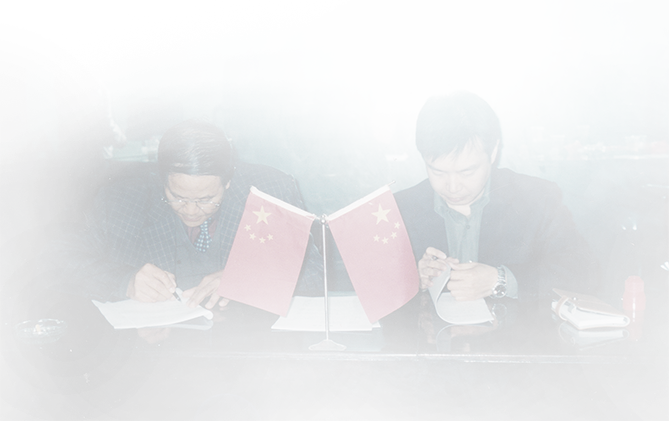
A historic signing moment from the 1970s, when HG’s founder helped drive the development of China’s food industry and began expanding into international markets.
Over the past decades, we have participated in the evolution of automated food production — from local factories to global turnkey projects across 100+ countries. That experience continues to shape every HG production line today.
Discover Our Heritage
Global Food Machinery &
Turnkey Factory Solutions

Building Long-Term Partnerships Through Shared Growth and Industrial Value.
Copyright © HG Industry Group All Rights Reserved
Food Machine Snack Food Processing Machinery

Unauthorized use of this website's content constitutes copyright infringement and may result in legal action.