 English
 中文简体
中文简体 日本語
日本語 русский
 عربى
عربى Український
 Español
 Français


Pastry Production Line: How It Works, What It Includes, and How to Choose the Right Setup for Your Bakery
Content
- What a Pastry Production Line Is and Who Needs One
- The Main Stages in a Pastry Production Line
- Types of Pastry Production Lines by Product Category
- Automation Levels: From Semi-Manual to Fully Automated Pastry Lines
- Capacity Planning: Matching Line Specification to Your Production Requirements
- Hygiene and Food Safety Requirements for Pastry Production Equipment
- Key Questions to Ask When Evaluating Pastry Production Line Suppliers
What a Pastry Production Line Is and Who Needs One
A pastry production line is a series of interconnected machines and workstations arranged in sequence to automate or semi-automate the manufacture of pastry products — from initial dough mixing through lamination, forming, filling, proofing, baking, and packaging. Rather than individual standalone machines each operated separately by a baker, a production line integrates these stages into a continuous or near-continuous workflow, with dough or product moving through each process step in a controlled and repeatable sequence. The result is significantly higher output per labour hour, consistent product dimensions and weight, and the ability to maintain quality standards across very large production volumes that would be impossible to achieve with manual methods alone.
The businesses that invest in pastry production lines range widely in scale. At the smaller end, an artisan bakery scaling up from fully manual production might install a semi-automatic line capable of producing 500 to 1,000 croissants per hour, using a dough sheeter, a butter laminator, and an automatic croissant rolling machine while retaining manual loading and tray placement. At the industrial scale, large bakery manufacturers run fully automated pastry lines producing tens of thousands of units per hour — from automated dough dividers and lamination systems through servo-controlled forming machines, tunnel ovens, spiral cooling systems, and robotic packaging — with minimal human intervention beyond monitoring and quality checks. Understanding where your operation sits on this spectrum, and what the next logical step up in automation looks like, is the starting point for any pastry production line investment decision.
The Main Stages in a Pastry Production Line
A complete pastry manufacturing line typically encompasses several distinct process stages, each with dedicated equipment. Not every line includes every stage — the specific configuration depends on the product type, required output, and level of automation — but understanding what each stage does and why it matters provides the framework for specifying or evaluating any pastry line.
Ingredient handling and dosing
Industrial pastry lines begin with automated ingredient dosing systems that weigh and dispense flour, water, fat, sugar, salt, yeast, and other dry and liquid ingredients into the mixing system in the correct proportions for each recipe. Flour silos with pneumatic conveying systems, automated liquid dosing valves, and recipe management software that controls dosing sequences are standard in high-volume bakeries. Accurate and repeatable ingredient dosing is the foundation of consistent product quality — even small variations in water content or fat ratio in laminated pastry dough produce measurable differences in final product texture and yield. Semi-industrial lines more commonly use manual weighing with batch mixing, but automated dosing becomes cost-effective at volumes above approximately 500kg of dough per shift.
Dough mixing
The mixing stage develops the gluten structure in the dough to the specification required for the downstream lamination or forming process. Pastry doughs for laminated products — croissants, Danish pastry, puff pastry — are typically mixed to a relatively under-developed state compared to bread doughs, because over-developed gluten makes lamination difficult by causing the dough to spring back during sheeting. Industrial pastry lines use spiral mixers or horizontal mixers with variable speed and programmable mixing curves, capable of processing batches of 50 to 500kg or more. Continuous mixers — which process dough in a steady stream rather than discrete batches — are used on the highest-volume lines to eliminate the batch cycle time that limits throughput in batch-mix operations.
Dough resting and tempering
After mixing, laminated pastry doughs require a resting period — typically 20 to 45 minutes at a controlled temperature — to allow gluten to relax before lamination begins. In industrial lines, this resting stage is managed in temperature-controlled retarder-proofer chambers or on refrigerated conveyor systems that hold the dough at a consistent temperature. Adequate resting time is critical for puff pastry and croissant doughs — insufficiently rested dough tears during sheeting and produces irregular lamination. Butter blocks for lamination must also be tempered to a specific consistency — typically 14 to 17°C — before incorporation, as butter that is too cold shatters rather than forming even layers, and butter that is too warm melts into the dough rather than creating distinct fat layers.
Lamination and sheeting
Lamination is the defining process in croissant, Danish, and puff pastry manufacture — the repeated folding and sheeting of dough with fat layers between them to create the hundreds of distinct dough-fat layers that produce the characteristic flaky, light texture of these products. Industrial lamination lines use automated dough sheeters with precision gap control, butter block enclosers that mechanically wrap butter within the dough block, and folding systems that perform the fold sequences (typically three-fold and four-fold combinations to achieve the required number of layers) without manual handling. The number of layers produced depends on the fold sequence — three double folds produce 27 layers, three single and one double fold produces 32 layers, and so on up to several hundred for puff pastry. Maintaining consistent fat layer thickness and even fat distribution throughout the lamination process is the primary technical challenge, and the quality of the lamination system directly determines the consistency of the finished product.
Forming and cutting
After lamination, the dough sheet passes through a forming section where it is cut and shaped into the individual product forms — triangles for croissants, rectangles for Danish pastries, circles for vol-au-vents, or strips for various rolled products. Industrial pastry forming machines use rotary cutters, stamp cutters, or guillotine cutters to produce consistent shapes with minimal scrap dough. Croissant rolling machines automatically roll the cut triangles into the recognisable spiral horn shape at speeds of several thousand pieces per hour. Danish pastry lines include depositors and folding systems that apply fillings and create the various Danish formats — pinwheels, envelopes, braids — at high speed. Scrap dough recovery systems collect the off-cuts between formed pieces and return them to the lamination stage or to a separate product line to minimise waste.
Filling and depositing
Many pastry products receive a filling — custard cream, almond frangipane, fruit compote, chocolate, savoury fillings — either before forming, after forming, or after baking. Industrial filling depositors use piston pumps, gear pumps, or auger systems to place a precise weight of filling at a specified location on each piece with cycle rates matched to the upstream forming speed. Filling temperature control is important for both product quality and food safety — cream-based fillings must be held and deposited at temperatures that prevent bacterial growth, while chocolate or ganache fillings must be maintained at a temperature that ensures correct viscosity for consistent depositing without smearing or overflowing the pastry shell.
Proofing
Yeast-leavened pastry products — croissants, Danish pastry, pain au chocolat — require a proofing stage after forming where the yeast ferments and the dough expands before baking. Industrial proofing uses tunnel proofers — long insulated chambers with controlled temperature (typically 28 to 32°C) and humidity (75 to 85% relative humidity) through which the loaded baking trays travel on a conveyor. Proofing time varies by product and formulation — typically 60 to 120 minutes for laminated yeast doughs — and the tunnel length and conveyor speed are designed to match the required proofing time to the overall line throughput. Under-proofed croissants are dense with compressed layers; over-proofed products collapse in the oven and have an uneven, open crumb structure. Precise proofer control is one of the most important quality variables in a laminated pastry production line.
Baking
Industrial pastry baking uses tunnel ovens — continuous conveyorised ovens through which loaded trays pass at a controlled speed — or rack ovens that bake full trolleys of product in batch cycles. Tunnel ovens are the standard for high-volume continuous lines, offering precise zone-by-zone temperature control that allows the baking profile to be optimised for each product — typically an initial high-heat zone for oven spring and caramelisation, followed by lower-heat zones for internal cooking and colour development. Pastry products are sensitive to baking profile because the fat layers must melt and steam in a specific temperature range to produce the characteristic lift and separation of a well-laminated product. Steam injection in the early baking stage is used for some pastry types to delay crust formation and maximise oven spring.
Cooling, glazing, and finishing
After baking, pastry products must be cooled to a safe temperature before packaging — typically below 27°C for ambient-packaged products or to near-refrigeration temperature for chilled-distribution products. Industrial pastry lines use spiral coolers or ambient cooling conveyors that transport products through a conditioned cooling zone. Glazing — applying egg wash, apricot glaze, sugar syrup, or fondant — can be applied by spray, roller coater, or curtain coater at designated points in the line, either before baking for egg wash and some sugar finishes, or after cooling for jam glaze and fondant. Decorating depositors can apply piped cream, chocolate drizzle, or nut toppings at the end of the cooling conveyor before the products enter the packaging system.
Types of Pastry Production Lines by Product Category
Different pastry categories have significantly different production line requirements. A line optimised for croissant production is not the same as one designed for choux pastry or shortcrust tart shells. Understanding the specific line configuration for your target products avoids over-specifying expensive equipment that will not be used or under-specifying systems that cannot handle your product requirements.
| Product category | Key line stages | Critical equipment | Main technical challenge |
| Croissant and Danish | Mix, laminate, cut, form, proof, bake, cool | Lamination line, croissant roller, tunnel proofer | Consistent butter layer distribution and even proofing |
| Puff pastry products | Mix, laminate (multiple folds), cut, form, bake, cool | High-precision sheeter, multi-fold laminator, stamp cutter | Achieving hundreds of even layers without fat melt |
| Choux pastry | Cook paste, deposit, bake, cool, fill, finish | Continuous cooker, precision depositor, filling injector | Consistent paste viscosity and depositing accuracy |
| Shortcrust tarts and quiches | Mix, sheet, cut, press, fill, bake, cool, pack | Rotary press or tart forming machine, filling depositor | Even shell thickness and accurate fill weight |
| Filo and strudel pastry | Mix, rest, stretch/sheet, layer, fill, roll or fold, bake | Ultra-thin sheeter, oil spray system, rolling/folding unit | Producing consistent paper-thin sheets without tearing |
Automation Levels: From Semi-Manual to Fully Automated Pastry Lines
Pastry production lines are not a binary choice between manual and fully automated — they exist on a spectrum of automation levels, and the right position on that spectrum depends on production volume, product complexity, available capital, and labour market conditions. Understanding the stages of automation helps businesses plan their investment pathway sensibly.
Level 1 — semi-manual with key machinery
At this level, a bakery adds individual machines to assist the most labour-intensive or quality-critical manual tasks — typically a dough sheeter and a croissant rolling machine — while retaining manual handling for all other steps. The sheeter ensures consistent dough thickness and reduces labour for lamination, while the rolling machine produces uniform croissant shapes far faster than manual rolling. Output is typically in the range of 200 to 600 pieces per hour depending on the machine capacity and available labour. This is an appropriate starting point for bakeries producing 1,000 to 5,000 croissants or Danish pastries per day, and the investment is relatively modest compared to a full line.
Level 2 — semi-automated line with integrated stages
At this level, the key production stages are mechanically integrated — the lamination line, forming equipment, and conveyor systems are linked so that dough moves through the process without manual inter-stage handling. Operators load dough blocks at the start of the lamination line and unload formed pieces onto baking trays at the forming exit, but the lamination and forming stages run without manual dough handling between them. A dedicated tunnel proofer and deck or rack oven complete the baking stage. Output typically ranges from 1,000 to 5,000 pieces per hour for croissant-type products. This configuration is appropriate for wholesale bakeries and supermarket in-store bakery operations producing significant daily volumes.
Level 3 — highly automated continuous line
At the highest level of automation, the entire production sequence from dough mixing to packaged product runs as a continuous integrated system with minimal manual intervention. Automated dough handling transfers mixed dough to the lamination line without manual loading; scrap dough is automatically recovered and reprocessed; formed pieces are automatically transferred to baking trays or directly onto the tunnel oven belt; baked products travel through the cooling system to automatic packaging; and the entire line is monitored and controlled from a central HMI (human-machine interface) panel. Output ranges from 5,000 to over 50,000 pieces per hour on the largest industrial lines. Capital investment is substantial — a complete high-speed croissant line from a manufacturer such as Rondo, Fritsch, or Rheon can represent an investment of several million euros — but the labour cost savings and output consistency justify this at industrial production volumes.
Capacity Planning: Matching Line Specification to Your Production Requirements
Correctly sizing a pastry production line is one of the most important and most frequently mishandled aspects of capital investment in bakery equipment. Oversizing a line results in equipment running below its efficient operating range, high capital and maintenance costs per unit produced, and unnecessary complexity. Undersizing results in a production bottleneck that limits business growth and may require a further investment sooner than anticipated.
The starting point is determining the required output in terms of pieces per hour or kilograms per hour at the finished product stage, accounting for planned production hours per shift and shifts per day, current and projected demand, expected product mix, and the planned proportion of production time available after changeovers, cleaning, and maintenance. A common error is to specify a line based on peak demand without accounting for the realistic available production hours — a line rated at 3,000 pieces per hour that is only operating at full capacity for 6 hours of an 8-hour shift due to cleaning, changeover, and minor stoppages delivers an effective output of 2,250 pieces per hour at most, and actual output may be lower if minor unplanned stoppages are frequent.
Product mix complexity also significantly affects effective line capacity. A line running a single product continuously operates at close to its rated capacity. A line that changes between croissants, pain au chocolat, and Danish formats multiple times per shift loses production time to format changeovers and cleaning — a factor that should be quantified realistically when specifying line capacity. Quick-changeover design features — tool-free format changes, standardised cleaning procedures, and modular tooling systems — reduce this impact and are worth specifying as a priority for lines handling diverse product ranges.
Hygiene and Food Safety Requirements for Pastry Production Equipment
Pastry production lines process products that in many cases contain high-risk ingredients — eggs, dairy, cream-based fillings — and are distributed through retail and food service channels subject to stringent food safety regulation. The hygienic design of the production line equipment is therefore not a secondary consideration but a core specification requirement that should be evaluated alongside production performance.
- Food-contact surface materials: All surfaces that come into direct contact with dough, filling, or finished product must be manufactured from food-grade materials — stainless steel 304 or 316, food-grade polyethylene, PTFE-coated surfaces, or other materials approved for food contact. Avoid equipment with aluminium food contact surfaces in environments with acidic fillings, or with surface coatings that can chip or delaminate into the product.
- Open frame and cleanability: Equipment frames and bases should be designed for ease of cleaning — open tubular steel frames that allow full access for cleaning, sloped surfaces that drain rather than retain water and residue, and minimal horizontal surfaces where product debris can accumulate. Enclosed, inaccessible cavities in equipment frames are a hygiene risk and should be avoided or sealed in any equipment specified for a food production environment.
- IP rating of electrical components: Electrical panels, motors, and control components on pastry line equipment must have appropriate ingress protection (IP) ratings for the cleaning regime used in the facility. Equipment cleaned with high-pressure water jets requires IP65 or higher ratings on all exposed electrical components. Under-rated electrical components in a washdown environment are both a safety hazard and a reliability problem.
- Allergen management: For bakeries producing both allergen-containing and allergen-free pastry products on the same line, the equipment must support thorough allergen cleaning procedures between production runs. This requires ease of disassembly for deep cleaning of all product contact parts, clear documentation of cleaning procedures, and in some cases dedicated production schedules that group allergen-containing products at the end of a production shift before a full allergen clean.
- Compliance with EHEDG and 3-A standards: The European Hygienic Engineering and Design Group (EHEDG) and 3-A Sanitary Standards (North America) publish hygienic design guidelines and certification programmes for food processing equipment. Equipment certified to these standards provides documented assurance of hygienic design compliance and simplifies the audit process for customers, retailers, and regulatory inspectors.
Key Questions to Ask When Evaluating Pastry Production Line Suppliers
Investing in a pastry production line involves a long-term relationship with the equipment supplier — for installation, commissioning, operator training, spare parts supply, and ongoing technical support. Evaluating suppliers on these dimensions as carefully as on the equipment specification itself is essential for a successful outcome.
- Can you provide references from bakeries running comparable lines for comparable products? Requesting and following up with reference customers who run the same or similar equipment for the same product types is the most reliable way to assess real-world performance, reliability, and the quality of after-sales support. A supplier unable or unwilling to provide relevant references warrants caution.
- What is included in the commissioning and operator training package? A production line that arrives on-site but cannot be operated efficiently due to insufficient training or commissioning support wastes time and money. Confirm specifically what commissioning support is included — how many days, what activities, and whether trial production runs with your actual recipes are included in the commissioning scope.
- What is the spare parts availability and lead time for critical components? A stalled production line is an extremely costly event in a bakery with committed customer supply obligations. Confirm that critical wear parts — sheeter rollers, cutter blades, conveyor belts, filling pump components — are held in stock by the supplier or available for next-day delivery, not manufactured to order with multi-week lead times.
- What remote diagnostics and support capability does the line have? Modern industrial pastry line equipment typically includes remote access capability that allows the supplier's engineers to diagnose faults and in many cases resolve them without a site visit. Confirm whether this capability is included, what the response time commitment is, and whether it requires a separate service contract after the warranty period.
- What is the guaranteed output rate, and under what conditions is it guaranteed? Suppliers' stated output capacities are typically measured under ideal conditions with a single product, fully optimised recipe, and experienced operators. Ask the supplier to specify the conditions under which the rated output is guaranteed and what recourse is available if the line fails to achieve that output after installation and commissioning.
- What is the full installed cost including utilities, civil works, and integration? The equipment purchase price is typically only 60 to 75% of the total cost of a new pastry production line installation. Electrical supply upgrades, compressed air and water connections, drainage, ventilation for the oven exhaust, floor reinforcement for heavy equipment, and integration with existing systems all add to the total cost. Insist on a total installed cost estimate from the supplier before budget commitment, not just the equipment list price.
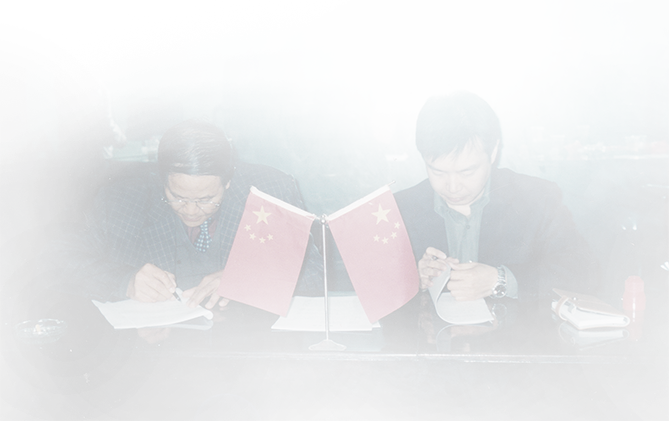
A historic signing moment from the 1970s, when HG’s founder helped drive the development of China’s food industry and began expanding into international markets.
Over the past decades, we have participated in the evolution of automated food production — from local factories to global turnkey projects across 100+ countries. That experience continues to shape every HG production line today.
Discover Our Heritage
Global Food Machinery &
Turnkey Factory Solutions

Building Long-Term Partnerships Through Shared Growth and Industrial Value.
Copyright © HG Industry Group All Rights Reserved
Food Machine Snack Food Processing Machinery

Unauthorized use of this website's content constitutes copyright infringement and may result in legal action.