English
 中文简体
中文简体 日本語
日本語 русский
 Español
 Український
 عربى
عربى Français
 Potato Chips Production Line
 Cake Production Line
 Rice Cracker Production Line
 Biscuit Production Line
 Cookie Production Line
 Wafer Production Line
 Pastry Production Line
 Other Food Production Line
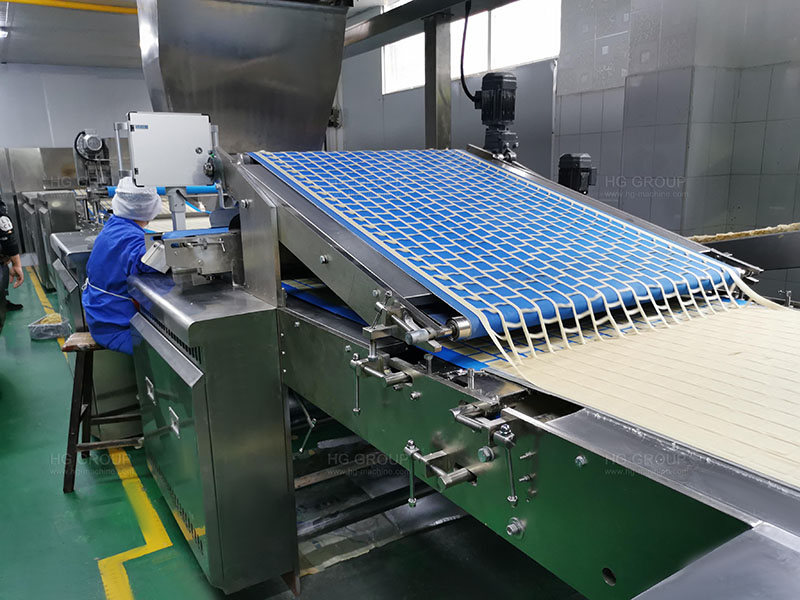
 Possessing more than 20 national patents
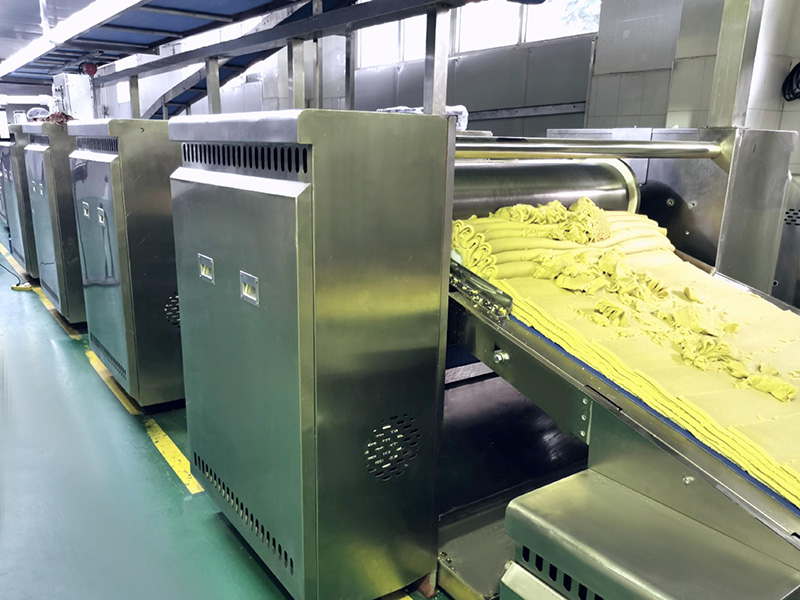
  4 pressure rollers, with a roller length of 420mm
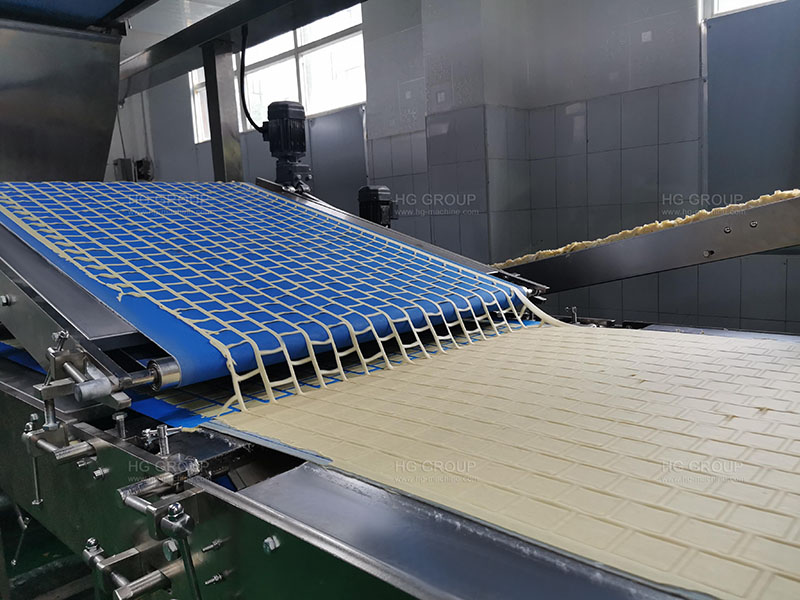
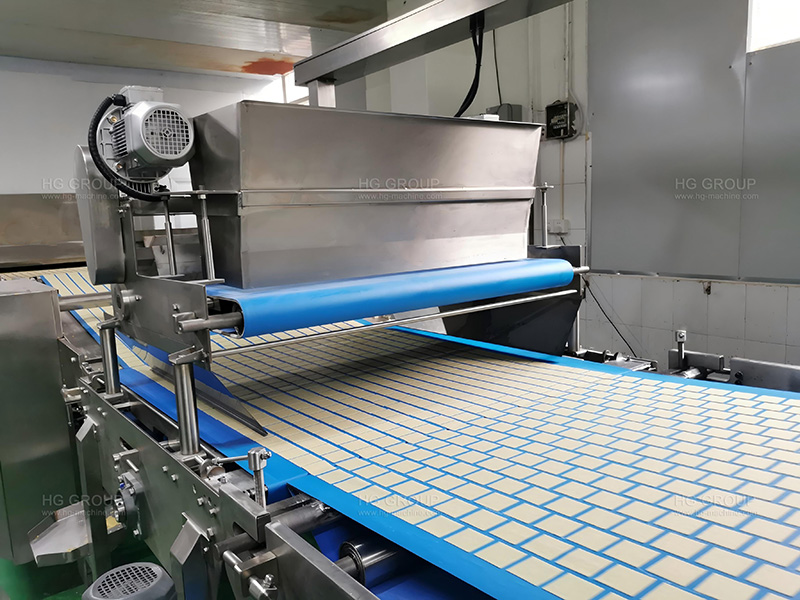
  Efficient dough sheet pressing
  Precise oil spraying and seasoning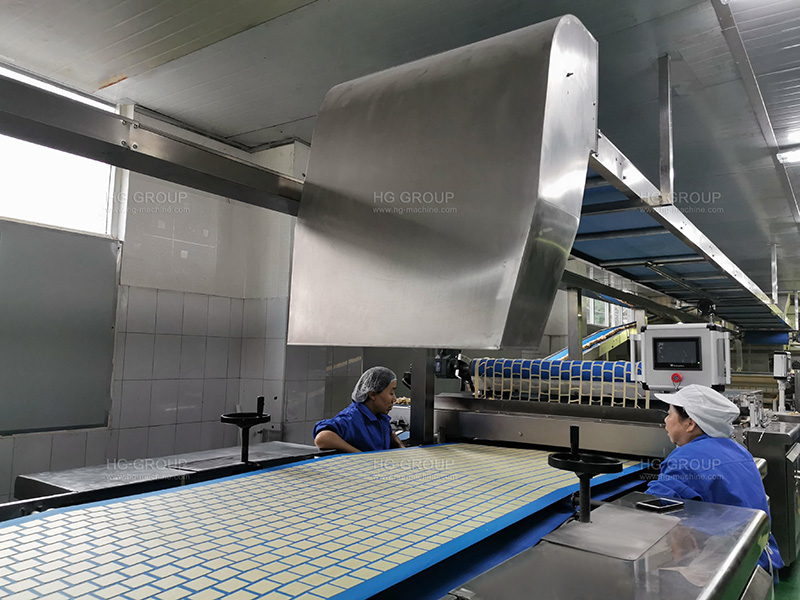
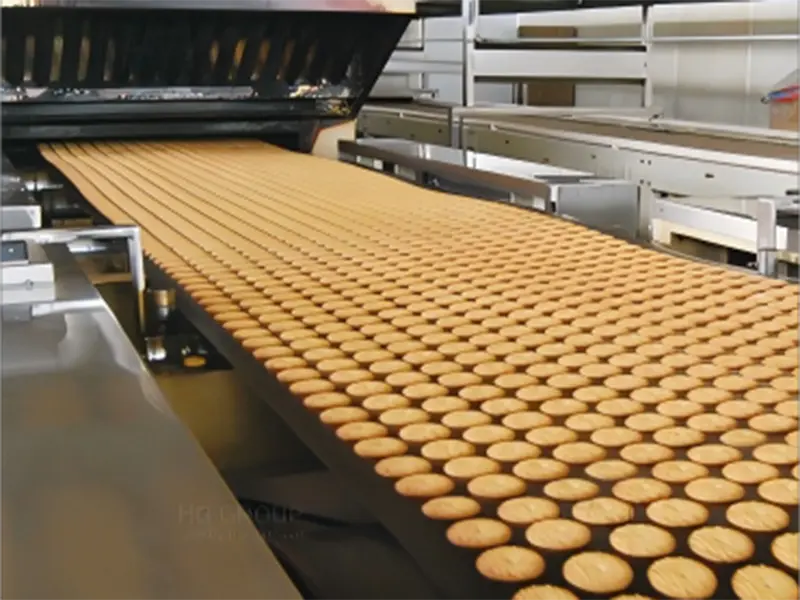
 PLC control
  Automatic stacking function
  Data management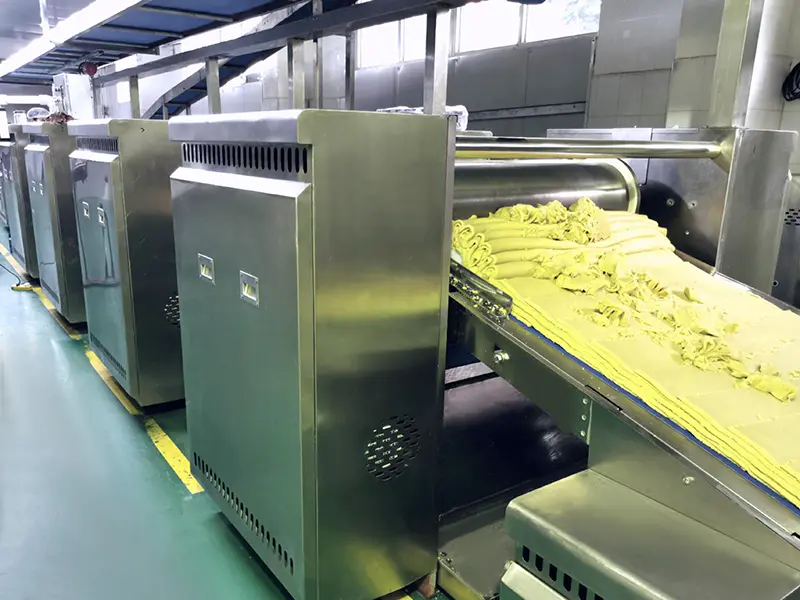
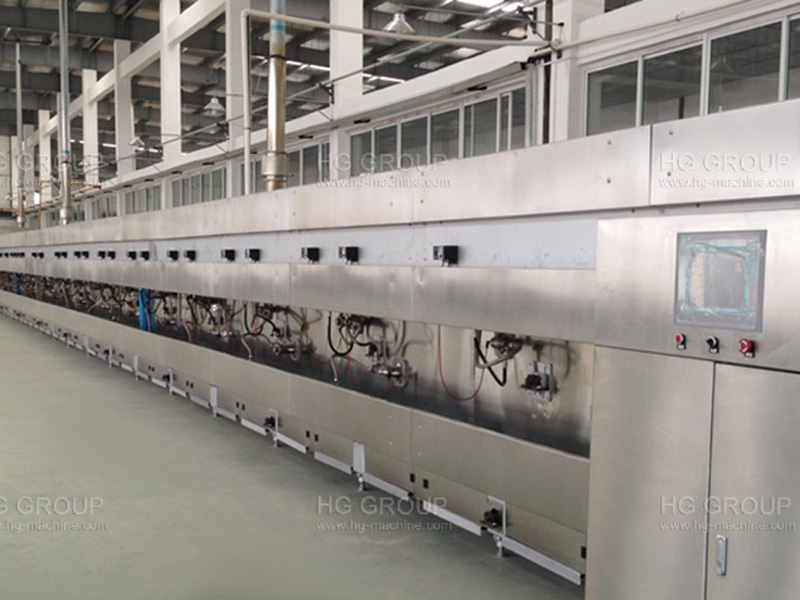
How to Match Line Configuration to Biscuit Category
For buyers planning multi-SKU output, the most practical decision is whether you need a soft/hard biscuit line only, or a base hard-biscuit line that can be expanded with filling injection and lamination. A modular approach typically reduces retrofit risk and preserves line stability when switching between plain crackers and filled products. In our projects, we often recommend starting from a stable forming+baking baseline and then adding the filled-biscuit modules when the product mix is confirmed.
Capacity Planning: What Actually Limits Throughput
Nameplate capacity is rarely limited by the oven alone. Real bottlenecks usually appear at calendering/forming stability, scrap rate at startup, and cooling/stacking rhythm. When evaluating a fully automatic biscuit production line, ask for a capacity range defined by: target biscuit thickness, baking time window, and acceptable breakage rate. The most meaningful KPI is sellable output per hour, not theoretical belt speed.
- Define the product thickness range you must hold (plain vs filled laminations).
- Confirm cooling/handling capacity matches oven discharge, especially for fragile crackers.
- Ask for demonstrated scrap rate during changeover, not only at steady state.
Texture Control: Translating “Soft vs Hard” into Process Knobs
Soft/hard texture is the result of water management and bake profile control. In practice, you will tune texture by coordinating dough development, sheet thickness, and the oven’s temperature/time curve. A line that can hold stable thickness during calendering and maintain a repeatable baking curve makes it easier to reproduce “buttery soft” cookies or “crispy” soda crackers without constant operator intervention.
- Softer bite typically benefits from controlled moisture retention and gentler baking ramps.
- Crispier crackers typically require tighter thickness control and a consistent final dry-down zone.
- If your SKUs span both, prioritize a line with flexible zone control and stable forming.
Filled Biscuits: Preventing Leakage, Blowouts, and Delamination
Filled soda crackers and filled cookies introduce three common failure modes: filling squeeze-out at lamination, steam-driven blowouts during baking, and layer separation after cooling. A filled biscuit production line should support precise filling deposition and repeatable lamination pressure so the filling stays inside the matrix through baking and handling. We focus on keeping the filling band uniform because filling thickness variation is often the root cause of bake defects.
- Match filling viscosity to depositor capability to avoid tails and voids.
- Control lamination pressure to prevent edge burst while maintaining seal integrity.
- Validate bake profile for filled SKUs—faster surface set can reduce leakage.
Changeover Strategy for Multi-SKU Factories
If you run both plain and filled products, changeover design matters more than many buyers expect. The practical goal is to reduce “hidden downtime” from cleaning, re-threading, and re-tuning thickness. A fully automatic biscuit production line with accessible product-contact areas and predictable calibration points tends to deliver higher weekly output than a line with slightly higher peak speed but longer changeovers. In our installations, streamlined changeover is one of the fastest ways to improve ROI without adding shifts.
Baking Profile Validation: What to Ask During Factory Acceptance
During FAT/SAT, do not only confirm that the oven reaches target temperatures—validate whether the line can keep the product within an acceptable moisture and color window across normal disturbances. The most actionable acceptance method is to test multiple bake settings and confirm you can repeatedly hit a defined standard for each SKU.
- Set a reference target for color and internal dryness, then repeat it after a controlled speed change.
- Verify stability from startup to steady state (first good product time).
- For filled SKUs, confirm sealing performance and leakage rate at production speed.
Automation Scope: Where “Fully Automatic” Should Deliver Measurable Value
In biscuit production, automation is most valuable where it reduces variability: dosing consistency, sheet thickness control, filling deposition, and stable baking execution. When comparing suppliers, ask which parameters are monitored and corrected automatically versus “set-and-watch.” A practical benchmark is whether the line can maintain repeatable product thickness and bake outcome across shifts with minimal manual adjustment. This is exactly where we keep our design priorities—consistent output, fewer operator-dependent surprises.
Design for Food Safety and Allergen Management
If you produce multiple flavors or allergens (e.g., dairy fillings, nut pastes), line design affects how quickly you can clean and verify separation. Filled biscuit modules deserve special attention because injectors and manifolds can trap residues. Buyers should evaluate whether product-contact parts are easy to disassemble, whether cleaning access is direct, and how well the line supports documentation and verification routines. When we supply export-oriented lines, these practical details are often decisive for audit readiness.
Spare Parts and Wear Items: The Real Cost of Ownership
Total cost of ownership is heavily influenced by predictable wear items: forming components, belts, scraper edges, sealing elements in filling systems, and bearings in high-dust zones. A constructive procurement step is to request a recommended spares list for 12–24 months and confirm lead times. In most cases, spares standardization across modules reduces downtime more than buying the lowest-cost consumables.
- Ask which parts are model-specific vs commonly stocked.
- Confirm belt specifications and replacement procedure (time, labor, alignment needs).
- For filled lines, confirm the service cycle for injectors and seals based on filling type.