 English
 中文简体
中文简体 日本語
日本語 русский
 عربى
عربى Український
 Español
 Français


Inside a Chocolate Stick Production Line: How It Works and What You Need to Set One Up
Content
- What a Chocolate Stick Production Line Actually Does
- The Core Process Flow of a Chocolate Stick Line
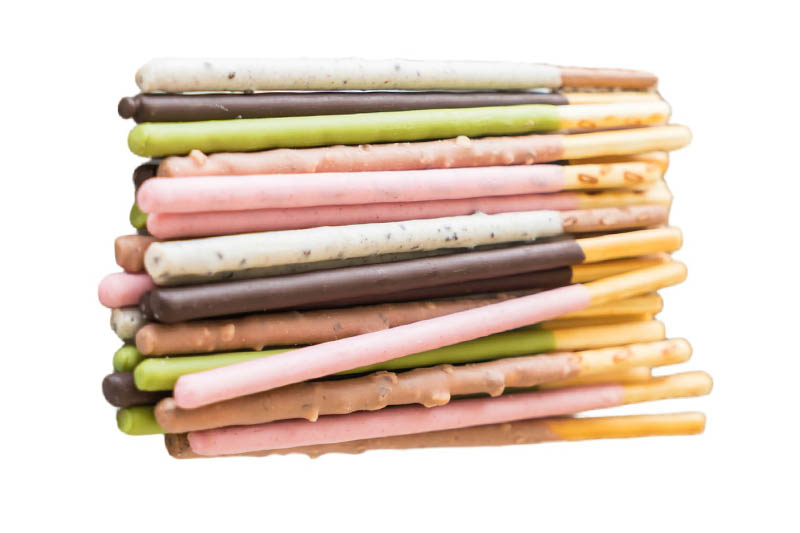
- Types of Chocolate Stick Products and the Lines That Make Them
- Key Equipment Components and What to Look for When Buying
- Capacity Planning: How to Match Line Speed to Your Production Target
- Hygiene Design and Food Safety Requirements for Chocolate Stick Lines
- Common Quality Problems on Chocolate Stick Lines and Their Root Causes
What a Chocolate Stick Production Line Actually Does
A chocolate stick production line is a sequence of interconnected machines designed to continuously form, shape, cool, cut, and package chocolate into elongated stick or bar formats — think wafer sticks filled with chocolate cream, solid chocolate batons, biscuit sticks coated in chocolate, or cookie sticks with enrobed shells. While the end product looks simple, the production process behind it involves precise temperature control, high-speed forming, synchronized cutting, and gentle handling to preserve product integrity from the first chocolate deposit to the finished wrapped stick.
Unlike slab or molded chocolate lines, stick production demands tighter dimensional tolerances because the length-to-width ratio of a stick means any inconsistency in forming, cutting, or cooling creates visible defects — crooked ends, uneven coatings, fragile breakage points, or adhesion failures between layers. A well-engineered chocolate stick manufacturing line eliminates these variables through precise machine synchronization and controlled environmental conditions throughout the entire process.
Modern chocolate stick lines are used by confectionery manufacturers ranging from large multinational brands producing hundreds of millions of sticks per day to mid-size regional producers running single-shift operations. The equipment scales accordingly, and understanding the full process flow helps buyers, plant managers, and product developers make informed decisions about which type of line fits their product and capacity requirements.
The Core Process Flow of a Chocolate Stick Line
Every chocolate stick production line — regardless of the manufacturer or product type — follows a logical sequence of process stages. Understanding each stage helps identify where quality problems originate and what specifications matter most when evaluating equipment.
Stage 1: Chocolate Preparation and Tempering
Before chocolate can be deposited, enrobed, or co-extruded, it must be properly tempered — brought through a controlled temperature curve that stabilizes the cocoa butter crystal structure into the desired Form V (beta) crystals. Properly tempered chocolate has a glossy surface, clean snap, and stable shelf life. Continuous tempering machines (also called temperers) are integrated at the start of the line, processing chocolate mass at flow rates matched to the downstream depositing or enrobing speed. For dark chocolate, typical tempering curves involve heating to ~50°C, cooling to ~27°C, and reheating to ~31–32°C. Milk and white chocolate use slightly lower final temperatures (29–30°C). Incorrect tempering is the root cause of bloom (gray, chalky surface) and soft, waxy texture in finished sticks.
Stage 2: Forming — Extrusion, Depositing, or Enrobing
The forming stage differs significantly depending on the product type. For solid chocolate sticks, a continuous extrusion or one-shot depositing system shapes molten tempered chocolate into a continuous rope or individual stick forms on a moving belt or in molds. For filled or coated stick products (such as a biscuit stick with chocolate enrobing), the biscuit or wafer stick substrate is fed through an enrobing curtain — a controlled waterfall of tempered chocolate that coats the stick on all sides. Co-extrusion systems are used for products with a chocolate outer shell and a cream, caramel, or praline filling simultaneously extruded through a die with concentric channels, forming the stick structure in one step.
Stage 3: Cooling Tunnel
After forming or enrobing, the chocolate stick moves through a multi-zone cooling tunnel where the chocolate is solidified under precisely controlled temperature and airflow conditions. Cooling tunnels for chocolate stick lines are typically 8–20 meters long, divided into three or four zones with independently adjustable temperatures. Entry zones run at 10–14°C to set the outer shell rapidly without thermal shock, while middle and exit zones gradually warm to 15–18°C to prevent condensation and ensure complete internal crystallization. Tunnel belt speed, zone temperatures, and airflow velocity must be matched to the product's cross-sectional mass and the desired throughput rate. Under-cooling results in sticky, deformed sticks that jam at the cutter; over-cooling causes thermal cracking and brittle breakage.
Stage 4: Cutting and Sizing
For continuously extruded or enrobed rope products, a high-speed rotary or ultrasonic cutting station divides the continuous product into individual sticks of the target length. Ultrasonic cutters (using high-frequency vibration to cut without drag) are preferred for chocolate-enrobed products because they produce cleaner, burr-free cut faces without smearing the chocolate coating. Rotary wire cutters are common for softer or filled stick products. Cut length accuracy is controlled by a servo-driven timing system linked to the belt speed encoder, achieving tolerances of ±1–2 mm in well-maintained production lines. Reject systems using weight checks or vision inspection are typically installed immediately after the cutter.
Stage 5: Conditioning and Packaging
Before packaging, cut chocolate sticks may pass through a short conditioning conveyor where they stabilize at room temperature (typically 18–22°C) to ensure the chocolate is fully set and the product temperature is compatible with the packaging film. Packaging machines for chocolate sticks include high-speed flow wrappers (for individual sticks), multipack collators followed by pillow pack or tray sealers, and cartoning lines for retail box formats. Flow wrapping speeds for individual chocolate sticks commonly reach 600–1,200 packs per minute on modern equipment, requiring robust infeed handling to maintain stick orientation and prevent breakage at handoff points.
Types of Chocolate Stick Products and the Lines That Make Them
Not every chocolate stick is made the same way, and the product type determines which line configuration is needed. Here is a breakdown of the main product categories and their corresponding production approaches:
| Product Type | Forming Method | Substrate | Key Equipment | Typical Output |
| Solid chocolate baton | Continuous extrusion + cut | None | Temperer, extruder, cooling tunnel, cutter | 500–2,000 kg/hr |
| Enrobed biscuit stick | Enrobing curtain | Biscuit/cookie stick | Biscuit oven/feeder, enrober, cooling tunnel | 200–800 kg/hr |
| Filled cream stick (wafer) | Wafer baking + cream filling + enrobing | Wafer sheet | Wafer oven, cream spreader, rolling/cutting, enrober | 300–1,200 kg/hr |
| Co-extruded filled stick | Co-extrusion die | None (self-forming) | Co-extruder, cooling tunnel, ultrasonic cutter | 400–1,500 kg/hr |
| Pretzel or rice cracker stick | Partial or full enrobing | Pretzel/cracker stick | Feeder, partial enrober or dipping tank, cooling tunnel | 150–600 kg/hr |
Key Equipment Components and What to Look for When Buying
A chocolate stick manufacturing line is only as good as the weakest piece of equipment in it. When evaluating a line — whether buying new, refurbished, or configuring a custom line — these are the components that most directly affect product quality, throughput, and total cost of ownership.
Chocolate Tempering Machine
Look for continuous tempering machines with a minimum of three temperature-controlled zones and a capacity matched to 110–120% of your planned line throughput to allow for fluctuation buffer. Key specifications include tempering degree measurement (online viscosity or crystallization index monitoring), CIP (clean-in-place) capability, and jacketed chocolate holding tanks with agitation to prevent crystal growth during idle periods. Leading suppliers include Selmi, Aasted, Sollich, and Bühler — all offering models from 200 kg/hr to over 5,000 kg/hr.
Enrobing Machine
Chocolate enrobers for stick products should have an adjustable curtain width (to handle different stick widths), a bottom enrobing drum for underside coating, an air blowing system to control coating thickness, and a vibration table to level the chocolate surface before cooling. Stainless steel construction with removable chocolate trays is essential for efficient grade changeovers. Curtain enrobers from Sollich (Turbotem series), Demmler, or Savage Bros. are commonly specified. Pay close attention to the chocolate recirculation pump — centrifugal designs can damage chocolate viscosity through overworking; gear pump designs are gentler and preferred.
Cooling Tunnel
Cooling tunnels for stick lines should offer independent zone temperature control to ±0.5°C, variable belt speed synchronized with the upstream forming machine, and hygienic belt design that allows easy cleaning between product changeovers. Tunnel width determines how many sticks can run side by side — wider tunnels (600–1,200 mm) increase throughput without increasing line speed. Energy efficiency is a growing specification requirement: modern tunnels use direct-expansion refrigeration with EC-motor fans and thermal insulation panels to reduce energy consumption by 20–30% versus older designs.
Cutting System
Ultrasonic cutting systems are the gold standard for enrobed and solid chocolate sticks, producing clean cuts at speeds up to 200 cuts per minute per lane. The ultrasonic horn vibrates at 20–40 kHz, effectively melting through the chocolate at the cut point without crushing or dragging. Wire cutters are a lower-cost alternative suitable for softer products or lower-speed lines. When specifying a cutter, confirm the minimum and maximum cut length range, the number of simultaneous lanes, the synchronization method with the upstream belt (encoder-linked servo or mechanical), and the changeover time for different stick lengths.
Packaging Machine
Flow wrappers (horizontal form-fill-seal machines) are the dominant packaging format for individual chocolate sticks. Key specifications include wrapping speed (packs per minute), minimum and maximum pack dimensions, film compatibility (OPP, metallized OPP, paper-based sustainable films), and infeed system type (chain conveyor with lugs, belt, or robotic placement). For multipack retail formats, downstream collators, tray erectors, and cartoning machines must be matched to the upstream flow wrapper speed to prevent product backlog and damage. Brands commonly specified include Ilapak, Bosch Packaging (now Syntegon), Ulma, and Cavanna.
Capacity Planning: How to Match Line Speed to Your Production Target
One of the most common mistakes when investing in a chocolate stick production line is misaligning the nominal machine capacity with the real achievable output under production conditions. Here's how to approach capacity planning realistically.
- Start with your annual volume target: Divide your annual production target (in kg or number of sticks) by the planned number of production hours per year. Factor in planned downtime: most confectionery lines run at 85–92% OEE (Overall Equipment Effectiveness) under good conditions, meaning roughly 8–15% of nominal capacity is lost to changeovers, cleaning, and minor stoppages.
- Calculate the required line speed in kg/hr or sticks/min: For example, if your target is 3,000 tonnes/year and you run 5,500 production hours/year at 90% OEE, your required net throughput is 3,000,000 kg ÷ (5,500 × 0.90) = approximately 606 kg/hr. Select a line with a nominal capacity of 700–750 kg/hr to give yourself a comfortable buffer.
- Account for multi-lane operation: Running multiple product lanes side by side on the same belt multiplies throughput without increasing belt speed — which helps keep mechanical stresses on the product low. A 1,200 mm wide cooling tunnel running 6 lanes of 50mm-wide sticks produces 6× the single-lane output at the same belt speed. Verify that the cutter, collator, and packaging machine downstream can handle the combined lane output.
- Size the chocolate supply system to match peak demand: Tempering machines and chocolate holding tanks should be sized for at least 120% of peak line demand to accommodate startup surges and prevent tempering instability when the line accelerates to full speed after changeovers.
- Don't forget CIP and changeover time: For lines running multiple SKUs or flavors, daily or twice-daily cleaning and changeover cycles can consume 1–3 hours. CIP-capable equipment significantly reduces this time and should be weighted heavily in the total cost of ownership calculation, especially for lines with more than two product variants.
Hygiene Design and Food Safety Requirements for Chocolate Stick Lines
Chocolate stick production involves open product handling at multiple stages — depositing, enrobing, cutting, and transfer conveyors — all of which are potential contamination points if the line is not designed to hygienic standards. For manufacturers supplying retail or food service customers, compliance with GFSI-recognized food safety standards (BRC, IFS, SQF, FSSC 22000) is essentially mandatory, and the equipment must support the hygiene management system.
Material and Surface Specifications
All product-contact surfaces on a chocolate stick line should be made from food-grade stainless steel (AISI 304 or 316), food-approved polymers (UHMW-PE, PTFE, acetal), or food-grade aluminum where applicable. Surfaces should have a minimum Ra 0.8 µm finish to prevent bacterial adhesion and allow effective cleaning. Avoid horizontal flat surfaces, hollow sections that cannot be drained, and narrow gaps between components where chocolate residue can accumulate and harbor microbial growth.
Allergen Control in Multi-Product Lines
For lines producing both nut-containing and nut-free chocolate sticks, allergen management is a critical food safety requirement. This means validated cleaning procedures between allergen changeovers, with ATP swab testing or allergen-specific ELISA testing to confirm cleaning efficacy. Equipment design should minimize recesses and joints where allergen-containing chocolate residue can remain post-cleaning. Many manufacturers invest in dedicated lines for allergen-containing products to eliminate the risk and cost of allergen changeovers entirely.
Metal Detection and Foreign Body Control
A metal detector or X-ray inspection system must be integrated into the chocolate stick line downstream of the cutting and before final packaging. Metal detectors should be validated to detect ferrous particles ≥1.5 mm, non-ferrous ≥2.0 mm, and stainless steel ≥2.5 mm (typical performance in chocolate products, which have a high product effect due to conductivity and moisture). X-ray systems offer additional detection of dense foreign bodies (glass, stone, bone, high-density plastics) and are increasingly specified as primary inspection on premium product lines.
Common Quality Problems on Chocolate Stick Lines and Their Root Causes
Even on well-designed chocolate stick production lines, recurring quality defects can frustrate production teams. Knowing the most common issues and their root causes allows faster diagnosis and correction.
- Fat bloom (gray surface): Almost always caused by improper tempering — too little seed crystal in the chocolate mass, incorrect final tempering temperature, or temperature fluctuation in the cooling tunnel. Check tempering degree instrument calibration and verify cooling tunnel zone temperatures against setpoints.
- Uneven coating thickness: In enrobed stick products, uneven chocolate coating is caused by inconsistent curtain flow, variable stick spacing on the infeed belt, or excessive air blower pressure removing too much chocolate from the top surface. Check enrober pump flow rate and curtain lip condition for buildup or partial blockage.
- Ragged or smeared cut ends: On ultrasonic cutters, this indicates a worn or misaligned sonotrode horn, incorrect cutting pressure, or a cutting frequency that is out of calibration. On wire cutters, wire tension and temperature of the product at cutting are the primary variables. Sticks that are too warm (under-cooled) will always smear at cutting regardless of cutter type.
- Stick breakage at packaging handoff: Usually a mechanical handling issue — transfer gaps between conveyors that are too wide, excessive infeed speeds at the packaging machine, or misaligned guide rails that cause product to twist and snap. Also check if the cooling tunnel is running too cold, making the sticks brittle before they have fully crystallized internally.
- Condensation on finished sticks: Occurs when cold sticks are transferred into a warmer, more humid environment at the packaging stage. The dew point of the packaging area must be controlled so that the surface temperature of the exiting stick is always above the room dew point. Ensure the conditioning conveyor gives adequate residence time for the product to warm up before packaging.
- Weight variation between sticks: For deposited or extruded solid chocolate sticks, weight variation is linked to tempering viscosity fluctuations, extruder pump pressure variation, or worn nozzles and dies. Continuous checkweigher data should be trended and used to make real-time adjustments to extruder speed or deposit volume. A standard deviation of more than 1.5% of target weight typically indicates a process parameter that needs investigation.

A historic signing moment from the 1970s, when HG’s founder helped drive the development of China’s food industry and began expanding into international markets.
Over the past decades, we have participated in the evolution of automated food production — from local factories to global turnkey projects across 100+ countries. That experience continues to shape every HG production line today.
Discover Our Heritage
Global Food Machinery &
Turnkey Factory Solutions

Building Long-Term Partnerships Through Shared Growth and Industrial Value.
Copyright © HG Industry Group All Rights Reserved
Food Machine Snack Food Processing Machinery

Unauthorized use of this website's content constitutes copyright infringement and may result in legal action.