 English


Biscuit Production Line: Complete Guide to Machines, Capacity, Automation, and Investment Costs
Content
- How a Biscuit Production Line Works: End-to-End Process Overview
- Key Machines in a Biscuit Manufacturing Line
- Types of Biscuit Production Lines by Product Category
- Production Line Capacity: How to Size Your Line Correctly
- Automation and Control Systems in Modern Biscuit Lines
- Packaging Integration: Completing the Biscuit Production System
- Leading Biscuit Production Line Manufacturers and Equipment Suppliers
- Installation, Commissioning, and Operator Training
- Common Problems on Biscuit Production Lines and How to Solve Them
- Cost Considerations and ROI for a Biscuit Production Line Investment
A biscuit production line is a fully integrated system of industrial machinery designed to transform raw ingredients — flour, sugar, fats, and leavening agents — into finished, packaged biscuits at high throughput and consistent quality. Whether producing hard crackers, soft cookies, sandwich biscuits, or wafers, the fundamental engineering challenge is the same: maintain precise control over dough mixing, forming, baking, cooling, and packaging across continuous, high-speed operations. For food manufacturers considering a new installation, an upgrade, or a capacity expansion, understanding the architecture of a biscuit manufacturing line in detail is the essential first step toward making informed investment decisions.
How a Biscuit Production Line Works: End-to-End Process Overview
A complete biscuit processing line follows a sequential series of stages, each handled by dedicated equipment that feeds directly into the next. Understanding this flow is critical for plant layout planning, troubleshooting, and capacity optimization.
- Ingredient weighing and pre-mixing: Bulk ingredients are automatically weighed and batched using volumetric or gravimetric dosing systems before being fed into the mixer.
- Dough mixing: Depending on the biscuit type, dough is mixed in horizontal, vertical, or continuous mixers to achieve the correct gluten development and texture.
- Dough sheeting and laminating: The mixed dough is progressively sheeted to a precise, uniform thickness using gauge rolls, with lamination added for puff or layered biscuits.
- Cutting and forming: Rotary cutters, rotary molders, or wire-cut forming heads shape the dough into individual biscuit pieces on the baking band.
- Baking: Shaped biscuit pieces travel through a tunnel oven on a steel or wire mesh band, passing through precisely controlled temperature zones.
- Cooling: Freshly baked biscuits pass through a cooling conveyor to reduce their temperature to ambient levels before handling or coating.
- Secondary processing: Depending on the product, biscuits may receive cream sandwiching, chocolate enrobing, jam filling, or sugar coating at this stage.
- Packaging: Finished biscuits are stacked, counted, wrapped, and cartoned by automated packaging machinery at the end of the line.
Each stage must be precisely synchronized with the others in terms of throughput speed and product dimensions. A bottleneck at any point — whether in the mixer, oven, or packaging unit — reduces the output capacity of the entire biscuit production system.
Key Machines in a Biscuit Manufacturing Line
Each stage of the biscuit making machine line is served by specialized equipment. The following breakdown covers the core machines, their functions, and the critical performance parameters buyers should evaluate.
Dough Mixer
The dough mixer is the starting point of the entire line and has an outsized influence on final product quality. For hard dough biscuits (such as crackers and Marie biscuits), horizontal sigma-blade mixers develop gluten through prolonged, high-shear mixing. For soft dough products (cookies, digestive biscuits), low-shear cream-and-sugar mixing followed by flour incorporation is required to avoid overdeveloping gluten, which would make the biscuit tough. Continuous mixers are increasingly used on high-volume lines because they eliminate batch inconsistency and integrate directly with the sheeting section without manual dough transfer. Key specifications to evaluate include mixing capacity (kg per batch or kg/hour), motor power, mixing arm configuration, and jacket cooling capability for temperature-sensitive doughs.
Dough Sheeter and Gauge Rolls
After mixing, the dough must be converted from a bulk mass into a smooth, uniform sheet of precise thickness. The sheeting section typically consists of a feed hopper, a pair of pre-sheeting rolls, and a series of progressively closer gauge rolls that reduce the dough thickness in stages to avoid tearing or stress. For laminated products like puff crackers, a laminator folds and layers the dough sheet multiple times to build up a defined number of layers. Accurate gap control on gauge rolls — measured in tenths of a millimeter — is critical because dough thickness directly determines biscuit weight, texture, and baking time uniformity across the width of the production band.
Rotary Cutter and Rotary Molder
Forming is accomplished by either a rotary cutter or a rotary molder, depending on dough type. Rotary cutters stamp shapes out of a continuous dough sheet, with scrap dough recycled back to the sheeting section. They are used for hard dough products that have sufficient elasticity to be sheeted first. Rotary molders, by contrast, press soft dough directly into engraved die cavities in a rotating drum, eliminating scrap entirely — ideal for high-fat, short-dough cookies and digestive biscuits that are too fragile to be sheeted and cut. Wire-cut and depositing machines are used for very soft, high-moisture doughs (drop cookies, soft-baked varieties) that cannot be sheeted at all. The forming unit's width determines the effective production band width and has a direct linear relationship with output capacity.
Tunnel Oven
The tunnel oven is the most capital-intensive and technically complex component of any industrial biscuit production line. Modern biscuit tunnel ovens are typically direct gas-fired (DGF), indirect radiation (IR), convection, or hybrid combinations of these heat transfer modes. Each zone within the oven can be independently controlled for temperature (top and bottom separately), airflow velocity, and damper position, giving bakers precise control over biscuit color, moisture content, and rise. Oven length ranges from 20 meters for small-capacity lines to over 100 meters for high-volume crackers or snack lines. Band speed, in combination with oven length, determines baking time. Critical baking parameters — including temperature profile, humidity level in early zones, and exhaust settings — must be optimized for each specific biscuit formulation and cannot simply be transferred between product types.
Cooling Conveyor
Biscuits exit the oven at temperatures between 150°C and 200°C and must be cooled to below 35–40°C before cream sandwiching, chocolate enrobing, or packaging — all of which require the biscuit to be structurally stable and thermally neutral. Cooling conveyors achieve this through a combination of ambient air exposure and, in some systems, forced-air cooling with HEPA-filtered air. The cooling section must be long enough to achieve adequate heat dissipation without creating condensation from rapid temperature drops. Inadequate cooling is one of the leading causes of packaging failure and mold development in wrapped biscuit products.
Cream Sandwiching Machine
For sandwich biscuits — one of the highest-value biscuit formats — a cream sandwiching machine deposits a precise weight of cream filling between two biscuit halves and applies controlled compression to achieve the correct sandwich thickness and cream adhesion. Modern sandwich machines are servo-driven and capable of running at 1,000–2,000 sandwiches per minute on multi-lane configurations. Cream weight accuracy is critical both for product quality and for cost control, as filling typically represents the highest-cost component of a sandwich biscuit.
Types of Biscuit Production Lines by Product Category
Not all biscuit production lines are configured identically. The equipment selection, line layout, and process parameters vary significantly depending on the type of biscuit being produced. Here is a comparison of the most common line types:
| Biscuit Type | Dough Type | Forming Method | Typical Oven Type |
| Hard Sweet Biscuits (Marie, Petit Beurre) | Hard dough | Rotary cutter | DGF / IR hybrid |
| Cream Sandwich Biscuits (Oreo-style) | Short dough | Rotary molder | Convection / IR |
| Crackers and Saltines | Fermented / hard dough | Laminator + rotary cutter | DGF multi-zone |
| Digestive Biscuits | Short / semi-sweet dough | Rotary molder | IR / convection |
| Wafers | Liquid batter | Wafer baking plates | Dedicated wafer oven |
| Soft-Baked Cookies | High-moisture soft dough | Wire-cut / depositor | Convection |
Production Line Capacity: How to Size Your Line Correctly
Selecting the correct capacity for a biscuit production line is one of the most consequential decisions in the investment planning process. Undersizing creates an immediate bottleneck on commercial launch; oversizing means high capital expenditure and underutilized assets with elevated per-unit fixed costs. Capacity in biscuit production is typically expressed in kilograms per hour (kg/h) of finished product output.
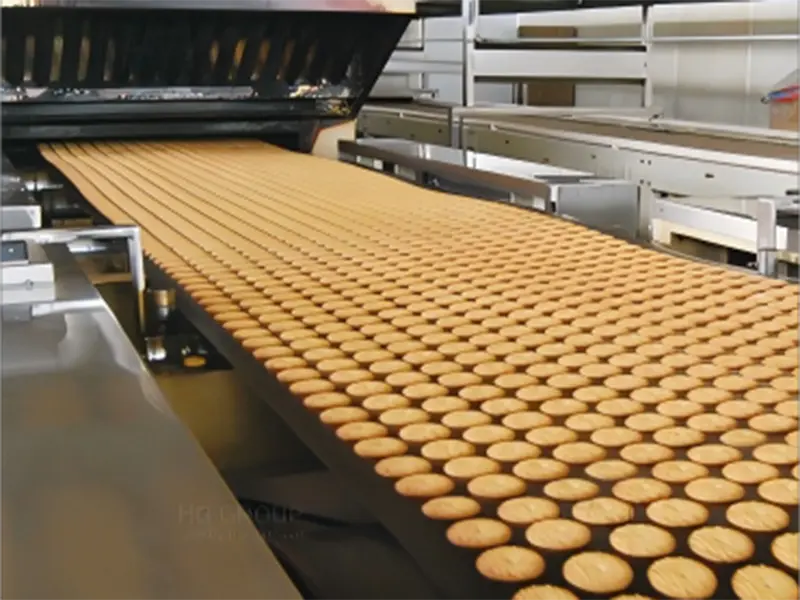
The primary drivers of line capacity are the oven band width and band speed. A wider band accommodates more product rows across the baking surface, multiplying output proportionally. Common band widths for commercial lines range from 800 mm (small-scale or specialty production) to 2,000 mm (high-volume industrial lines). A 1,000 mm band line typically produces 300–600 kg/h for hard sweet biscuits; a 1,500 mm band line of the same product can produce 600–1,200 kg/h. As a general planning benchmark:
| Line Scale | Band Width | Output Range | Typical Application |
| Small / Pilot | 400–600 mm | 50–150 kg/h | R&D, artisan, export startups |
| Mid-Scale | 800–1,000 mm | 200–600 kg/h | Regional brands, contract manufacturing |
| Industrial | 1,200–1,500 mm | 600–1,500 kg/h | National brands, large co-packers |
| High-Volume | 1,800–2,000 mm | 1,500–3,000+ kg/h | Multinational FMCG producers |
Beyond band width, actual available production hours per year, planned downtime for cleaning, maintenance, and product changeovers must all be factored into capacity calculations. A line rated at 500 kg/h running 22 hours per day, 300 days per year with 85% OEE (Overall Equipment Effectiveness) produces approximately 2,805 tonnes per year — a figure that should be benchmarked against market demand forecasts before committing to a specification.
Automation and Control Systems in Modern Biscuit Lines
Contemporary automated biscuit production lines are highly sophisticated systems governed by PLC (Programmable Logic Controller) or SCADA (Supervisory Control and Data Acquisition) platforms that manage and monitor every stage of the process in real time. The level of automation varies considerably between entry-level lines and premium turnkey systems, but the direction of the entire industry is firmly toward greater automation for the following reasons:
- Consistency: Automated control eliminates human variability in critical parameters such as mixing time, dough temperature, oven zone settings, and cream deposit weight, producing tighter quality uniformity across multi-million-piece daily output volumes.
- Recipe management: Digital recipe storage allows operators to switch between product types quickly, automatically adjusting all machine parameters to pre-validated settings rather than relying on manual reconfiguration.
- Data logging and traceability: Continuous logging of process parameters (oven temperatures, dough weight, baking times) supports food safety compliance, batch traceability, and root-cause analysis when quality deviations occur.
- OEE monitoring: Real-time dashboards display line speed, downtime causes, and production counts, enabling supervisors to identify and respond to inefficiencies during the shift rather than after the fact.
- Energy management: Smart oven control systems modulate gas and electrical consumption based on actual demand, reducing energy waste during transitions, slowdowns, and idle periods.
Vision inspection systems are increasingly integrated at the post-oven stage to detect broken, underbaked, or misshapen biscuits and reject them automatically before they reach the packaging section. X-ray or metal detection systems are also standard in food-safety-compliant lines to detect physical contaminants before the product is sealed in primary packaging.
Packaging Integration: Completing the Biscuit Production System
The packaging section of a complete biscuit production line is often underestimated in both complexity and capital cost. In a fully automated line, packaging machinery directly follows the cooling conveyor (and sandwiching or enrobing units if applicable), receiving biscuits at line speed and converting them into consumer-ready, sealed, and labeled packages without manual intervention.
Primary Packaging
Primary packaging — the wrapper in direct contact with the biscuits — is typically performed by horizontal flow wrappers (HFFS machines) or vertical form-fill-seal (VFFS) machines. HFFS machines are the standard for stick-pack and sleeve-wrapped biscuits, producing hermetically sealed polypropylene (BOPP) packages at speeds up to 200–400 packages per minute per lane. Stacking systems before the flow wrapper organize biscuits into single-file columns of the correct count per pack before wrapping.
Secondary and Tertiary Packaging
After primary wrapping, multipacks or individual wrappers are collated into retail cartons by cartoning machines, then loaded into corrugated shippers by case packers. Palletizing — either robotic or conventional layer palletizers — stacks filled cases onto pallets for warehouse storage and outbound logistics. The full integration of primary through tertiary packaging in a single automated line eliminates manual product handling, reducing labor costs, contamination risk, and damage rates significantly.
Leading Biscuit Production Line Manufacturers and Equipment Suppliers
The global market for biscuit production line equipment is served by a mix of European premium manufacturers, established Asian suppliers, and turnkey project specialists. Each segment offers different balances of technology sophistication, service support, and capital cost.
- Baker Perkins (UK): One of the oldest and most respected names in biscuit line engineering, known for the Tweedy mixer and high-precision forming and oven systems. Particularly strong in crackers, hard sweet, and sandwich lines.
- Haas (Austria / GEA Group): Specializes in wafer, sandwich, and cookie lines with a strong emphasis on automation and energy efficiency. Widely used by multinational confectionery companies.
- Bühler Group (Switzerland): Provides complete line solutions for biscuits, crackers, and cookies, with deep integration between process equipment and digital automation platforms.
- Reading Bakery Systems (USA): Focused on snack crackers, pretzels, and extruded snack lines, with strong process engineering and application support.
- Zhaoqing Kehui / Katbar / Henan Rongda (China): Chinese manufacturers offer complete biscuit production line machines at significantly lower capital costs, making them the dominant choice for emerging market manufacturers and mid-scale regional producers. Quality and after-sales service vary by supplier and should be evaluated through site visits and reference checks.
When evaluating suppliers for a turnkey biscuit line, key selection criteria beyond equipment specifications include: availability and responsiveness of local or regional technical service, spare parts availability and lead times, scope of commissioning and operator training, and the supplier's experience with your specific product type and production scale.
Installation, Commissioning, and Operator Training
The period between equipment delivery and first commercial production on a new biscuit production line is one of the highest-risk phases of a food manufacturing project. Poor planning during installation and commissioning leads to extended downtime, quality problems, and cost overruns. A structured commissioning plan should address the following elements:
- Factory Acceptance Testing (FAT): Key performance parameters — output speed, product weight, moisture content — should be validated at the supplier's facility before shipment, using actual production recipes where possible.
- Site preparation: Civil works, utility connections (gas, electricity, compressed air, water), and ventilation must all be completed to specification before equipment installation begins.
- Site Acceptance Testing (SAT): After installation, the full line is tested at the production site at increasing speeds until it achieves the contracted throughput and quality specifications.
- Recipe development and baking trials: The baking team must develop and validate oven profiles and process parameters for every product to be run on the line before commercial launch.
- Operator and maintenance training: Hands-on training for production operators, quality technicians, and maintenance engineers should be built into the commissioning schedule and completed before the first commercial run.
Common Problems on Biscuit Production Lines and How to Solve Them
Even well-engineered biscuit manufacturing lines experience recurring operational problems. Knowing the most common issues and their root causes enables faster troubleshooting and reduces production losses.
| Problem | Likely Cause | Corrective Action |
| Biscuit weight variation | Gauge roll gap inconsistency or dough feed variation | Recalibrate gauge rolls; check dough feed hopper level consistency |
| Uneven baking color | Oven zone temperature imbalance or band speed variation | Profile oven temperature across full width; check band drive for slippage |
| Biscuits sticking to band | Insufficient fat in formulation or band contamination | Review formulation fat level; clean and condition the baking band |
| High breakage rate post-oven | Excessive baking, low fat, or abrupt conveyor transitions | Reduce oven temperature or time; review conveyor gap and speed matching |
| Cream fill weight out of spec | Cream temperature variation affecting viscosity and pump output | Maintain cream at consistent temperature; recalibrate deposit pump |
| Packaging seal failures | Incorrect seal bar temperature or film tension | Validate seal temperature for film specification; adjust film tension settings |
Cost Considerations and ROI for a Biscuit Production Line Investment
The capital cost of a biscuit production line spans an extremely wide range depending on capacity, automation level, equipment origin, and whether secondary processing (sandwiching, enrobing) is included. As a rough guide, a small-scale line with a 600 mm band from a Chinese manufacturer may cost USD 150,000–400,000 for the core line equipment. A mid-scale line from a European supplier with full automation and packaging integration typically ranges from USD 1.5 million to USD 5 million. High-capacity lines from premium manufacturers with full turnkey scope including civil and utility work can exceed USD 15–20 million.
Beyond capital cost, the key financial parameters for ROI analysis include:
- Raw material yield: The ratio of finished biscuit output to raw ingredient input. Losses in trim scrap, dough sticking, and broken product directly affect per-unit cost.
- Energy consumption: The oven represents 60–75% of total line energy consumption. Energy cost per kg of output should be benchmarked during commissioning and monitored continuously.
- Labor cost: Automation level directly determines the headcount required per shift. A fully automated line may require 5–8 operators; a semi-manual line of similar capacity may require 20–30.
- OEE (Overall Equipment Effectiveness): Industry benchmarks for well-run biscuit lines are 75–85% OEE. Each percentage point of OEE improvement on a 500 kg/h line running 22 hours per day adds approximately 40 tonnes of annual output — meaningful revenue at commercial biscuit pricing.
- Maintenance and spare parts: Annual maintenance costs for a well-maintained mid-scale line typically run 2–5% of original equipment cost. Preventive maintenance programs that track wear parts and schedule replacements proactively are essential for sustaining OEE targets.
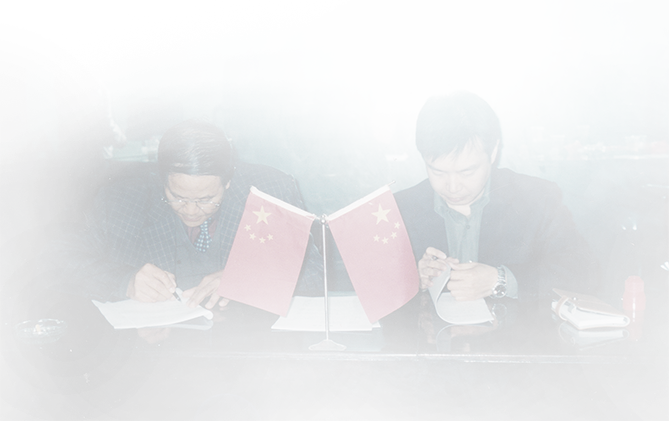
A historic signing moment from the 1970s, when HG’s founder helped drive the development of China’s food industry and began expanding into international markets.
Over the past decades, we have participated in the evolution of automated food production — from local factories to global turnkey projects across 100+ countries. That experience continues to shape every HG production line today.
Discover Our Heritage
Global Food Machinery &
Turnkey Factory Solutions

Building Long-Term Partnerships Through Shared Growth and Industrial Value.
Copyright © HG Industry Group All Rights Reserved
Food Machine Snack Food Processing Machinery

Unauthorized use of this website's content constitutes copyright infringement and may result in legal action.