 English
The Evolution of Convenience: How the Egg Roll Machine is Revolutionizing Food Production
The culinary world is constantly seeking innovation to meet the ever-growing demand for efficiency, quality, and speed. One area that has seen a remarkable leap forward is in the production of crispy, golden egg rolls. Traditionally a laborious, manual process, the creation of these popular appetizers has been dramatically transformed by the advent of specialized automation, most notably the egg roll machine. This piece of sophisticated equipment is no longer a niche tool; it is a fundamental component in high-volume food manufacturing and large-scale restaurant operations, signifying a major shift in how frozen and freshly-prepared egg rolls reach consumers worldwide.
Key Advantages of Adopting an Egg Roll Machine
The decision to invest in automated production is driven by clear operational benefits. An egg roll machine offers compelling advantages over manual assembly, addressing some of the industry’s most pressing challenges:
Consistency and Uniformity: Manual rolling inevitably leads to variations in size, weight, and filling distribution. Automated systems guarantee product uniformity, which is essential for consistent cooking times, standardized portion control, and brand quality assurance. Every single egg roll produced meets the exact specifications set by the manufacturer.
Massive Increase in Production Capacity: While a skilled human roller might produce a few hundred units per hour, an industrial egg roll machine can generate thousands. This scaling capacity allows businesses to meet peak demand, manage large contracts, and significantly lower the cost per unit.
Reduced Labor Costs and Strain: Automating the repetitive task of rolling frees up skilled labor for other critical kitchen or production tasks. It also mitigates the physical strain and potential for error associated with high-volume, repetitive manual work.
Enhanced Hygiene and Safety: In a modern production environment, less human handling translates directly to a reduction in contamination risk. Machines are built with food-grade materials and designed for easy sanitization, ensuring a higher standard of food safety compliance.
Inside the Technology: How a Modern Egg Roll Machine Works
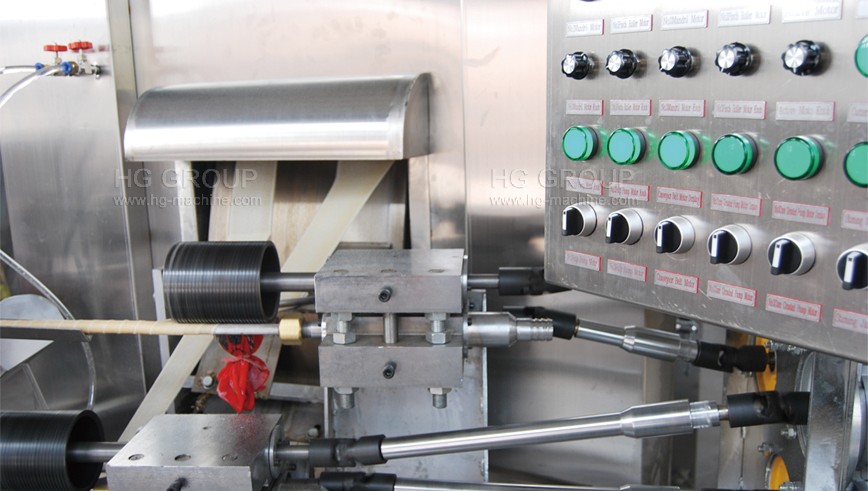
The mechanics of a modern egg roll machine are a testament to clever engineering. The process is typically broken down into several synchronized stages:
Wrapper Feeding: Pre-cut or continuously formed egg roll wrappers (skins) are automatically fed onto a conveyor belt. High-end machines often utilize sensors to ensure the perfect positioning of each wrapper.
Precise Filling Dispensing: A volumetric pump or specialized extruder measures and dispenses the exact quantity of filling (cabbage, pork, vegetables, etc.) onto the wrapper. This is where uniformity is guaranteed.
Folding and Rolling: This is the core function. A series of mechanical arms, folders, and rollers execute the precise folding pattern required to create the characteristic tightly-wrapped cylindrical shape. The complexity of this mechanism allows machines to replicate the intricate rolling technique of a skilled artisan.
Sealing: The edge of the wrapper is brushed with a liquid sealant (often a flour-and-water mixture) before the final fold is made, ensuring the filling is securely contained during the cooking process.
Output: The finished, uncooked egg rolls are then conveyed to the next stage, which may be immediate frying, freezing, or packaging.
The Future Outlook for Automated Egg Roll Production
As global consumption of Asian-inspired appetizers continues to rise, the market for the egg roll machine is poised for continued growth. Future developments are likely to focus on even greater flexibility and integration:
Adaptability for Varied Products: Next-generation machines are being developed to handle a wider array of fillings and wrappers, easily switching between standard egg rolls, spring rolls, and other specialty stuffed products like burritos or flautas with minimal changeover time.
Smart Integration: Incorporating smart sensors and AI will allow machines to self-diagnose maintenance needs, automatically adjust filling consistency based on real-time data, and seamlessly integrate into enterprise resource planning (ERP) systems for complete inventory and production control.
Sustained Energy Efficiency: Manufacturers are continually improving the efficiency of the mechanical and heating components to reduce the energy footprint of large-scale food production.
In conclusion, the sophisticated egg roll machine represents more than just a piece of factory equipment. It is a critical link in the modern food supply chain, enabling businesses to deliver high-quality, safe, and consistent products to millions of consumers efficiently. The evolution of this technology continues to drive the standardization and accessibility of one of the world’s most beloved appetizers.

Copyright Shanghai HG(hengguang) Food Machinery Co.,Ltd. All Rights Reserved
