 English


Precision Engineering: Driving Efficiency in the Biscuit Production Line
In the world of high-volume food manufacturing, the Biscuit Production Line stands as a paramount example of industrial precision and seamless automation. It is a complex, continuous system where engineering excellence dictates product uniformity, quality, and ultimately, profitability. Beyond simple baking, a modern production line is a sophisticated chain designed to transform raw ingredients into millions of finished goods with minimal human intervention.
Technical Pillars of the Biscuit Production Line
The efficacy of a modern Biscuit Production Line rests upon the integration and synchronization of three primary technical stages: mixing, forming, and thermal processing (baking and cooling).
1. Advanced Ingredient Handling and Mixing Control
The journey begins with precision ingredient handling. Bulk handling systems for flour and sugar are integrated with gravimetric feeders to ensure accurate measurement, a prerequisite for recipe consistency. The mixing stage is critical: high-shear, continuous mixers are employed, particularly for hard doughs, to develop the correct gluten structure and control the temperature profile. For soft doughs, specialized planetary or horizontal mixers ensure gentle blending to prevent overdevelopment. Digital control systems constantly monitor torque and energy consumption, ensuring that every batch processed by the Biscuit Production Line adheres strictly to established rheological standards.
2. High-Speed Forming Technology
The forming section showcases specialized mechanical engineering designed for speed and reliability.
Rotary Cutters and Docking: For hard doughs, synchronized servo-motors drive rotary cutters with exacting pressure control. Integrated docking pins create precise perforations, which are essential for controlling steam release during baking, preventing blistering, and ensuring a flat product profile.
Moulding and Depositing: For soft and wire-cut biscuits, precision depositors and rotary moulders operate at high cycles per minute. The rapid transfer of formed pieces from the moulding roller to the oven band is a key area of innovation, often involving vacuum assistance or scraper blades calibrated to micron-level tolerances, maximizing yield on the Biscuit Production Line.
3. Thermal Management in Continuous Ovens
The heart of the system is the continuous band oven, a masterpiece of thermal engineering. These ovens are segmented into multiple, independently controlled zones (up to 10 or more), allowing for highly specialized temperature curves—from rapid initial heat for “oven spring” to gradual drying for moisture reduction. Indirect-fired radiant ovens are often favored for premium products, offering clean, consistent heat, while convection systems ensure rapid, even heat penetration. Precise humidity injection systems are also utilized to control the biscuit surface and color development, guaranteeing the consistent golden-brown finish expected from the Biscuit Production Line.

Economic and Strategic Advantages
The investment in a state-of-the-art Biscuit Production Line is justified by compelling economic and strategic returns.
Operational Efficiency and Waste Reduction
Automation minimizes human error, resulting in vastly improved production consistency. Advanced vision systems installed before and after the oven provide real-time feedback, automatically detecting and rejecting improperly sized, colored, or broken biscuits. This continuous loop of quality assurance dramatically reduces scrap rates and energy consumption per unit of product, driving down operating costs across the entire Biscuit Production Line.
Flexibility and Market Responsiveness
Modern production lines are designed for rapid changeovers. Modular components and recipe-driven automation allow manufacturers to switch quickly between different biscuit types, weights, and packaging formats. This flexibility is a critical competitive advantage, enabling the company to respond swiftly to changing consumer demands and market trends, from specialty cookies to diet-friendly crackers.
Food Safety and Traceability
Integrating automated processes and smart sensors ensures unparalleled levels of food safety. Components are designed for Clean-In-Place (CIP) systems, minimizing allergen risk and simplifying sanitation. Full traceability is embedded into the process; every batch of raw material and every finished package can be tracked through the digital infrastructure of the Biscuit Production Line, meeting stringent global regulatory requirements.
The Biscuit Production Line is more than just a sequence of machines; it is a meticulously orchestrated system where mechanical, thermal, and digital technologies converge. It is the core asset enabling manufacturers to achieve industrial scale while maintaining the consistent quality consumers demand.
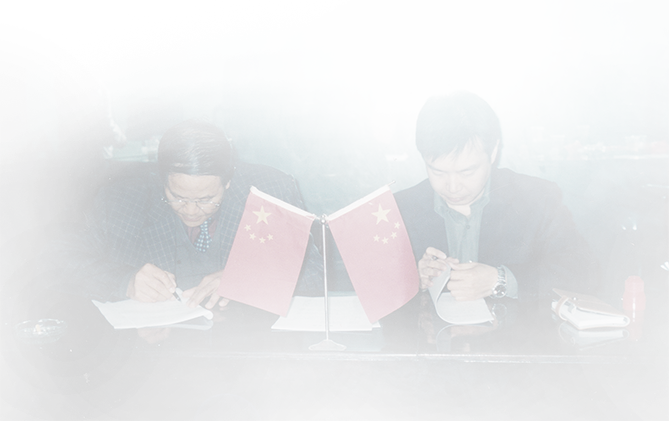
A historic signing moment from the 1970s, when HG’s founder helped drive the development of China’s food industry and began expanding into international markets.
Over the past decades, we have participated in the evolution of automated food production — from local factories to global turnkey projects across 100+ countries. That experience continues to shape every HG production line today.
Discover Our Heritage
Global Food Machinery &
Turnkey Factory Solutions

Building Long-Term Partnerships Through Shared Growth and Industrial Value.
Copyright © HG Industry Group All Rights Reserved
Food Machine Snack Food Processing Machinery

Unauthorized use of this website's content constitutes copyright infringement and may result in legal action.