 English
 中文简体
中文简体 日本語
日本語 русский
 عربى
عربى Український
 Español
 Français

How a Donut Production Line Works — and How to Choose the Right One for Your Bakery
Content
- What a Donut Production Line Actually Does
- The Main Stages of a Donut Production Line
- Types of Donut Production Lines by Scale
- Yeast-Raised vs. Cake Donut Lines: Key Differences
- Critical Specifications to Compare When Buying a Donut Line
- Floor Space and Line Layout Planning
- Leading Equipment Manufacturers and What They Offer
- Total Cost of Ownership: Beyond the Equipment Price Tag
- Practical Steps Before You Buy a Donut Production Line
What a Donut Production Line Actually Does
A donut production line is an integrated sequence of food processing machines that automates the full cycle of donut manufacturing — from raw dough preparation through forming, proofing, frying, finishing, and packaging — with minimal manual intervention at each stage. Rather than relying on individual standalone machines operated separately by different workers, a production line connects each process step in a controlled flow, ensuring that donuts move through every stage at a consistent rate, temperature, and handling standard.
The practical benefit of a donut manufacturing line over artisan or semi-manual production is not simply speed. It is consistency. Every donut that exits a properly configured line has the same weight, the same fry time, the same glaze coverage, and the same final appearance. For wholesale suppliers, supermarket bakeries, franchise chains, and large-scale donut brands, that repeatability is the product — customers expect every unit to look and taste identical regardless of when or where it was made. A well-designed automated donut line is the engineering answer to that expectation.
The Main Stages of a Donut Production Line
Understanding what happens at each station helps you evaluate equipment specifications, identify bottlenecks, and make informed decisions about which line configuration suits your output requirements. A complete industrial donut production line typically runs through the following stages in sequence:
Dough Mixing and Preparation
The line begins with a commercial dough mixer — typically a spiral mixer or a horizontal continuous mixer for high-volume operations. Spiral mixers handle batch sizes from 30 kg to 200 kg per cycle and are well suited to yeast-raised donut dough, which requires careful gluten development without overworking. Continuous mixers feed dough directly into the downstream line at a constant rate, making them the preferred choice for production lines running at outputs above 2,000–3,000 units per hour. Ingredients — flour, sugar, yeast, fat, eggs, milk solids, and water — are either manually loaded or metered in via automated dosing systems, which improve recipe accuracy and reduce variability between batches.
Dough Sheeting and Laminating (for Cake Donuts)
For cake donuts, the mixed batter or soft dough passes through a sheeting and cutting system rather than a proofer. A dough sheeter rolls the dough to a precise, uniform thickness — typically 12–18 mm for standard ring donuts — and a rotary cutter stamps out the rings and centers simultaneously. The cutout centers are typically re-incorporated into the dough feed to reduce waste. Sheeting roll gap, cutting pressure, and dough temperature at this stage are the primary variables that determine weight consistency across the batch.
Dough Dividing and Forming
For yeast-raised donuts, the mixed dough is fed into a dough divider-rounder that portions it into equal weight pieces and rounds them into smooth balls. These balls are then transferred to an extruder or ring former — a machine that shapes the dough into rings, twists, or filled round shells, depending on the die configuration. Ring extruders deposit dough rings directly onto the frying belt or onto proofing trays at rates of 800 to 5,000 pieces per hour depending on the model. Weight accuracy at this stage is typically ±2–3 g per piece on modern servo-driven formers.
Proofing
Yeast-raised donuts require a controlled proofing period after forming, during which the yeast ferments and the dough rises to its target volume before frying. In a production line, this is handled by a tunnel proofer — an enclosed cabinet with programmable temperature (typically 35–43°C) and relative humidity (75–85%) settings through which formed donuts travel on a continuously moving belt or rack conveyor. Proofing time is typically 45–90 minutes for standard yeast donuts, and tunnel proofer length is calculated to match this dwell time at the line's target throughput speed. Inadequate proofing leads to dense, tough donuts; over-proofing causes collapse in the fryer.
Frying
The fryer is the thermal core of the donut production line and the station where the most critical quality and food safety parameters are controlled. Continuous tunnel fryers — the standard in industrial donut lines — consist of an oil-filled tank with a submerged conveyor that carries donuts through the hot oil, flipping them automatically at the midpoint to ensure even browning on both sides. Key frying parameters include oil temperature (typically 180–195°C), fry time (60–120 seconds per side for yeast-raised; shorter for cake donuts), oil turnover rate, and free fatty acid (FFA) content monitoring. Modern fryers include automatic oil top-up systems, oil filtration circuits, and temperature control accuracy of ±1–2°C to maintain consistent color and oil absorption across the full production run.
Cooling
Freshly fried donuts exit the fryer at 70–85°C and must be cooled before glazing or icing, both to set the surface structure and to prevent glaze from melting on contact. A cooling conveyor — either a straight belt cooler or a spiral cooler for space-efficient footprint — reduces the donut surface temperature to below 35°C, typically within 3–8 minutes depending on the cooling method. Forced-air cooling using ambient or refrigerated air accelerates this process in high-speed lines. Inadequate cooling before glazing is one of the most common causes of glaze pooling and uneven coverage on production lines.
Glazing, Icing, and Topping Application
After cooling, donuts pass through the finishing station, which may include one or more of the following application methods depending on the product range: a waterfall glazer that cascades warm liquid glaze over the top surface of donuts moving on a mesh conveyor; a dip glazer that immerses the top half of each donut in a glaze tank; an icing applicator for fondant or royal icing; and a dry topping drum or shaker that deposits sprinkles, granulated sugar, crushed nuts, or other particulates onto the wet glaze surface before it sets. Glaze temperature, viscosity, and conveyor speed are the key variables controlling coverage consistency. Most modern finishing stations include recirculation systems that collect excess glaze drips and return them to the reservoir, minimizing waste.
Filling Injection (for Filled Donuts)
Filled donut varieties — jelly, custard, cream, or chocolate — require an injection station where a needle or nozzle punctures the donut shell and injects a measured volume of filling under pressure. Automatic donut injectors are typically positioned either before or after glazing, depending on the product, and are calibrated to deliver a precise fill weight (commonly 20–40 g) per piece. Multi-head injectors can process 1,000–4,000 pieces per hour. Filling temperature, viscosity, and injection pressure must be matched to the specific filling type to avoid bursting the shell or underfilling.
Packaging
The final stage of the donut production line is packaging, which ranges from manual packing into retail boxes at the exit conveyor to fully automated flow-wrapping, tray-sealing, or bag-filling systems. High-volume lines typically integrate automatic counting and collating systems that group donuts into the correct retail configuration (e.g., 4-pack, 6-pack, or 12-pack) before feeding them into the packaging machine. Modified atmosphere packaging (MAP) extends shelf life for pre-packaged donuts distributed through retail channels. Vision systems and checkweighers at the packaging stage provide a final quality gate, rejecting units that fall outside weight or appearance tolerances.
Types of Donut Production Lines by Scale
Not every donut operation needs a full industrial line. The right line configuration depends on your daily output target, product variety, available floor space, and capital budget. Here is how production line options typically break down by scale:
|
Line Type |
Typical Output |
Key Equipment |
Best For |
|
Compact / Semi-Auto |
200–800 pcs/hr |
Benchtop former, small open fryer, manual glazing |
Café chains, small retail bakeries, food trucks |
|
Mid-Scale |
800–3,000 pcs/hr |
Ring extruder, tunnel proofer, continuous fryer, waterfall glazer |
Regional wholesale, supermarket in-store bakeries, franchise outlets |
|
Industrial / High-Volume |
3,000–10,000+ pcs/hr |
Continuous mixer, multi-lane former, long-tunnel fryer, spiral cooler, auto packaging |
National brands, co-manufacturers, frozen donut producers |
Yeast-Raised vs. Cake Donut Lines: Key Differences
The two dominant donut types — yeast-raised and cake donuts — require meaningfully different production line configurations, and understanding this distinction is essential before specifying equipment.
- Yeast-raised donut linesrequire a proofing stage between forming and frying, which adds significant line length and thermal management complexity. The dough is softer and more sensitive to handling, which demands gentler conveyor systems and precise proofer climate control. Fry times are longer, and the resulting donut has a lighter, more open crumb structure.
- Cake donut linesuse a thicker batter or short dough that is sheeted and cut or extruded directly into the fryer without proofing. This eliminates the proofer from the line entirely, reducing both floor space and process complexity. Cake donut lines tend to have higher throughput per linear meter of floor space because the proofing dwell time is removed from the sequence.
- Combination linescapable of running both yeast-raised and cake donut products are available from several major equipment manufacturers. These lines typically incorporate a modular proofer section that can be bypassed when running cake donut programs, and a multi-function former that accepts interchangeable die sets for different donut formats.
Critical Specifications to Compare When Buying a Donut Line
When evaluating donut production line suppliers and equipment configurations, these are the specifications that have the most direct impact on operational performance and total cost of ownership:
Throughput and Capacity Headroom
Always specify a line with at least 20–30% more rated capacity than your current peak output requirement. Production lines rarely run at 100% rated speed continuously — changeovers, cleaning cycles, minor stoppages, and speed adjustments all reduce effective throughput. Buying a line that is already at its ceiling leaves no room to grow and forces you back into the market for new equipment sooner than planned.
Oil Management System
The fryer's oil management system has a direct impact on both product quality and operating cost. Look for continuous filtration that removes crumb and fine particles during the production run, automatic oil top-up to maintain a consistent oil level and fry depth, and real-time monitoring of oil temperature and FFA content. Poor oil management leads to rapid oil degradation, off-flavors, and dark fry color — all of which increase oil consumption costs and product rejection rates.
Cleaning and Sanitation Design
Food production equipment is only as good as its cleanability. Evaluate how quickly each section of the line can be broken down for cleaning, whether the fryer includes a drain and filter cleaning system, and whether the proofer interior surfaces are accessible for daily sanitizing. Lines designed for clean-in-place (CIP) operation significantly reduce downtime associated with scheduled sanitation versus manual strip-and-clean configurations.
Control System and Recipe Management
Modern donut production lines should include a PLC-based control system with a touchscreen HMI that allows operators to store, recall, and run named product recipes. Recipe management minimizes setup time when switching between product types — for example, switching from a glazed yeast ring to a chocolate cake donut — and ensures that all line parameters (speed, temperature, glaze viscosity setpoint, fry time) are set consistently every time. Look for systems that log production data for traceability and quality records.
Energy Consumption
The fryer is the largest energy consumer on a donut line, accounting for 60–75% of total line energy use. Compare the thermal efficiency of fryer designs — specifically the insulation standard, the heating element or burner efficiency rating, and whether the fryer includes a lid or cover to retain heat during production. Gas-fired fryers are generally more economical to operate than electric fryers at high throughput, but the relative cost depends on local energy prices and utility availability at your facility.
Floor Space and Line Layout Planning
A complete mid-scale donut production line typically requires a floor footprint of 15–40 meters in length and 3–6 meters in width, depending on whether a straight-line or U-shaped layout is used. U-shaped or C-shaped configurations are common in facilities with constrained floor length, as they fold the line back on itself to reduce the overall room length requirement while maintaining the same process sequence. When planning a line layout, allow for the following clearances and ancillary requirements:
- Minimum 1.2 meters of operator access clearance on both sides of each machine section for operation, maintenance, and emergency access
- Ventilation and exhaust extraction above the fryer and proofer — frying generates significant steam, oil vapor, and heat that must be captured and exhausted to meet food safety and workplace health standards
- Utility connections including three-phase electrical supply, gas supply (if applicable), water supply and drainage for the fryer and proofer, and compressed air for pneumatic conveyor and injector systems
- Ingredient storage and dough preparation area upstream of the line, sized to avoid production interruptions from batch mixing delays
- Finished product staging area downstream of the packaging station, with adequate space for stacking, labeling, and loading for dispatch
Leading Equipment Manufacturers and What They Offer
The global market for donut production line equipment is served by a relatively small number of specialist manufacturers, most of which offer both individual machines and complete turnkey line solutions. The following are the most widely referenced suppliers in the industry:
- Belshaw Adamatic (USA):One of the longest-established donut equipment brands globally. Their Adamatic line covers automatic ring formers, tunnel fryers, proofers, and glazers across a wide capacity range, with strong aftermarket parts support. Widely used by franchise donut chains in North America and internationally.
- Moline Machinery (USA):Specializes in dough sheeting and make-up equipment for yeast-raised and cake donut lines. Their Roundomatic and multi-lane sheeter-cutter systems are a standard reference in industrial bakery installations.
- UNIFILLER Systems (Canada):Known primarily for filling and depositing equipment, including high-speed donut injectors and cream fillers that integrate with existing production lines.
- Aasted (Denmark):Supplies chocolate enrobing and coating systems that are used in the donut finishing stage for chocolate-dipped product lines, and larger continuous fryer systems for European industrial bakery operations.
- Chinese OEM manufacturers (various):A growing segment of the market, particularly for mid-scale lines in Asia, the Middle East, and developing markets. Brands such as Dahua, Sinobake, and various Guangdong-based equipment makers supply complete donut lines at significantly lower capital cost than Western counterparts, though with varying levels of after-sales support and parts availability. Buyers should evaluate service network coverage carefully before purchasing from this segment.
Total Cost of Ownership: Beyond the Equipment Price Tag
The purchase price of a donut production line is only one component of its total cost of ownership over its operational life. Before committing to a specific line configuration or supplier, calculate the following ongoing cost elements and factor them into the financial comparison:
|
Cost Element |
Key Variables |
Typical Impact |
|
Frying oil consumption |
Oil turnover rate, filtration efficiency, FFA management |
High — often the largest variable operating cost per unit |
|
Energy (gas or electric) |
Fryer efficiency, proofer insulation, cooler type |
Significant — 60–75% of energy is consumed by the fryer |
|
Planned maintenance and parts |
Parts availability, service contract terms, wear part life |
Moderate — highly variable based on supplier parts network |
|
Labor |
Automation level, operator headcount, cleaning hours |
Lower on automated lines; higher on semi-manual configurations |
|
Product waste and rejects |
Weight accuracy, glaze consistency, fry color uniformity |
Directly tied to equipment precision and recipe control quality |
|
Downtime and lost production |
Equipment reliability, service response time, spare parts stock |
Can be the highest-impact cost element if service support is poor |
Practical Steps Before You Buy a Donut Production Line
Investing in a donut production line — even a mid-scale configuration — represents a significant capital commitment. Working through the following steps before finalizing a purchase decision will reduce the risk of buying equipment that underperforms or does not fit your operation.
- Define your product range first:The equipment required for a ring donut and glaze operation is meaningfully different from a line that also needs to run filled donuts, cake donuts, and twisted varieties. Map your full intended product range before speaking to equipment suppliers — not after.
- Calculate your realistic daily output target:Work back from your sales forecast or supply contract volumes, not from a hypothetical maximum. Factor in shifts, cleaning time, changeover time, and a realistic uptime percentage (typically 75–85% for a well-maintained continuous line).
- Request a factory acceptance test (FAT):Before a line ships, insist on a FAT at the manufacturer's facility where the full line is assembled, run at rated speed with your actual dough recipe, and inspected against the agreed specification. This is standard practice for industrial equipment purchases and gives you the right to reject or require corrections before accepting delivery.
- Verify local service and parts availability:A production line that cannot be serviced within 24–48 hours of a breakdown is a serious operational liability. Confirm the supplier's service engineer network in your region, average response time commitments, and whether critical wear parts are stocked locally or must be imported.
- Visit a reference installation:Ask the equipment supplier for contact details of existing customers running a similar line configuration. Visiting a live installation and speaking directly with the production manager gives you unfiltered insight into how the equipment performs day-to-day, what problems have arisen, and how the supplier responded to them.
- Plan for installation and commissioning time:A complete donut line installation — including delivery, assembly, utility connection, initial trials, and operator training — typically takes 4–12 weeks depending on line complexity. Build this lead time into your production launch schedule and budget for the engineering and commissioning costs separately from the equipment purchase price.
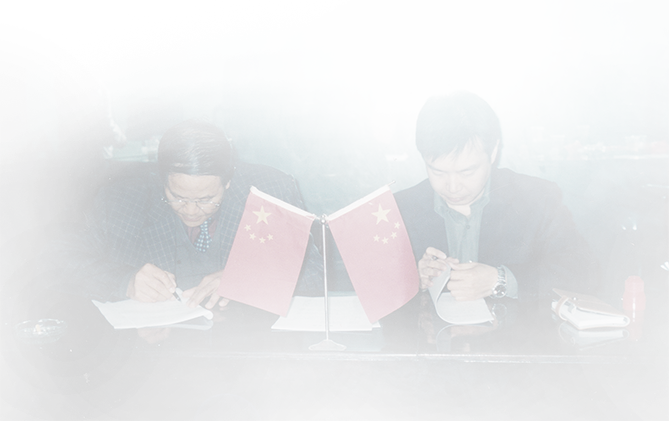
A historic signing moment from the 1970s, when HG’s founder helped drive the development of China’s food industry and began expanding into international markets.
Over the past decades, we have participated in the evolution of automated food production — from local factories to global turnkey projects across 100+ countries. That experience continues to shape every HG production line today.
Discover Our Heritage
Global Food Machinery &
Turnkey Factory Solutions

Building Long-Term Partnerships Through Shared Growth and Industrial Value.
Copyright © HG Industry Group All Rights Reserved
Food Machine Snack Food Processing Machinery

Unauthorized use of this website's content constitutes copyright infringement and may result in legal action.