 English
From Batter to Crunch: The Engineering Secrets of High-Efficiency Wafer Stick Production Lines
Optimizing the Baking Process with Rotary Oven Technology
The heart of any wafer stick machine is the rotary baking drum. Modern industrial machines utilize a continuous baking cycle where a thin layer of liquid batter is precisely deposited onto a heated, rotating drum. The drum temperature must be maintained with extreme accuracy, typically using gas or electric heating elements, to ensure the wafer sheet achieves a uniform golden-brown color. As the drum rotates, the batter dries and hardens into a flexible sheet that is ready for rolling. Advanced sensors monitor the surface temperature in real-time, adjusting the heat input to compensate for ambient changes, which prevents the wafer from becoming too brittle or remaining undercooked.
Precision Rolling and Filling Mechanisms
Once the wafer sheet is baked, it is immediately stripped from the drum and guided toward the rolling spindle. This is a critical stage where the flat wafer is transformed into its iconic cylindrical shape. Simultaneously, a filling pump injects creams, chocolates, or fruit pastes into the center of the tube. High-end wafer stick machines feature adjustable rolling speeds and nozzle diameters, allowing manufacturers to control the ratio of wafer to filling. This mechanical synchronization ensures that the filling is centered and consistent, preventing leakage or hollow spots that could compromise the product's quality and shelf life.
| Machine Component | Primary Function | Key Benefit |
| Batter Mixer | Homogenizing ingredients | Ensures smooth texture |
| Baking Drum | Heat application | Consistent color & crispness |
| Cutter Unit | Product sizing | Uniform length and clean cuts |
Advanced Automation and Control Systems
Modern wafer stick production relies heavily on PLC (Programmable Logic Controller) systems to manage the complex interplay between heat, speed, and volume. Operators can store various "recipes" in the machine's memory, which automatically adjusts parameters like the batter pump flow rate and the cutting knife frequency. This level of automation reduces human error and significantly lowers labor costs. Furthermore, integrated cooling conveyors allow the sticks to set firmly before they reach the packaging stage, ensuring the structure remains intact during transport.
Key Technical Specifications for Industrial Models
- Production Capacity: Ranging from 20kg to over 100kg per hour depending on the number of baking lines.
- Material Construction: Food-grade stainless steel (SUS304) for all parts in contact with ingredients.
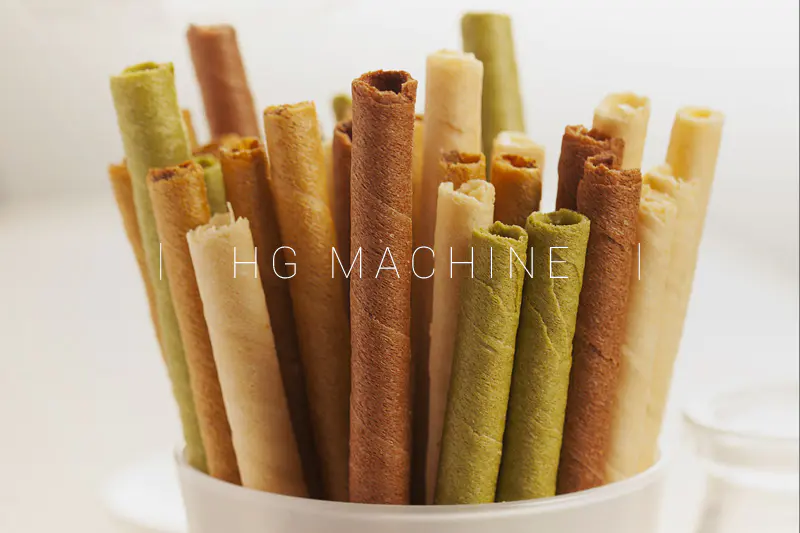
- Customization Options: Capability to produce bi-color (striped) wafers using dual-batter feeders.
- Safety Features: Emergency stop triggers and heat-shielded enclosures for operator protection.
Maintenance and Hygiene Standards
To maintain a long operational lifespan, wafer stick machines require a rigorous cleaning and maintenance schedule. Because the batter contains sugars and fats, residues can build up on the drum and nozzles, potentially causing carbonization or clogging. Most high-quality machines are designed with "Easy-Clean" features, such as detachable scrapers and accessible pump housings. Regular lubrication of the high-temperature bearings and inspection of the cutting blades are essential to prevent downtime and ensure that every wafer stick meets food safety regulations and consumer expectations.


Copyright Shanghai HG(hengguang) Food Machinery Co.,Ltd. All Rights Reserved
