 English


Making Biscuits: A Simple Guide to How They're Made
Biscuit production is a complex and highly specialized process that transforms basic ingredients into a wide array of delightful baked goods. From humble digestive biscuits to intricate cream-filled varieties, the underlying principles involve precise ingredient scaling, meticulous mixing, controlled shaping, and carefully monitored baking.
1. Ingredient Preparation and Scaling
The foundation of any good biscuit lies in the accuracy of its ingredients. This initial stage is critical for ensuring consistent product quality.
-
Flour Handling: Wheat flour, the primary ingredient, is typically delivered in bulk and stored in silos. Before use, it undergoes sifting to remove any foreign matter and aerate it, which improves its handling properties and ensures even distribution during mixing.
-
Sugar and Fats: Sugars (sucrose, glucose syrup, etc.) and fats (vegetable oils, butter, margarine) are also precisely weighed or metered. Fats may be pre-creamed or heated to a specific temperature to ensure proper emulsification.
-
Minor Ingredients: Leavening agents (baking soda, baking powder), salt, flavorings, colorings, and emulsifiers are carefully measured in small quantities. Often, these are pre-blended into premixes to ensure uniform dispersion throughout the dough.
-
Water/Liquid: Water or other liquids like milk are critical for hydration and dough development, and their temperature can be controlled to influence dough consistency and mixing time.
2. Mixing
Mixing is where the dry and wet ingredients are combined to form a homogenous dough. The type of mixer and mixing duration depend heavily on the desired biscuit texture and the type of dough (e.g., hard dough, soft dough, or short dough).
-
Hard Doughs: Used for crackers and some digestive biscuits, these doughs require significant gluten development. Mixers with strong shearing action, like horizontal bar mixers, are used, and mixing times are longer to develop the gluten network that gives these biscuits their characteristic snap.
-
Soft Doughs: Common for rich tea biscuits or semi-sweet biscuits, these doughs have moderate gluten development. Z-arm mixers or planetary mixers are often employed, with mixing focused on even ingredient distribution rather than extensive gluten formation.
-
Short Doughs: For shortbread, cookies, or biscuits with high fat and sugar content, minimal gluten development is desired. Creaming mixers or ribbon blenders are used, aiming for a crumbly, tender texture. Over-mixing can lead to tough biscuits.
-
Temperature Control: Dough temperature is crucial. Friction from mixing generates heat, and often, mixers are jacketed with cooling systems to maintain optimal dough temperature, preventing premature yeast activity or fat melting.
3. Forming
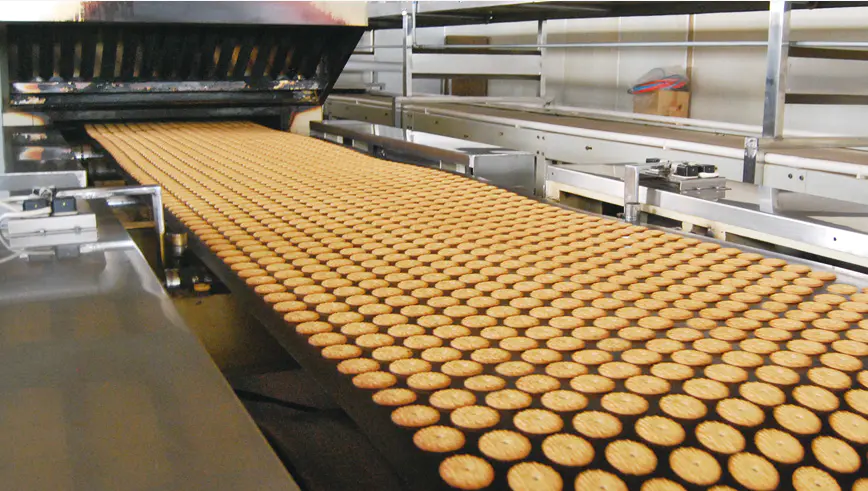
After mixing, the dough is formed into the desired biscuit shapes. This stage is highly automated and employs various techniques.
-
Rotary Moulding: Ideal for soft doughs with high fat and sugar content (e.g., shortbread, cookies). Dough is pressed into engraved dies on a rotating roller, which then deposits the precisely shaped dough pieces onto a conveyor belt. This method ensures consistent weight and shape.
-
Rotary Cutting: Used for hard and semi-hard doughs (e.g., digestive biscuits, crackers). The dough is first sheeted into a continuous band using a series of gauging rollers. A rotary cutter with sharp dies then cuts the desired shapes from the dough sheet. Excess dough (web scrap) is recycled back into the mixer.
-
Wire-Cut/Depositing: Primarily for soft, often chunky doughs with inclusions (e.g., chocolate chip cookies, oat biscuits). Dough is extruded through a die and then cut by a wire, or deposited as individual drops onto the baking band. This method offers flexibility in shape and allows for larger inclusions.
-
Extrusion: Used for certain types of biscuits, where dough is continuously pushed through a die to form ropes or strips, which are then cut to length.
4. Baking
Baking is the transformative stage where the dough develops its final structure, color, and flavor. Industrial biscuit ovens are typically long, tunnel-like structures with multiple heating zones.
-
Oven Types: Most common are direct-fired ovens (hot gases directly heat the product) or indirect-fired ovens (hot gases heat the oven chamber, and radiated heat bakes the product). Convection ovens, which circulate hot air, are also used for certain products.
-
Temperature Zones: Ovens are divided into zones, each with precisely controlled temperature and humidity.
-
Zone 1 (Drying/Set): Moderate temperature to dry the surface and set the shape, preventing spreading.
-
Zone 2 (Browning/Development): Higher temperatures promote rapid expansion (oven spring) and the Maillard reaction, responsible for browning and flavor development.
-
Zone 3 (Drying/Finishing): Lower temperatures to slowly reduce moisture content to the desired level, ensuring crispness and shelf stability, and completing the baking process.
-
-
Moisture Control: Steam injection may be used in initial zones to promote gloss or delay crust formation, allowing for greater expansion. Humidity control throughout the oven is crucial for consistent texture.
5. Cooling
After baking, biscuits are hot and pliable. Rapid cooling is essential to prevent condensation, maintain crispness, and allow them to firm up before packaging.
-
Cooling Conveyors: Biscuits are transferred onto long cooling conveyors, often in ambient air, or sometimes in temperature-controlled environments.
-
Controlled Cooling: Too rapid cooling can lead to cracking or checking (fine cracks on the surface). Too slow cooling can result in condensation and loss of crispness. Cooling tunnels may employ forced air circulation for efficiency.
6. Post-Baking Processes and Packaging
Many biscuits undergo additional processes before packaging.
-
Creaming/Sandwiching: For cream biscuits, two baked biscuits are brought together with a layer of cream filling in between.
-
Enrobing/Coating: Some biscuits are partially or fully coated with chocolate, icing, or other confectionery coatings.
-
Sprinkling/Topping: Salt, sugar, or other toppings may be applied after baking.
-
Inspection: Biscuits are often passed through metal detectors and vision systems to ensure quality and detect any foreign objects.
-
Packaging: Biscuits are packaged in various formats (flow-wraps, trays, cartons) to protect them from moisture, oxygen, and physical damage, thereby extending their shelf life. Automated packaging lines are designed for high speed and efficiency.
The industrial production of biscuits is a testament to the interplay of food science, engineering, and automation. Each stage, from the meticulous weighing of ingredients to the precise control of oven temperatures, is fine-tuned to consistently produce the diverse range of biscuits enjoyed worldwide. This intricate process ensures not only taste and texture but also safety, quality, and shelf stability for consumers globally.
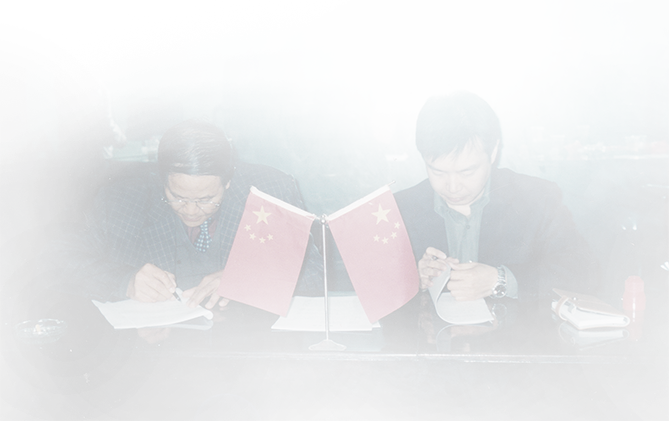
A historic signing moment from the 1970s, when HG’s founder helped drive the development of China’s food industry and began expanding into international markets.
Over the past decades, we have participated in the evolution of automated food production — from local factories to global turnkey projects across 100+ countries. That experience continues to shape every HG production line today.
Discover Our Heritage
Global Food Machinery &
Turnkey Factory Solutions

Building Long-Term Partnerships Through Shared Growth and Industrial Value.
Copyright © HG Industry Group All Rights Reserved
Food Machine Snack Food Processing Machinery

Unauthorized use of this website's content constitutes copyright infringement and may result in legal action.