 English


Is Smart Cake Production Driving Baking Automation?
In the context of the food industry’s increasing pursuit of efficiency and standardization, cake production lines are undergoing a critical stage of accelerated transformation. Particularly in the baking sector, emerging trends such as automation, intelligence, and eco-friendly practices are reshaping the landscape. From raw ingredient mixing to final packaging, the cake production line is no longer merely a mechanical assembly process; instead, it has become a comprehensive system integrating information technology, smart sensing systems, and sustainable manufacturing concepts. This article explores how modern cake production lines are reshaping the industry and provides an in-depth analysis of current development trends.
1. From Mixing to Packaging: An Overview of Cake Production Line Automation
Amid growing demands for efficiency, standardization, and product quality, cake production lines are undergoing a profound technological revolution. Evolving from manual-based traditional processes, these lines are now highly integrated, intelligent systems. With rising consumer expectations and cost pressures, automation, digitalization, and green manufacturing have become inevitable trends. Today’s cake production lines are no longer just mechanical operations—they incorporate artificial intelligence (AI), the Internet of Things (IoT), and high-efficiency control systems. HG, a player in the field, is driving cake production technology forward with a focus on both flexibility and intelligence, setting new industry benchmarks. This article delves into six key perspectives to analyze core trends and breakthroughs in modern cake production technology.
| Production Stage | Automated Equipment Function | Advantage |
| Ingredient Mixing | Automated weighing and blending system | Reduces human error and ensures precise ratios |
| Molding & Filling | Volumetric dispenser | Guarantees uniform cake size |
| Baking | Tunnel oven with temperature control | Stabilizes heat profile and enhances baking consistency |
| Cooling & Decorating | Air-cooling system + auto icing machine | Reduces turnaround time and unifies decoration style |
| Packaging & Sealing | Multifunctional automatic packaging line | Boosts efficiency and meets hygiene requirements |
As baking consumption becomes increasingly refined, the ability of automation equipment to support production stability and product variety has become especially crucial.
2. Full Automation from Mixing to Packaging: Workflow Optimization in Action
Modern cake production lines have realized full automation from raw material processing to final product packaging. Compared to traditional manual production, the advantages are evident in consistency, speed, and hygiene. In the initial stage, automated weighing and mixing systems reduce human error and ensure accurate ingredient proportions. The filling phase employs volumetric dispensing machines, ensuring uniform cake sizes. The baking section uses tunnel ovens with precise temperature control, significantly improving baking efficiency and product uniformity. For cooling and decorating, air-cooling systems are combined with automatic icing machines, producing consistent designs while improving efficiency. Finally, automatic packaging lines handle sealing and boxing, boosting productivity while fulfilling freshness and safety requirements. This synchronized process not only improves output but also enables full traceability and quality control throughout the production lifecycle.
3. Smart Manufacturing Empowered by AI and IoT: The New Model for Cake Factories
The intelligent upgrade of cake production lines is accelerating rapidly. By integrating AI algorithms and IoT devices into the production process, manufacturers can monitor and adjust equipment conditions, capacity utilization, and product quality in real time. For instance:
Smart Recognition Systems detect cake volume and surface color to ensure they meet preset standards, automatically rejecting defective products.
Sensor Networks monitor baking temperature and humidity, enabling automatic calibration of process parameters.
MES (Manufacturing Execution Systems) centralize control over raw material inventories, order progress, and production data.
Such smart integrations not only enhance overall operational efficiency but also enable faster response to mixed and small-batch orders. This capability is crucial for modern cake factories seeking agility and precision in today’s diverse and dynamic marketplace.
4. Green Manufacturing: Eco-Friendly Cake Production Lines Gain Traction
Under the national “dual carbon” strategy, green manufacturing is becoming a new direction for the baking industry. As a key component of food manufacturing, cake production lines are actively responding to environmental policies by upgrading equipment and optimizing systems to promote low-carbon transformation. For example, traditional gas ovens, while fast-heating, are high in energy consumption and emissions. In contrast, modern electric ovens adopt multi-zone temperature control and waste heat recovery technologies to reduce carbon output and improve energy efficiency.
In structural design, modular production lines allow for flexible equipment adjustment based on capacity needs, supporting energy-saving standby modes and rapid switching, thereby minimizing resource waste. Additionally, packaging systems are being continuously upgraded in the direction of sustainability—many manufacturers are now opting for biodegradable films and recycled paper boxes to meet consumer expectations for green products.
With the integration of water recycling systems, fume filtration units, and heat energy recovery technologies, the ecological friendliness of the entire cake production process has been significantly enhanced. This sustainable manufacturing concept not only helps reduce environmental compliance costs but also contributes positively to building a responsible brand image in global markets.
5. Flexibility in Small Batches: Customization and Diversity in Parallel
Modern consumers increasingly demand more than just flavor—they look for creative appearances, nutritional value, and personalized features in baked goods. This is especially true in niche markets such as holiday-themed cakes, children's cakes, and maternal-infant baked goods. As a result, differentiation has become a key competitive edge, pushing cake production lines to evolve beyond large-scale, single-SKU models to flexible systems capable of small-batch, custom production with fast switching.
Mini cake production lines have emerged as a response to this trend. Compact in structure and small in footprint, they are ideal for deployment in community central kitchens, chain bakery backrooms, or urban micro-factories. These lines support quick mold changes and automatic multi-recipe blending, enabling rapid response to market shifts and reducing the time to launch new products. This reduces inventory risk and allows for small-scale testing, niche promotions, and customized e-commerce orders.
Flexibility, efficiency, and responsiveness are becoming essential labels for next-generation cake production systems.
6. Upgraded Hygiene and Safety Standards in Cake Production Lines
In the context of globalization in the food industry, hygiene and safety have become critical metrics for the construction and operation of cake production lines. As consumers grow more concerned about food quality, regulatory bodies have tightened their oversight of production processes.
Modern cake lines are now designed with hygienic engineering principles from the outset. Equipment is made from stainless steel with sealed structures and smooth, seamless surfaces to prevent bacterial growth and residue buildup, making cleaning more efficient. The integration of CIP (Clean-in-Place) systems allows internal cleaning and disinfection without disassembly, greatly enhancing both hygiene and operational continuity.
To prevent external contamination and cross-infection, many factories now feature cleanrooms, pressure barriers, and insect-proof ventilation systems. Additionally, intelligent monitoring tools such as data traceability, video surveillance, temperature alarms, and foreign object detection ensure full-process transparency—from ingredient input to final packaging.
These safety systems not only ensure regulatory compliance but also play a crucial role in brand building and customer trust.
7. Trend Outlook: Cake Production Lines Move Toward “Flexible + Intelligent” Era
From automation and smart technologies to green manufacturing and flexible production, cake production lines are moving toward an integrated trend of “flexibility plus intelligence.” On one hand, highly integrated smart hardware and information systems are becoming standard, not only boosting line efficiency but also enhancing responsiveness to varied product categories and production rhythms. On the other hand, flexible manufacturing offers strong market adaptability—whether for mass production or customized orders, switching between setups can be done swiftly and efficiently.
Moreover, energy-saving designs, closed-loop resource recycling, and AI-powered predictive maintenance are all being refined to meet the expectations of modern manufacturing.
In a rapidly evolving market with increasingly complex consumer demands, only companies that accelerate their transformation and build intelligent, demand-oriented, and flexible cake factories will gain a strategic advantage for sustainable development. For the bakery industry, this represents not just an upgrade opportunity but also a critical step in establishing future competitive barriers.
8.HG Leads the Bakery Industry Toward a New Era of Intelligent and Sustainable Manufacturing
As the baking industry continues to evolve, cake production lines are undergoing a significant transformation—from traditional, large-scale production to an advanced integration of intelligent, flexible, and sustainable manufacturing systems. In this shift, equipment intelligence, system synergy, and full-process data loop management have become key metrics of progress. HG stands at the forefront of this transformation, consistently committed to the food processing equipment sector and driven by a dedication to innovation, quality, and service excellence.
HG continues to invest in cutting-edge research and development, bringing technologies like artificial intelligence, big data, and IoT into practical applications across its cake production lines. The company has built highly integrated systems focused on precision process control, smart sensing, and predictive maintenance, enabling customers to achieve full automation and visualization from ingredient input and mixing to baking, cooling, and packaging. Meanwhile, HG is deeply committed to sustainability, incorporating energy-saving technologies, clean production processes, and eco-friendly materials into its equipment design—delivering comprehensive solutions that balance performance, safety, and environmental responsibility.
Looking ahead, HG will further advance its "Digital Baking + Green Manufacturing" strategy by launching more modular, adaptable cake production systems tailored to various use cases. This approach empowers bakeries to respond swiftly to dynamic market demands and supports their efforts to offer personalized, high-quality products while reducing costs and environmental impacts. As a company dedicated to food processing innovation, HG aims to drive the industry forward by collaborating with partners around the world—together opening a new era of intelligent baking and helping shape a more sustainable and competitive future for the global bakery sector.
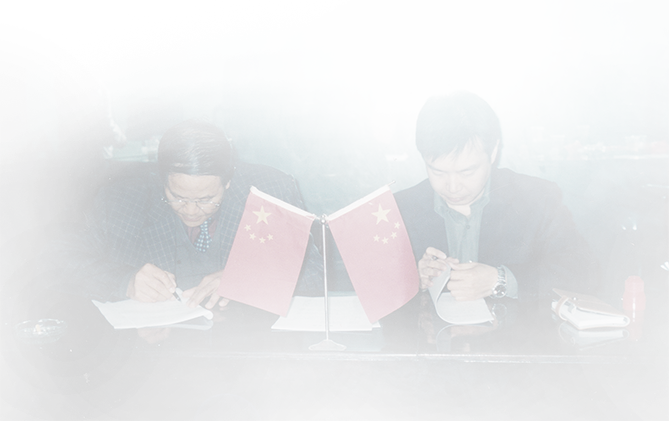
A historic signing moment from the 1970s, when HG’s founder helped drive the development of China’s food industry and began expanding into international markets.
Over the past decades, we have participated in the evolution of automated food production — from local factories to global turnkey projects across 100+ countries. That experience continues to shape every HG production line today.
Discover Our Heritage
Global Food Machinery &
Turnkey Factory Solutions

Building Long-Term Partnerships Through Shared Growth and Industrial Value.
Copyright © HG Industry Group All Rights Reserved
Food Machine Snack Food Processing Machinery

Unauthorized use of this website's content constitutes copyright infringement and may result in legal action.